Saturday, June 1, 2019

Where there's a Will...

     You've been accepted into three different colleges.  Which one should you go to?  You have been presented with two ministry opportunities this summer.  Which one are you supposed to get involved in?  You have several job offers.  Which is the right one for you?  You've just moved to a new town and have visited several great churches.  Where should you plug in?  Or how about this problem that everyone on TV faces but no one in real life ever does: You have three different suitors who all adore you and want to marry you...and they're all irresistible?  How do you determine which one to marry?  More realistically, what about that one person you're dating and considering marrying?  How do you know if it's right?  Do you see where I'm going with this?  We have a lot of important choices to make in life, some I didn't even mention above.  What would God have us do in these situations?  It can be hard to know.

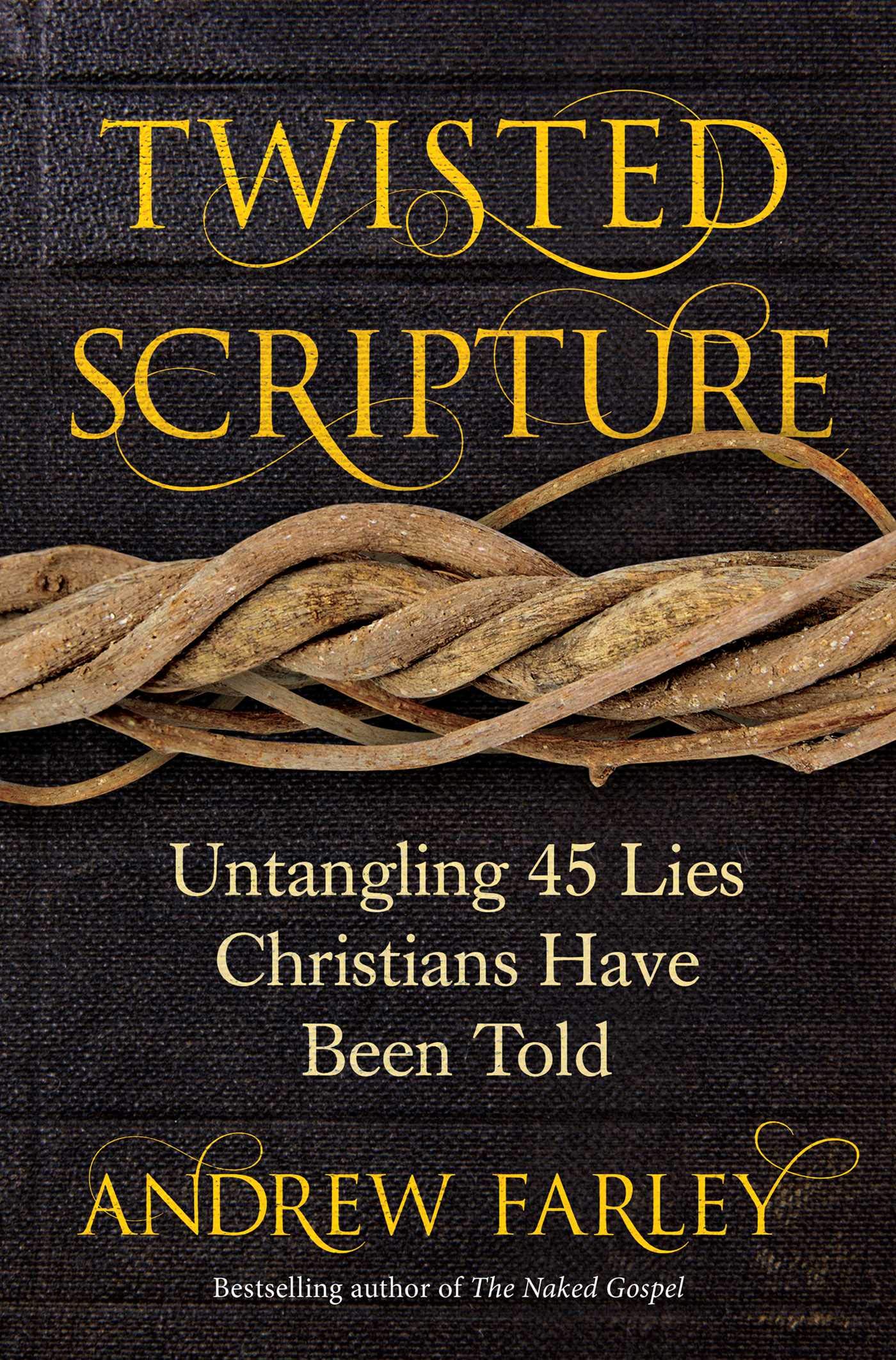
     In my last post, I recommended the book Twisted Scripture, a recently-published book by Andrew Farley.  I still do recommend it, although I told you there was one chapter I disagreed with, and that I would go into it in this post.  In one of the chapters in the book, Farley talks about God's will.  The myth he is refuting is that God's will is really hard to figure out, and that it's like hitting a target, and if we don't get a bulls-eye, then we miss out on God's perfect will for us and end up in His "permissive" will, getting God's second-best...or worse.  I agree with Farley in the sense that this scenario isn't how it works.  However, I also disagree with the other extreme, which Farley goes to.  In essence, he says that we are free to do whatever we want, because we are saved and sanctified, and are incapable of having wrong desires anymore.  Whatever decisions we make, they're God's will and God is in them, because we are believers and God is with us.  He says it is "advisable" to pray for guidance in important decisions, but ultimately, we are blessed whatever decisions we make.  I can't completely agree with this.  I do agree that we don't need to be tormented or in agony about God's will, but it is much more than "advisable" to pray for wisdom when making decisions.  It is vital.  Christians are automatically justified (made right with God) at salvation, but sanctification (becoming more like Christ) takes a lifetime, so we are still capable of wrong decisions.  Besides, not all choices are between good and bad.  Some are between good and better.  God's best for me might not be God's best for you.  We need God's guidance badly, because he does have an ultimate plan that we are a part of.  More importantly, God wants us to interact with Him, because He loves us and wants a relationship with us.

     One of the best books I have read in my Christian life is on the very subject of knowing and doing the will of God.  It is entitled Experiencing God, by Henry Blackaby.  You can order it here.  God has used this book tremendously in my life.  I recommend it highly.

Image result for experiencing god

     I've heard a lot of people's opinions about the will of God.  Some say God is obviously in control, so we can just do what we want, and He'll override anything that isn't His will.  While it is true that God is in control and absolutely can override anything, we shouldn't bet on that.  On a similar note, others have said that God doesn't really care about what we do, and that we can do what we please, so long as it isn't technically defined in the Bible as sin.  You would think this way of living would make a person happy, because it is basically permission to do what you want...but for me, that is a very depressing way to live.  I see my own neediness before God, in incapability to choose rightly without His help.  It sounds like God doesn't care about my life at all, and I'm kind of on my own, fending for myself.  This isn't how God was in the Bible.  He was very involved with His people.

     I know when I was single, waiting for my future husband (who ended up being Walter) I really struggled with this.  I had a very good friend who had felt called to the mission field.  She had broken up with a boyfriend because he didn't have that calling.  This guy really wanted to marry her.  After the breakup, he transferred to her college, and basically wore her down until she got back together with him.  When she made that choice to give up the mission field and be with this guy, she changed drastically.  She changed her theology.  When I asked her, "What about your calling to missions?" she replied, "God doesn't care about callings."  Whoa!  When I asked her, "Do you believe this man is the one God has for you?" she said, "You can marry anyone you want, as long as they're a Christian.  God doesn't care."   As a single girl, really waiting on the Lord, and having recently been through a painful breakup, my friend's words bothered me.  If God had no part in it, there was no hope for me.  I didn't have a boyfriend at the time.  Was it then my responsibility to make it happen?  I just couldn't go along with that.  After the painful relationship I had been in, I was stripped of all confidence in this area, and knew I needed God's guidance.  And besides, God isn't so "hands off" like that.  It just didn't seem like the God I had come to know.


     Whether or not my friend was actually called to the mission field and gave it up, or whether she was supposed to marry this guy (which she did, and once she did, being with him became His will--I'll touch on that later.), I disagree with her reasoning and the change in her beliefs.  God cares very much about our calling.   I believe God has a very specific plan for all of His children...and for the world.  He invites us to be a part of that plan.  That means every detail of our lives is orchestrated by God, including (especially) the big stuff like who we marry, or even if we marry.
Image may contain: Janelle Ann Stoermer and Walter Harrison Stoermer, people smiling, people standing, wedding and indoor
Janelle and Walter's wedding day
     Let's look at how God worked throughout the Bible.  God communicated directly with His people, both in the Old and New Testament.  He called Noah to build an ark (Genesis 6:13ff).  He called Abram out of his own country and promised to make him a great nation (Genesis 12:1-3).  He called Moses to lead His people out of Egypt (Exodus 3).  He called Elijah in several specific aspects of his life and ministry as a prophet in Israel (First Kings 17, 18, 19:9-21).  He called Jonah to preach to Nineveh (Jonah 1:1).  He called Peter to preach to Cornelius (Acts 10).  He called Saul of Tarsus to be the Apostle Paul (Acts 9).  This list is far from complete, but it is a start.  It establishes how God spoke to believers in both the Old and New Testaments.  God hasn't changed.  Like the believers in the book of Acts, we are under grace now, as opposed to the law.  Our relationship with God is different than that of Old Testament saints.  The way we approach God is different.  But He still speaks today.

     In all of the instances where God spoke to people that I listed above, the people involved had a choice to make, either listen and obey, or refuse.  The most famous story of disobedience is Jonah.  He ran away from God's calling, and paid dearly for it (Jonah 1 and 2).  Less considered instances or refusal or disobedience (or at least acting outside of God's leading) include Abram going down to Egypt and lying (Genesis 12:10-20), Moses arguing with God (Exodus 4:13) and disobeying in front of the people (Numbers 20:11), and Elijah running in fear from Jezebel and wanting to die (First Kings 19:1-8). In all cases, disobedience cost these people something, but it did not hinder God's ultimate plans.  Psalm 33:11 says, "But the counsel of the Lord stands forever..."  Isaiah 46:10 says, "I make known the end from the beginning, from ancient times what is still to come. I say, 'My purpose will stand, and I will do all that I please.'"

     From all of this, I consider the big takeaway to be that God is Sovereign.  Out of love for us, He includes us in His purposes, but even if we botch it up, His will still ultimately happens.  When we disobey, we're the ones who miss out.  When I was in high school, my pastor used to tell this story.  He was at a funeral, and really felt the prompting of the Holy Spirit to stand up and share the gospel.  He felt awkward and didn't really want to do it, so he kind of silently argued with God.  While he stalled, another Christian in attendance stood up and preached the gospel.  My pastor told us that God's plan still happened, but he was the one who missed out on the blessing of obedience.  We can't botch up God's plan.  We can't botch up history in some major way.  This isn't Back to the Future after all!
Image result for back to the future

         In each instance I shared above about God's speaking to individuals, every encounter with God was different.  Moses got a burning bush.  No one else in history met God in quite that way.  Elijah heard a still, small voice.  Peter had a vision (of course, he had spent three years being Jesus' disciple before that).  Paul met Jesus on the road to Damascus.  None of these people had the exact same experience.  The same is true today.  We all have our individual walks with the Lord.  But there are some principles.  We have the inner testimony of the Holy Spirit, who guides us into all truth (John 16:13).  We have the Bible.  God will never lead us to do something that violates what He has said in the Bible.  God will never call us to lie, commit adultery, murder, etc.  Those things are clearly sin.  But the Bible is much more than just a big list of what we can and can't do. It is alive! Sometimes, I'm reading a verse I've read many times, but it suddenly jumps out at me.  That's the Holy Spirit getting my attention.  Does that ever happen to you?

     Getting back to my single years and my friend who got back with her boyfriend (later husband)...as I had shared, I had been through a very hurtful relationship.  In my pain and confusion, I sort of wanted this guy back, and was grasping at straws that maybe it was God's will after all.  In my heart of hearts, I knew it wasn't right, but I needed some assurance from God.  I prayed and asked God to speak to me about it.  I opened my Bible for my quiet time.  I happened (in God's divine Providence) to be in First Samuel 16, and verse one was my answer: "And the Lord said to Samuel, 'How long will you mourn for Saul,  seeing as I have rejected him...'"  It was as if God were asking me, "How long will you mourn over this guy, seeing as I have rejected him from being the one for you?"  I knew at that moment that this was God's answer to me.  Even though I still had a lot of emotions to work through, I had joy too, knowing God loved me enough to answer me, and reveal His will.  I was assured He was in control, and I could rest in that.  Not every person reading this passage would be called by God to apply it this way (in fact, just about nobody would!), but at that moment, the Holy Spirit inside me knew it was what I needed.  When I shared this with my friend who had recently gotten back with her boyfriend and thought God didn't care about callings, she got very angry and told me I'd better be careful, because I was creating my own doctrine.  She likened me to Joseph, Smith, who founded Mormonism.  She was wrong.  I wasn't creating doctrine.  I was going deeper with God.  I was hearing Him speak to me about my situation through His word.  His Spirit was taking a passage written thousands of years ago and applying it to me that day at the dawn of the twenty-first century.  Only the Bible can have that effect, because we have the Author in our hearts, and because the Bible is "Living and Active" (Hebrews 4:12). It isn't something we conjure up.  The Bible isn't a crystal ball we look to for some random answer.  God has to do it.  The Bible has one meaning (very important!), but unlimited applications.  As for my friend, I believe I touched a nerve, because she was denying what God was calling her to do.  But I cannot speak for her.  She's not me, and I'm not her.  I'm only accountable for myself.  

     There are many verses that support the idea of God having plans for us, and guiding us.  Psalm 37:23 says, "The steps of a good man are ordered by the Lord, and he delighteth in his way."  Proverbs 3:5-6 admonishes us to "Trust in the Lord with all your heart, and lean not on your own understand in all your ways acknowledge Him, and he shall direct your paths."  In Acts 16, we are told that Paul and his companions tried to go to Asia, but the Lord kept preventing them, and He then sent them to Europe by way of a dream.  God had plans for them (and for the history of the world, but that's a story for another time).  And He has plans for us.  Plans for our future.  Plans for where we live, who we marry, what job we have. What impact we make for eternity.  All of that.  

     God also speaks to us through other believers, and through circumstances working out certain ways.  When all of these things are working together, that is often how God guides us.  I also happen to believe that if we are walking with the Lord, seeking Him daily, that when we are suddenly faced with a choice, we will have a pretty good idea already of what God would want, because we have already been hearing from Him and seeking Him.  Romans 14:23 tells us "...whatsoever is not of faith is sin."  This means that if we don't act on what we believe God leading us to do, we've sinned, even if we haven't technically broken a commandment.  Consider Jonah a moment: It wasn't technically a sin to get on a boat headed for Tarshish, but it was a sin for Jonah, because God had told him to go to Nineveh (Jonah 1:1-3).  He didn't break a written commandment, but he broke God's personal command to him.  We do the same thing sometimes.

     In spite of all of this, some people still act as if God doesn't have an interest in our lives.  Like it's our job to figure it out.  One verse that encouraged me a lot when I was single was James 1:17, "Every good and perfect gift is from above..." Another was Psalm 37:4, "Delight yourself also in the Lord, and He will give you the desires of your heart."  Both of these verses speak of God being the one to give us these things.  We're not alone, on our own, trying to do it.  These verses weren't guaranteeing that I would get whatever I wanted out of life.  No one gets that guarantee.  But it does relieve us of having to make things happen.  It's in God's court.  Our job is to obey His leading in our lives.  A definitive verse that establishes both God's calling on us and His fulfillment is First Thessalonians 5:24, "Faithful is He that calleth you, who also will do it."  

     I think my favorite passage about marriage (and in a larger sense, about God's Sovereign leading) is the story of Isaac and Rebekah, in Genesis 24.  Abraham sent his servant to choose a bride for Isaac.  The servant was clearly a godly man.  He really sought God's guidance in this most important decision.  He didn't have the benefit of the completed Word of God (or really any of it!) or the Holy Spirit in his heart, but he obviously loved and feared God.  He asked God for some very specific signs about the right woman, and God led Rebekah to him.  She was the one God had for Isaac.  It was also the first time in the Bible that it says a man loved a woman!  Isaac is my favorite Patriarch, as he was the only one who was a one-woman man.  If God had picked out Rebekah for Isaac, He does the same for us now.  And not just with the issue of marriage, but with every issue.  If He cares about who we marry, don't you think He cares about our jobs, our homes, our churches, etc?  Acts 17:26 says that God "...determined allotted periods and boundaries of their dwelling places."  This is saying God, in His Divine Providence, determined where and when we would live and be.  Why?  The next verse tells us that it is so we would know Him.  God knew that Los Angeles, California in 1982 was the very best time and place for me to be born, so that Riverside, California in 1987 was the very best time and place for me to receive Christ as my personal Savior.  Albuquerque, New Mexico in 2019 is the very best place for me to walk with Him today.  If God works out all of this, He must have a plan for our lives!

     On another note entirely, what about when we miss God's plan?  What about when we sin, or make honest mistakes, or just aren't aware of what God is doing?  Who of us hasn't missed it at times?  No one has followed God's will perfectly, and that's where grace comes in.  God loves us.  It is never too late to get back on the path of God's will for us.  There are things we may have missed out on, such as my high school pastor not getting the joy of sharing the gospel at that funeral.  But God still deeply desires to use us.  He is bigger than our sin and mistakes.  He can even redeem those things.  We can't go back to the past and undo our decisions, and God doesn't ask us to.  He asks us to move forward.  In other words, if my friend was originally called to the mission field, but she married this guy who didn't want to go and stayed in the US instead, she could start listening and obeying God, experiencing Him working in her life, but He wouldn't lead her to leave her husband and go to the mission field.  She could only move forward with her life.  We all can.  The Apostle Paul (who had many regrets) wrote in Philippians 3:13b-14: "Forgetting what is behind, and reaching for what is ahead.  I press on toward the goal to win the prize for which God has called me heavenward."  Move on in God's grace.  That's all any of us can ever do.  
Image result for press on toward the goal

Monday, May 27, 2019

Under Grace

     Last week, I read an incredible book that I highly recommend to any Christian.  It is the newly published Twisted Scripture, by Andrew Farley.  The overarching premise is that we, as believers, are under grace, not the law.  Most would agree with that...until you start to look at what that actually means.  Several of Farley's conclusions might be considered radical, but they are scriptural.  I didn't agree with him on 100% of everything, but I agreed with most of it.  Even the parts I differ from were thought-provoking.  This book both liberated and convicted me (and also refuted some of the false, legalistic teachings I have been unwittingly told).  I think this book is a must-read for every believer, whether you agree with everything he says or not.  It is worth reading.  You can order a copy here.

     Image result for twisted scripture andrew farley

     I remember as a college student, going on mission trips and being trained to do ministry.  I have wonderful memories, and know differences were made for eternity.  However, some of our leaders used a lot of legalistic manipulation to keep us where they wanted us.  A lot of condemnation was put on us.  The President of the ministry constantly told us that if our motives weren't perfect every time we did ministry, all we'd get in Heaven for a reward was a chest full of junk.  That kept us paranoid and obsessively checking our motives.  I think it is good to soul-search and make sure we're following God's leading in our lives, but no one has perfect motives 100% of the time.  And what this gentleman was really telling us was that, though we were saved by grace through faith, we really had to live by good works.  That is still a form of legalism.  It was a heavy load to carry.  My biggest fear was getting up to Heaven and not hearing Jesus say, "Well done, good and faithful servant," and instead being given a box of wood, hay and stubble.  Instead of enjoying my walk with the Lord, I lived in paranoia.
Me at 19 (summer 2001) teaching 5-day Bible clubs in Boston, Massachusetts.  In spite of legalistic leadership, I loved every minute of the ministry.  There were wonderful people in leadership too.

     We also had a very legalistic man leading devotions for us.  His devotions were constantly demeaning us.  He would accuse us of "playing Christianity for all it's worth!"  As if being a Christian on this earth gives you all the glory!  If we wanted to play something for all it was worth in order to get some sort of glory or advantage, we wouldn't pick Christianity, because, from a worldly perspective, there is much more to be had out there in the world.  I say this to refute his logic, not to encourage worldliness.  This man's devotions were very angry, basically warning us to watch ourselves (when his own moral life was far from perfect, but that's a story for another day).  He would tell us our ministry efforts had been failures if we didn't see immediate fruit.  He would cut us down, telling us that we thought we were so great going on mission trips (as if he could read our minds or something), but we weren't, only God was great, and we'd better give Him the glory, or He'd punish us.  I never took his devotions to heart the way I did the President of the ministry, so I wasn't wounded by him as much as totally annoyed.  I felt he was trying to manipulate and control us.  I still think that, although he has since passed away.
2001 Summer Missionary Team (I was nineteen that year).  The legalistic devotions leader is at the far right, leaning in.
     Don't get me wrong.  I am delighted to have gone on those mission trips.  I am delighted for the people who came to the Lord.  I am delighted that I ended up working with this ministry full-time in my 20's, and continue to volunteer with it even now.  Any ministry can have its duds.  But I sure was fed a lot of legalism from leadership back in the late 90's and early 2000's.  My husband (whom I didn't know at the time) was facing the same kinds of controlling teaching at a Bible college he attended.  He was constantly accused of being "in the flesh" every time he said or did anything someone else didn't like (not necessarily even leadership, often other students).  As if the person talking to him was God's authority on what was godly and what wasn't.  Like myself, my husband has spent time separating the good he learned from the Bible from the legalism thrown at him.  This book, Twisted Scripture, takes the power away from those would would manipulate God's people in this way.  Andrew Farley talks about how we should view heavenly rewards in light of God's grace.  He also talks about our work for Him.  He even says it isn't possible for a saved person to be "in the flesh" (though saved people do sin sometimes).  This book really removes all striving from our lives.  We can rest in God's grace, not try to strive to be perfect.  As I said, you may or may not agree with all of it.  I didn't completely.  It was still very liberating to see myself in light of God's grace.  Farley argues that many of the passages used to put burdens on Christians are often really referring to who we were before salvation, and taken out of context.  You'll have to read it for yourself.

     There were several points in Twisted Scripture that I need to mull over and think about more before I determine where I stand.  I definitely agree with the overarching premise of us being under grace.  I overall agree with Farley.  However, my next post will be about the one chapter in this book I definitely disagreed with, so be watching for it!  As a teaser:  How do you know when something is God's will?  When faced with multiple opportunities, how do you determine what God would have you do?  


Friday, May 17, 2019

When things happen...

     Have you been through this...you wait and wait for something to happen, and when it does, it happens fast!  That's how this week has been for me.

     I have shared how God led my husband and me from South Dakota to New Mexico last fall.  My first job was at a very unusual preschool with philosophies I disagreed with.  I had shared about it last fall in some blog posts about being live in the fiery furnace.  It was a time of intense spiritual warfare, and God delivered me without my getting fired.  The day after I resigned, unsure of what to do, God opened a door for me to teach 5th grade at a wonderful Christian school here in town.  It was a dream come true, and also God's impeccable timing!  I have loved every minute of it.  Two of my students have come to Christ (the rest shared that they were already believers).  I have seen tremendous spiritual victories that have brought joy to my heart.  I have been so grateful for this opportunity to serve the Lord here.
Our class with the third grade class on a field trip to work a farm!

     In March, I found out that this school's accreditation does not recognize my college degree (long, boring story behind that), and so they were unable to hire me for another school year (I was told that they had my contract for next year all printed out and ready before they found this out).  I was really disappointed, and wasn't sure what God had in store...
Image result for disappointed
     As the weeks went on, my days were still filled with working at this wonderful Christian school, in this dream job that has blessed my life in countless ways.  My husband is doing his Master's degree online, and has been working on finding a job himself, preferably ministry-related.  We prayed daily and nightly about this.  In the past, I have been the type of person who diligently applied and put out resumes until I got hired.  I also seem to "land on my feet" and have never had a gap in employment since I entered the workforce in 1999 (age 17).  However, this time around, God really didn't lead me to apply en masse even though this would have been my inclination.  One Christian preschool that I had applied at last fall came to mind, and I contacted them, asking about an opening.  They sent me the application, which I filled out and returned to them in person.  I didn't hear anything.  Time went on.  I still didn't feel God leading me to apply at other places, or even to call and follow up on this Christian preschool.
Image result for applicationsImage result for telephone

     My husband is so calm and faithful.  He trust God no matter what.  I get antsy about things, and Walter always brings me back down to earth.  On Tuesday night of this week, I was really concerned about our future (the schoolyear at this Christian school ends next week, and our savings will only help us a few months).  Walter again prayed with me.  We prayed that if I was supposed to have a job, that this Christian preschool I had applied for some weeks ago would get back to me.
Walter and Janelle

     About twelve hours later (Wednesday morning), I received an email from this preschool.  They invited me in for an interview the next day (Thursday).  I went in, and I have to say it was the longest and best interview of my life.  I have worked in Christian places before, but never in a place that cared so deeply about my personal relationship with the Lord.  They wanted to know my salvation experience in detail, and about my Christian walk over the years.  Then the pastor of the church that the preschool is under interviewed me as well, to share the church/daycare's vision for this ministry and find out about mine.  I felt like I was talking with best friends I had never met before!  These people are the genuine article.  After talking with the pastor, I was sent back to the preschool director, who shook my hand and said I'm hired!  I start Friday the 24th!  The day after this school ends.  On top of that, my current job still pays me through May 31st, so I'll get a final check from them in June.  God is so faithful!

Heights Christian Church and Day Care.  The name is even significant to be, because my childhood church was called Corona Heights Baptist Church.  The name of this one being similar kind of spoke to me.

     I am excited about how God has been working things out!  I'm also so thankful for this job that I've had most of the 2018-19 school year!  I have loved it!  I love everyone here, and leave with a great relationship with them all.  I pray God's best for them as they move on to what God has for them.

     God is faithful!

Saturday, May 11, 2019

FUNdamentals


     "Oh no," my husband sounded concerned a week ago.

     I looked up from the book I was reading.  "What is it, honey?"

     He turned from the computer to meet my gaze.  "A Christian author died today.  She was our age.  She had a husband and two kids"

     Wondering if I might know who it was, I asked the author's name.

   He squinted at the screen.  "Rachel Held Evans."

  I racked my brain, but didn't recall the name.  Naturally, I looked her up.


Image result for rachel held evans
Rachel Held Evans
     As a Christian writer myself, I am always interested in my fellow authors of faith.  I saw that Rachel had written four books.  Wanting to check her out, I purchased the shortest, least expensive book.  Since I bought it on Amazon kindle, it was available immediately.  I read it in a couple of hours.  My heart truly goes out to her husband and children, and my prayers are with them as they carry on.

     As I read her book Faith Unraveled; How a Girl Who Knew All the Answers Learned to Ask Questions, I was disappointed.  She joins the long list of post-evangelical female authors who want to share their journey from the "confines" of fundamentalist Christianity to the "liberation" of this vague, undefinable faith that they still consider somewhere on the Christian spectrum.  A year ago, I read and reviewed a similar book When We Were on Fire, by Addie Zierman.  Similar stuff.  Another outspoken woman in this category writes the blog Parenting as a Liberal, Feminist Christian, in which all she routinely rants about things that evangelical Christians value or do (such as dressing modestly, voting for candidates who espouse biblical values, or having costume parties at churches on Halloween in lieu of trick-or-treating).  As if any of this stuff hurts her!  What pain does she experience when my church has a "Trunk-or-Treat" outreach?  How about when I choose to wear a one-piece swimsuit?!?  Come on!

     All three of these beautiful women have something in common.  They were raised in solid Christian faith and, by their own admission, made a commitment to Christ at a young age.  Then, somewhere in early adulthood, they hit a point where they were done.  All three (as well as others like them) still claim to be Christians, but with a "redefined" faith.  Addie Zierman uses the term "reimagining" her faith.  

     Both the labels of "fundamentalist" and "evangelical" fit my belief system.  I am a fundamentalist Christian.  I am an evangelical.  But to be honest, I don't use those titles much.  I'm a born-again Christian whose faith aligns with the Bible.  The terms "fundamentalist" as well as "evangelical," while applicable, are often abused and misunderstood.  They are associated with statistics more than personal faith.  Those words get people's radars up.  I don't want to do that.  

     Before I talk about Rachel Held Evan's book in depth, I want to clarify what fundamentalism means.  The term cropped up for Bible-believers in the 1920's, amidst the rise of modernism--self-proclaimed Christians who did not want to believe the Bible as literally.  A big push in this was the Scopes Trial, in 1925.  The trial was held in Dayton, Tennessee, and involved the legal right to teach Evolution in public schools.  While, at that time, Creationism won the battle, some real damage happened.  Fundamental Christians (those who believed in a literal 6-day creation from the book of Genesis) were made to look stupid, and at odds with science.  This is a mistaken idea.  Evolution is a theory.  In a sense, so is Creationism.  Both require faith.  Neither theory could actually be called science, because, for something to be scientific, it must be observable, measurable and repeatable.  Neither Evolution nor Creation fits this definition of science.  Both are a matter of faith.  Both sides look at available evidence from their own viewpoint.  In truth, there is no conclusive evidence to support Evolution.  We still have apes today, and we have humans today.  Yet, we don't have some link between walking around.  If we truly evolved from apes, there probably wouldn't be apes anymore, or if there were, not only would there still be apes and humans, but there would be links, and there aren't (note--this argument, while valid, is not used as much today, since Evolutionists are now no longer claiming we evolved from apes, but that we evolved from a common ancestor to apes.  There is still no evidence to support our supposed sub-human ancestors).  Also, no one can say what ultimately caused the Big Bang.  Additionally, explosions cause disorder, not the order we find in our solar system.  These are just some very basic arguments against Evolution that I was taught in junior high by a Christian lawyer who came to speak to our class, and I was convinced for life of the fallacies of Evolution.  I studied even more in-depth as I got older, and am more convinced than ever in the truth of Creationism as found in Genesis.  For a long time, both Biblical Christians and outspoken atheists have mistakenly agreed that God and science were in disagreement.  This isn't true.  God created science, and there are Christian scientists who are much smarter than I am who reveal many ways that the evidence supports the claims of scripture.    But science aside, Fundamentalists take the Bible at its word.  This puts them (us, as I am one of them) at odds with those who do not.
Image result for Bible
     I find it easier to converse with someone who just flat-out disbelieves the Bible and always has than with those who were once Bible-believers and now deny a lot of it, but still hang on to some semblance of Christianity.  The former have never encountered and denied Jesus.  The latter are usually very bitter and angry.  Also, I find their arguments fraught with fallacy.  I am going to use Rachel Held Evans as an example.  I will say, before I begin, that she is one of few I have read that is not mean or angry.  I felt like I actually liked her as a person while I read it.  

     In her book, she recounts her journey.  She grew up in a Christian family in the South.  She made a commitment to the Lord at age 5 (much as I, myself, did). She went to AWANA, Sunday school, and had the benefit of a Christian education.  As I read this part of her story, I felt I was reading my own life story (except I'm not from the deep South).   Since she is my age, I related to her in that way as well.  While she was going to AWANA and Christian school in Alabama, I was doing the same in California.  It was a happy life.

     Rachel struggled with doubts here and there, but her major crisis of faith happened in the early 2000's, while she was attending a Christian college.  Shortly after 9/11, she saw a Muslim woman being killed by her own people on TV.  It was incredibly tragic.  Human life is a gift from God (Psalm 139:14).  The crowning glory of creation (Genesis 1:27).  Any loss is a tragedy (Exodus 20:13).  Like many of us were during that time, Rachel was deeply troubled, wondering where this woman would spend eternity.  She was Muslim, and according to the Bible, no one comes to the Father except through Jesus Christ (John 14:6).  But did this woman have an opportunity to hear the gospel?  She was in a Muslim country.  She had been raised on the teachings of Islam.  According to information Rachel later discovered, this woman was in an abusive marriage.  How did this poor woman have a chance to hear the gospel?  Would God take all of it into account?  This led Rachel to wonder if she, herself, was a Christian because she was an American, much the way this woman was Muslim by virtue of being a Middle Easterner.  What did God do with people who never heard the gospel?  Was it fair of God to condemn anyone to Hell who didn't follow Him?  Were there exceptions?  If so, what were they?  Was there hope for this Muslim woman who had died on TV?

Image result for picture of a muslim woman and a christian
     
     This led Rachel to deeply question her faith.  She spent time thinking and studying.  She asked a lot of questions, and the answers she got did not satisfy her.  She eventually came to the point of faith that was very vague.  When evangelists asked her if she was saved, she answered, "Jesus and I are still working on that one."  She continually defined Christianity as an American religion that excluded other nations and cultures.  She blames the Iraq and Afghanistan wars (and George W. Bush personally) for her faith struggles.  She admits parts of the Bible she doesn't like or know what to do with.  She is uncertain about whether she still believes in Creation or if she is now an Evolutionist. She repeatedly states that there is a lot of scientific evidence to support Evolution, but never once shares what that evidence is.  She kind of picks and chooses what parts she still follows.  She actually said that she doesn't like the phrase "picks and chooses" because she claims to put a lot more thought into it than simple picking and choosing.  She refers to her faith as "evolving".  She says in her blog (which I looked up after reading the book), "Jesus is the one thing I'm willing to risk being wrong about."  Well, now she is face to face with God, so there is obviously no more vagueness.  

     Here is my response to this.  I find it ironic that she left evangelical Christianity because her questions weren't answered to her satisfaction, and yet joined this vague faith with no solid answers and that's somehow okay.  As Christians, it is okay not to have all the answers.  It's enough that God does.  He is all knowing, and we are not.  But where she was at when she wrote the book confuses me.  Kind of hypocritical to leave a faith because of unanswered questions, and then being part of a faith movement without any answers at all.  

     As for this Muslim woman who died, and all who die without Christ: First John 3:20 says, "God is greater than our heart, and knows all things."  God knew what was in this woman's heart.  God has greater understanding that Rachel did, or than any of us does.  Isaiah 40:28 says that there is no searching of His understanding.  We know from Second Peter 3:9 that God is not willing that any should perish, but that all should come to repentance.  We also know that God made one way to get to Heaven.  One way to have eternal life with Him.  The Bible is very clear about this.  In John 14:6, Jesus makes the bold claim, "I am the way, the truth and the life, no one comes to the Father, except through Me."  According to this verse, no one--not one person--can come to the Father without Jesus Christ.  If there was any other way, would Jesus have died?  No way!  He prayed in the garden to have that cup pass from Him (Matthew 26:39).  In essence, He was praying, "If there is any other way for people to be saved without My having to do this, let that be it!"  But ultimately, he surrendered to the Father's will, knowing there was no other way for us to be saved.  Being so inclusive to other religions might seem kind toward those people, but is it kind to Jesus?  It is a slap in the face to all He suffered.  Romans 1:20 gives us some insight into this as well.  "For since the creation of the world God's eternal qualities--His eternal power and divine nature--have been clearly seen, being understood by what is made, so that people are without excuse."  God reveals Himself to everyone.  His creation speaks of Him.  Titus 2:11 likewise tells us "The grace of God that brings salvation has appeared to all men."  Everyone has some sense of God at work.  If they accept what little they receive, I believe God gives them more.  John 1:16 says, "For from His fullness we have received, grace upon grace."  I believe this means that if people receive that little bit of grace of God made available, He will work further in them, revealing more and more of Himself to them.  I don't know where this Muslim woman who was killed was at.  Maybe she was questioning Islam and trying to know Jesus.  Maybe she was firmly convinced Islam was the way.  God has it sorted out.  It isn't up to me...or Rachel...to determine if God was fair to this woman.  

     Secondly, Rachel kept asserting that Christianity is an American religion that excludes other countries and cultures, and that people choose Christianity because they are Americans.  That is entirely untrue.  Christianity began in Israel.  God had been working out the story of our faith since the beginning,  After Adam and Eve fell into sin (and brought the entire human race down with them), God promised to send a Savior to pay the penalty for our sins and bring people back to a right relationship with God.  This promise was given in the Garden of Eden, somewhere between the Tigris and Euphrates rivers (modern day Middle East).  As history rolled along, God chose a people for Himself from which the Messiah would come.  This was the nation of Israel.  There were times in the Old Testament when God asked the Israelites to do things that seem cruel and strange to us today, such as wiping out all living people and animals of the Amalekites (First Samuel 15).  But God had reasons for this.  Remember, God was preserving Israel to be a place His Son could come through, and Satan was constantly fighting it (just read the book of Esther for starters!).  There were many wicked people who were a threat to Israel, and, for the sake of God's people (present and future), they had to be done away with.  Many scholars even believe the Amalekites and others had diseases that would have harmed Israel.  That's my two cents on that.  It makes sense.  Many other times, God grafted outsiders into His people of faith (such as Rahab).  Clearly, God loved all people, so there were obviously reasons for what God had His people carry out.  But anyway, throughout History, God gave clues about the coming Savior through the prophets, most notably Isaiah.  Jesus finally came, and He fulfilled every prophecy, including being born of a Virgin, being born in Bethlehem, and raised in Nazareth.  Most importantly, He fulfilled Isaiah 53, dying for our sins!  Because of this, salvation is available to all!  The gospel spread out from Israel, eventually to the ends of the earth.  America is blessed to have been started as a nation of refuge for believers who were persecuted in Europe.  But Christianity is not exclusively American, nor is America exclusively Christian.  As of 2015, 75% of Americans said they were Christians.  However only 29% of Americans claim to be born again, which means many people use the label of Christian without actually being saved at all.  This also puts true believers in a minority in a supposedly Christian country.  Perhaps many in the US are sympathetic to Christianity, but being sympathetic doesn't mean a person actually believes for himself.  Many nations (particularly third-world countries) have a higher percentage of practicing Christians than the United States.  And there is a Christian presence in every nation, including Iraq and Afghanistan.  This should refute the idea that Christianity is an American religion, or that people in Islam countries have no chance to ever hear the gospel.  Perhaps the woman who was killed had heard the gospel.  We simply don't know.  If someone does consider themselves a Christian simply because they are an American, they clearly aren't a Christian, nor do they even know basic history.  

     Jesus said it would be that way.  Matthew 7:13-14 warns: "Enter by the narrow gate, for broad is the gate and wide is the path that leads to destruction, and there are many who go by it, because straight is the gate, and narrow is the way that leads to life, and there are few who find it."  As Christians, we will always be in the minority until we get to Heaven.  I am blessed to be in a nation where people are open to Christianity, and where we are able to openly worship and share our faith.  I have never been in jail for the gospel, but I have been in trouble for it. I've had my job threatened for it.  I've even had the police called on me once for it (the police wouldn't come because I wasn't breaking the law).  As believers, we go against the grain.  We irritate those who don't buy it.  They can't "live and let live."  Former Vice-President Dan Quayle has said in his 1994 memoir Standing Firm, "But unfortunately, Conservative Christians are fair game for caricature and abuse...Sadly, prejudice against Conservative Christians is the only acceptable form of bigotry in today's America."  He wrote this after four years in the nation's second-highest office, being mocked, maligned and misunderstood for his Christian faith the entire time.  

Image result for broad and narrow way

     I also consider it very foolish Rachel to blame George W. Bush or the wars for losing her faith. Bush was the only President I know of who shared that he read his Bible daily, and had since long before his Presidency.  He is hardly responsible for turning someone from the Bible if he was reading it and trying to follow it so diligently.  And regardless of that, the President of the United States may be the highest office in this country and come with a lot of power...but not that much power!  No one can make someone else lose their faith.  There is no finger pointing at the judgment.  We can't stand before God and point at people and say, "so-and-so did stuff I disliked so I rejected You."  We are responsible for our own soul.  And excuse me for getting political for a second, but, regardless of a person's opinion of how former President Bush handled the Middle East after 9/11, Al Qaeda struck us first.  Rachel kept making it sound like it was brother versus brother, both sides were good, and there's this big question about who was really right.  That is very inaccurate.  War is a very complex and complicated subject, and there are many intelligent people who disagree with each other on how things should have been handled.  Personally, I supported Bush at the time, and still do agree with how he handled it.  It's okay if you disagree with me.  It's a moot point now, and that isn't my purpose here.  I just think her arguments are uninformed and emotionally-based.  If we're going to blame Presidents, I disagree with many things former President Obama did, but I didn't give up my faith over it.  I respected and prayed for my President.  We should all be doing that, because the Office of the President is a hard place to be.

     Rachel went on to talk about how she doesn't hold to certain parts of the Bible.  Yet she used the Bible (mostly out of context) to defend many of her new views.  She took the authority away from it, then tried to use it as an authority.  Again, this is inconsistent.  If you can't believe all of the Bible, why believe any of it?  What is the means by which a person decides which parts to keep and which parts to discard?  What if people disagree about what parts should be discarded?  There is no consistency in this.  I have more respect for people who discard all of it than people who cut out parts they don't like but keep the parts they do.  The Bible is an all-or-nothing book.  God is an all-or-nothing God.  Believing part of the Bible is like believing someone who lies to you a lot.  How do you know when they're telling you the truth?  Either the Bible is completely true, or it is completely false.  There is no room for vague interpretations in it.  

     My biggest issue with Rachel's book is that she went from a solid faith to something vague, and no longer claimed to have assurance of salvation.  "Jesus and I are still working on it," she said.  That sounds so nice, but First John 5:13 says, "...you may know that you have eternal life, and that you believe on the name of the Son of God."  God wants us to be certain of our salvation.  Second Peter 1:10 says to "give diligence to make your calling and election sure."  That means to have assurance of our salvation.  God wants us to know, not just "work on it".  The Bible is very clear about what must be done to have eternal life.  Jesus himself said, "You must be born again," in John 3:3.  The Apostle Paul expounded on what that entails.  "Believe on the Lord Jesus Christ, and you will be saved." Acts 16:31.  Romans 10:9 has always been a favorite of mine.  "If you will confess with your mouth that Jesus is Lord, and believe in your heart that God raised Him from the dead, you will be saved."  We need to be reborn by placing our faith in the finished work of Jesus Christ on the cross.  That is salvation.  Nothing vague about it.  

     I feel that Rachel (as well as the other post-evangelical women I mentioned) majorly disregard Isaiah 40:13, "Who hath directed the Spirit of the Lord, or, being His counselor, hath taught Him?"  We are finite.  We are the created.  We have no business deciding how God should do it.  We have no business "redefining" or "reimagining" the faith so clearly put fourth in the Bible.  If there are incorrect things happening in the name of Christ, those things should be corrected using the Bible.  Martin Luther did this in 1517 when he nailed his 95 theses to the door of the Wittenberg Castle Church, thus beginning the Protestant Reformation.  But just rejecting parts of the faith because they seem mean or exclusive is not up to us.  God is the authority.  We are not.  The road is narrow.  Everyone has the option of choosing to enter by the narrow way.  But no one has the option of widening it, making it all-encompassing.  As I said earlier, that's a slap in the face to everything Jesus went through on our behalf to say, "Well, Islam is another way to God."  If that was so, Jesus would never have suffered.  It would have been unnecessary. The same is true for saying certain things are not sin that the Bible calls sin.  If it isn't sin, Jesus didn't need to die for it...and yet He did. 

     It is sobering that right now, Rachel is standing before the judgment seat of Christ, giving an account for what she did with her faith.  But what is more sobering is that I will one day do the same.  Am I keeping in step with the Bible, or am I stepping off and saying what I think the Bible should mean?  Am I proclaiming the full counsel of God, or am I purporting my opinion to be God's will?  Something to be careful about.

     As I had said, I still felt I liked Rachel as I read her story, even though I disagreed with her conclusions.  I didn't quite feel the same about the others mentioned.  Addie seems sort of whiney, and others seem just plain angry.  I can only imagine the hurts these women carry.  Addie's book was similar to Rachel's in that she went from firm beliefs to a lot of vagueness.  Her journey wasn't as studious.  She was hurt and offended by Christian people, and some of the "sub culture" of American Christianity.  She is even more vague than Rachel, in that she doesn't really state where she stands now, or what place the Bible has in her life.  The implication is that she believes the same way, but gripes about things in Christian culture she doesn't like.  She is a good writer, and, being about her age (a little older), I relate to the American Christian world she grew up in.  Some parts of it were good and biblical.  Others included silly fads that are no longer in existence.  But my argument for that is this: every subculture has its own catchphrases and trends that might seem odd to an outsider.  I've been friends with people who are Muslim, Mormon, Jehovah's Witness, Hindu, and Jewish.  All of them had phrases that I needed to have them explain to me as an outsider.  Dislike the catchphrases all you like, but don't put it entirely on evangelical Christians.  Every subgroup has them.  Also, Addie took exception with certain biblical phrases, such as "born again".  That is straight out of the Bible (out of the mouth of Jesus!).  We can't take exception to that.  All through Addie's book, she looked to people more than God.  That is so clear.  There is no part in the book where she really seeks the Lord for Himself, in His word and prayer.  She always looks at other Christians for validation.  They let her down, and she really loses it for a while.  I am not denying the pain, but I admit to not having a lot of patience for people who deny the Lord based on rude Christians. I've had my own pain due to rude Christians, and I didn't deny Jesus.  Someone being mean to me doesn't make the Bible suddenly untrue.  Addie's insecurities played a huge role in her decision making.  Yet now, she's suddenly an expert on "reimagining" Christianity.  She doesn't state what the basis for this change comes from.  If she is looking to the Bible to determine what things people are saying should be part of our faith, then I agree with her.  But most of what she said was so vague, I really couldn't tell.  There was no authority of any kind (not the Bible, not anything).

     Other authors I have read along these lines produce writings that are incredibly bitter.  One such female post-evangelical stated in one blog that anyone who disagreed with Obamacare is a racist who hates Obama for his skin color.  Whoa!  I know Obamacare had some benefits that helped certain people I know, and I'm glad for that.  However, it ended up costing me a lot of money and difficulty while it was in effect.  While I disagree with parts of Obamacare, I happen to think Barrack Obama is an attractive man.  I have nothing against his physical appearance or ancestry.  Even though I didn't vote for him, I wasn't one of the people claiming he wasn't an American citizen.  I certainly don't hate him, or anyone else.  I prayed for him the whole time he was in office.  I think his family is lovely, especially his beautiful daughters.  This author saying that I hate him simply because I disagree with parts of his plan is so over the top and not an intellectual answer at all.  These women accuse fundamentalist Christians of being too political, but they use all kinds of political arguments.  I am not sure where these women stand spiritually.  This same author says in the intro to her blog that being a Christian means she believes in the Nicene Creed.  This creed does proclaim the truth of God and the gospel, but I still find it disappointing that she doesn't share that she is a Christian based on the Word of God.  She came across to me as very, very angry.  She takes swipes at evangelicals every chance she gets.  Again, as with the others I mention, she doesn't share what she actually believes about Jesus or the Bible.  

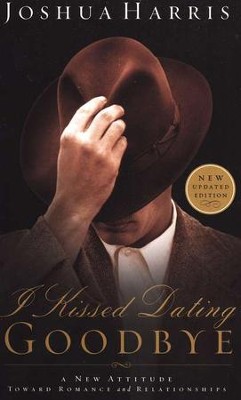
     There are things in Christian culture I don't always like either.  When I was a teenager in high school in the 90's, I was just about the only person I knew who didn't like the DC Talk song Jesus Freak.  My reason for this opinion is long and philosophical, so I won't go into it now.  I actually didn't like DC Talk in general either.  On a different note, a big concern I have right now is that many of my fellow Christians in my original home state of California follow John MacArthur.  I happen to believe he is the most divisive man in Christianity today, and very mean-spirited on top of that.  I have lost good friends to him, who decided I was a heretic because I didn't do things exactly the way John MacArthur said they should be (forget what Jesus said!).  I've had John MacArthur followers at ministry conferences in Los Angeles (where I presented workshops) confront me very vehemently, as if they were contending for the faith, simply because I used a phrase they had been told wasn't right (such as "invite Jesus into your heart--which is actually found in Ephesians 3:17).  That so many of my fellow Christians in California follow him scares me.  But will I give up my faith for it?  Not on your life!  John MacArthur isn't Jesus.  I won't let John MacArthur define me or my faith.  He hasn't been building the church for 2000 years!  Another thing in some Christian circles that concerns me is that many churches are trying too hard to be relevant and "cool" to today's culture.  They end up making fools of themselves and not really reaching anyone. I get concerned when any fad/trend sounds good, but people who espouse it don't follow it (such as teens in my 90's youth group who wore WWJD bracelets but didn't live for Christ at all, or kids who "kissed dating goodbye" but were sexually active and hoping people wouldn't find out). I object to the hypocrisy more than the trend (I wore a WWJD bracelet, and read the book myself).  All of these Christian culture things concern me, but they are not a means for me to criticize other Christians, or my faith.  Jesus settled it on the cross.  It's done.  I'm done 

  I Kissed Dating Goodbye, A New Attitude Toward Romance and  Relationships  -     By: Joshua HarrisImage result for wwjd braceletImage result for cool church

     I am a committed Fundamentalist. I'm committed to Jesus Christ, not fundamentalism as an idea.  Nothing anyone has said has steered me from the Bible as my source of Truth.  I have a relationship with the Lord.  His Holy Spirit lives in my heart.  I could no sooner disbelieve Him than I could disbelieve the existence of my mother.  I don't hate those who disagree with me.  I can withstand intellectual arguments.  Christianity has stood up to scrutiny for years.  What I refuse to withstand is mean-spirited anger.  I will walk away from that ten times out of ten!  I've had my own "faith journey", which has involved crises, questions, rejection, pain, and triumph.  I came out on God's side.  To counter the grievances of these vague "post evangelicals", I have written my own story in a book.  I think you would like it.  It answers the age-old question: "What really happens on a mission trip???" Among other things.  You can order it for 99 cents from Amazon right here. I sincerely hope you will, and get in touch with me!  You can look up my author page on Facebook as well, to get the latest updates on books and bargains (such as giveaways!).  Go to Facebook and look up Janelle Stoermer, author.  Blessings to you!
Why I Still Believe

Saturday, May 4, 2019

Oral Report

     Do you remember giving an oral report growing up?  Maybe you were nervous.  Maybe you worried your mind would go blank in front of the class.  Maybe you were worried about making silly mistakes.  Well, you needn't have feared!  Yesterday, one of my students gave one of the craziest oral reports ever, one to put all other possible erroneous reports out of mind!

     As I've shared, I teach 5th grade at a Christian school here in Albuquerque, New Mexico.  It's a small, close-knit school.  I only have twelve students in my fifth grade class.  Yet even in a class of twelve, they certainly have their very different personalities!  Take Ian* (not his real name).

     Before the oral report, we had a music practice.  Our class is rehearsing a song to perform for the rest of the school the last day.  It is a worship song.  Yesterday, a woman came in to teach them the sign language for the song as well.  All the kids were doing really well, learning the signs...all but Ian.  He was standing there with a bored look on his face, his hands shoved deep into his pockets.  It really ruined the effect of the others all doing their best.

Image may contain: one or more people and indoor
Our School chapel/auditorium, where we will  perform our song. FYI, this picture was taken at a school music recital.
     "Ian, give it a try," I encouraged.  Ian looked at me as if I had asked him to shoot his mother, and then burst out crying.  The music stopped.  The signing stopped.  All eyes were on Ian.  His classmates and I are used to these little outbursts, but the music teacher and signing visitor were perplexed.

     Ian held up our practice time for a good ten minutes with the scene he caused.  The music teacher was trying to calm him down.  Ian was eating up the attention, yet stubbornly refusing to speak or explain.  Ian is a great kid, but our class has been a victim of these scenes a few times.

     "Ian," the sign language lady smiled.  "If you don't want to sign, you can go stand over by Mr. Moss (music teacher) and sing the song with him while he plays it on the guitar."

     Ian ignored this suggestion and kept crying.  I had had enough.

     "Ian, two choices," I said kindly but firmly.  "You can try the sign language with the others, or you can go stand over by Mr. Moss.  Which do you prefer?"

     Pouting, Ian shrugged.  He was hamming it up and enjoying every minute of it.  He liked that everything had stopped for him.

     "Then I choose for you.  Go stand by Mr. Moss."  He slowly complied, sniffling dramatically.

     The rest of practice went well.  We all had fun.  The others all learned the sign language quickly.

     As we walked back down the hall to our classroom, I told Ian that it was okay for him to share that he didn't feel comfortable signing, but he was never allowed to just not answer like that.

     "Can't help it," he said, now happy as a clam.  "I'm just a private person."

     He sure cried and made a scene privately, didn't he?

     It was time for the class' oral reports.  We have been reading biographies of missionaries or other heroes of the faith this year, and I had put the kids in teams to do more in-depth reports on these great Christian people whom we had already read about.
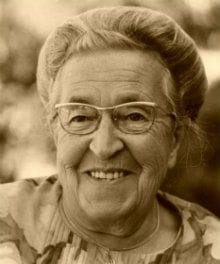
Image result for corrie ten boom
Corrie ten Boom

Jim Elliot

Amy Carmichael
Image result for david wilkerson
David Wilkerson (founder of Teen Challenge, and author of The Cross and the Switchblade)
Image result for fanny crosby
Fanny Crosby, blind hymn writer
     One other missionary included in our reports (as well as our book list this past year) was Brother Andrew, who smuggled Bibles into Soviet bloc countries during the Cold War.  His book, God's Smuggler is one of my favorite books.  It reads like an exciting spy novel, but is a true story of God at work.  Click here to check it out.  It was a delight to share it with the students.  I had assigned two boys to do the oral report on Brother Andrew.  
God's Smuggler by [Andrew, Brother]

Image result for Brother Andrew
Brother Andrew, the Bible Smuggler
     As you may have guessed, Ian was on the team doing the report on Brother Andrew.  The students had weeks to work on it.  I gave them time in class every day to work with their partner.  I told them to come to me if they needed help.  I let them use the books we had read about these people, and also looked up information on the Internet for them.  Several students asked me questions and requested help.  I was glad to help them.  Ian only asked me to print a few pictures of Brother Andrew for his display board, but never seemed to need information.  It was his job to ask.
The team doing their report on David Wilkerson.  They received an A+
     It wasn't planned this way, but Ian and his partner went last.  Up until this point, the teams had all gotten somewhere in the A range for grades on the reports.  I expected similar success for Ian's team, especially because his partner strives for good grades.  

     In order for what happened next to make sense, I'll give a really short explanation about Brother Andrew.  If you're unfamiliar, Brother Andrew used that name as a protection of his privacy and the privacy of believers in the Soviet Union when he was smuggling Bibles into that region.  He was from Holland, and impacted much of Europe with his ministry.  As a younger man, he had fought the Dutch war in Indonesia.  An injury during the war was what ultimately brought him to Christ, and into the ministry.  I highly recommend the book.  Anyway...

     The two boys walked up to the front of the classroom.  Ian (the private person, you'll remember) began by exclaiming loudly, gesturing dramatically with his arms, "Brother Andrew fought in anesthesia, and I have no idea what the heck that is, because no one bothers to tell me anything!"  

     I cringed!  He meant Indonesia, not anesthesia.  It was his business to know what it meant!  He'd had weeks to work on this report, not to mention that we had all read the book.  

     "Yeah," his partner picked up.  "That part was in chapter two of the book."

     "No!"  Ian corrected him.  "It was chapter three!  I remember now!"  

     "I'm sure it was two!"

     They had a mild argument before deciding that this part of the story had covered chapters two and three.  

     After explaining virtually nothing about Brother Andrew's short-lived military career, Ian backed up.  "When Brother Andrew was a kid, he played a mean trick on some neighbors and put glass on their chimney and ruined the cookies!  Anything but cookies!  Come on!"

     The back story to this was that a young Brother Andrew had put a glass pane over a neighbor's chimney, backing it up, and thereby filling the house with smoke.  The neighbors caught on to what he had done, but instead of being angry, they offered him a cookie that they had been cooking (which were not ruined, by the way).  These people ended up supporting his ministry later on.  Ian's version explained nothing!  

     He carried on another two or three minutes about how horrible it was to ruin cookies.  His arm went dramatically across his forehead.  Alas, poor Ian, I knew him well!  Pretty impressive for a self-proclaimed private person.

     His partner went on to explain a few things about the Bible smuggling.  His facts were a bit off as well, and mostly preceded by the words, "I believe," indicating he was not sure of his facts.  

     Then Ian took back over.  "This report was really hard, because the book was no help at all!  Thanks a lot book!  And the Internet was even worse.  Thanks a lot, Internet!"  

     And now you know all about Brother Andrew!  You also know that if you ever felt you bombed an oral report, you were still better than Ian's report!  To quote Mark Twain, Let us draw the curtain of charity over the rest of the scene.