Friday, June 14, 2019

The Battle

     You wake up at midnight in a cold sweat, narrowly dodging the nightmares.  You are misunderstood everywhere you go.  Every aspect of your life is filled with pressure.  No one gives you a break.  Those who love you the most make comments that they mean nothing by, but the enemy of your soul turns them into fiery darts and plunges them into your heart, infecting your spirit with pain and wrath.  Those who don't love you intentionally push your buttons.  You are at your lowest, and you can't escape the feeling that you are failing some sort of test you never asked to take.  This is spiritual warfare.  This was my week.

     This past week, I have been teaching at Vacation Bible School at my church.  In so many ways, it was a wonderful, wonderful week.  Below, I am pictured with my helpers and some of our students.  I'm standing in the middle.  I had the privilege of teaching first and second graders.
Image may contain: 9 people, including Janelle Ann Stoermer, people smiling, people sitting and shoes
     As I implied above, I experienced a lot of spiritual warfare.  A lot of people talk about spiritual warfare...but what is it, and why do we have to deal with it?  

     As humans, we can't see into the spiritual world, unless God gives us a glimpse into it.  I'm kind of glad.  I have the feeling it would be terrifying!  But maybe it would be encouraging.  I love the story in Second Kings 6, where Elisha and his servant are surrounded by enemies.  His servant is afraid, but Elisha tells him, "Don't be afraid.  Those who are with us are more than those who are with them."  Humanly speaking, this wasn't true.  Elisha then prays for God to open his servant's eyes.  Verse 17 tells us that God did open the servant's eyes, and he saw that the hills were covered with horses and chariots of fire.  This bolstered their courage.  Although we don't often get that kind of a glimpse into the supernatural, this story serves as a reminder that, as Christians, we have that guarantee that there are more on our side than with the enemy.

     Now, before I go on, who is our enemy?  Are people our enemies?  According to the Bible, no.  Ephesians 6:12 says, "For our struggle is not against flesh and blood, but against the rulers, against the authorities, against the powers of this dark world and against the spiritual forces of evil in the heavenly realms."  People might seem like the enemy.  But they aren't our real enemy.  There is a spiritual battle going on around us all the time.  Satan has his demons working for him.  This verse leads many to conclude that there is a spiritual hierarchy.  But Satan is the center of it.  First Peter 5:8 refers to the devil as our adversary, and says that he walks around as a roaring lion, seeking to devour people.  Satan is our enemy.  He may appear to be using people, but we have to remember that the people aren't the real enemy.  It's easy to lose sight of that, because we can't see Satan, but we can see people.  

     In over two decades of ministry and mission work, I have only dealt with one person who was demon possessed (demon-indwelt might be a more correct phrase).  It was very similar to what we see in the Bible in those situations.  Most of the time, though, the warfare isn't that obvious.  It's trying to go about our business in serving the Lord, but facing difficulties that have no real explanation.  More often than not, it involves interpersonal relationships.  Satan loves to pit Christians against each other to ruin our effectiveness for the Lord.  He wants to steal, kill and destroy (John 10:10).  What does he come to steal?  Our joy.  What does he come to kill?  Our effectiveness for Christ.  What does he come to destroy?  Whatever he can in our lives.  

     To illustrate this, I'm going to tell you what my week involved, in a nutshell.  As I said, I have been involved in teaching the first-and-second-graders at our church's Vacation Bible School.  Six children in our class received Christ as Savior.  Several in the other classes did too (I don't have a precise number right now).  Did Satan like this?  Not at all!  He was losing people from his kingdom of darkness!  God already won, and Satan knows this, but he won't go down without a fight.  So he attacks those in God's service.  Makes sense.  Here are just a few things that followed me through this week.  Feelings of despair and discouragement.  Misunderstandings in all areas of my life (including a very manipulative coworker at my job).  I placed my hand on a window to open it (not even applying pressure) and the whole window exploded outwardly, splintering into a thousand pieces and cutting me in the process.  A very entitled man thought I was cutting in front of him in line when I went to donate plasma (something I do twice weekly) and he shoved me and roughed me up, yelling and humiliating me (not to mention scaring me to death).  Even some very loving people in my life said some things that Satan used to hit me at my deepest level of insecurity (which wasn't their intention at all).  I had nightmares throughout the week, so even sleep wasn't an escape. I felt like I couldn't get a break.  Wherever I went, this madness followed me.  These are the types of things that can be attributed to spiritual warfare.  Just one of these things might not necessarily be it, but all together in this level of intensity, just happening to fall on the week of Bible School...well, I don't believe in coincidences.  In the middle of all this, kids were getting saved.  I'm encouraged by Romans 8:18: "For I reckon that the sufferings of this present time are not worthy to be compared to the glory which shall be revealed in us."  Being shoved around, breaking windows by barely touching them, being hit at my weakest points, having stress and pressure...none of that is worth comparing to the kids who got saved and will now be able to live in Heaven for all eternity.  What I went through this week is literally less than NOTHING in comparison!
     As believers, what are we supposed to do in the midst of these battles?  First of all, we need to remember that our enemy is Satan, not people. I already said this, but it is so important it bears repeating.  Secondly, we need to realize that Satan is defeated.  Jesus defeated Satan and all his demons.  Colossians 2:15 says: "When He had disarmed the rulers and authorities, He made a public display of them, having triumphed over them through Him" That is the New American Standard versions.  The NIV says that Jesus, "made a public spectacle" of the powers of evil.  I like that description.  The third thing to remember is that, in Christ, we have the victory!  First Corinthians 15:57 says, "But thanks be to God who gives us the victory through our Lord Jesus Christ."  Romans 8:31 says, "If God is for us, who can be against us?"  These are things we need to remember when faced with spiritual battles.  

     Once we remember and consider these truths, the next step is found in James 4:7-8.  "Submit yourselves to God.  Resist the devil and he will flee from you.  Draw near to God and He will draw near to you..."  We need to be in prayer, reading our Bibles, in constant fellowship with the Lord.  If we're doing this, we can resist Satan.  Resisting Satan is simply not giving in.  Choosing to see the truth of the situation, not through the lens of our feelings.  Not sinning in a situation.  Choosing to do it God's way, even when you're at the end of what you can handle.  This is only possible as we draw near to God.  

     God has given us tools.  Ephesians 6:10-17 is a favorite passage of mine.  We are told to be strong in the Lord and in His mighty power, and to put on the full armor of God in order to resist the devil's schemes.  Yes, all Satan has is schemes.  God has the real power.  But those schemes can work on us if we don't put on that armor that God makes available to us.  The pieces are the belt of truth, the breastplate of righteousness, the the shoes of the gospel of peace, the shield of faith, the helmet of salvation, and the sword of the Spirit.  These each represent different ways God protects us from Satan.  The belt of truth is the truth, that we must remember in spiritual battles.  It is not a coincidence that this belt holds the breastplate of righteousness in place.  The breastplate represents Christ's righteousness, which is ours at salvation.  This is the very thing that keeps us from being defeated by Satan, since our Master defeated him.  The shoes of the gospel of peace are a reminder to be ready with the gospel in the midst of battle.  Don't let the warfare distract us from sharing the gospel.  That's the whole point.  The shield of faith protects us from those fiery darts Satan throws at us (often through other people, many of whom have no idea their words are being used that way).  The helmet of salvation protects us from Satan's lies.  He likes to make us doubt our salvation, or doubt God in some other way.  And the sword of the spirit is the Bible.  The word of God.  Note that the other weapons in the armor are all for our protection, but the sword is our only offensive weapon.  God's word is it.  It is the way we can win.  Memorizing and meditating on scripture is so important.  

     It is also important to know that the battles don't last forever.  Luke 4 tells an account of Satan tempting Jesus before His earthly ministry began.  At the end of it, Luke 4:13 tells us, "When the devil finished all his tempting, he left until an opportune time."  In the book of Job, Satan was only allowed to go so far.  God had the ultimate control.  And in a deeper sense, our battles will one day end for all time.  Revelation 20:10 says that Satan will be thrown into the lake of fire forever.  If you are a Christian, you are the victor, because Jesus is our Victor!  To quote a favorite hymn, because He lives, we can face tomorrow!  And to quote another, Onward Christian soldiers (that's us!).  Moving forward, we can focus on spreading the word, fighting the good fight, keeping the faith, and finishing the race.  One day, we will wear crowns of glory, preserved for us from the foundation of the world.


Tuesday, June 11, 2019

Eternally Secure???

     There is something that has always confused me.  It's when someone shares (usually in a Bible study type setting) about a sick relative who needs prayer.  I ask, "Is this person a Christian?"  The reason I ask is because that makes all the difference in the world.  If this person isn't saved, we need to be praying for their salvation.  Anyway, though, I'll ask about this person's salvation, and I'll often get an answer that really confuses me. "They used to be."  Have you ever gotten that?  What is actually meant by that?  Does that mean the person once professed to be a Christian and now denies Christ?  Did this person used to be active in church and suddenly stopped attending?  Is the person now living an immoral life in some way?  The deeper question is, can a person actually stop being a Christian?  If so, what lines are crossed in order for that to happen?
     Like my last post, The Chosen Ones, this post is about a subject that has been pretty heavily debated.  I do not claim to be smarter than the great theologians who originated these debates, although I do have the same resources.

     First, let's look at what it actually means to be a Christian.  If being a Christian is simply going to church, and a person stops going, then it makes sense to say they "used to be" a Christian.  If being a Christian is simply saying you are one, and then you decided not to say it anymore, it would also make sense to say you "used to be".  Or if being a Christian is living a moral life, and then a person left morality and engaged in what most would consider gross sins, then again, it would make sense to say they "used to be" a Christian.  But the truth is, Christianity is none of these things.  A Christian is a person who has been brought to a right relationship with God through faith in Jesus Christ.  It isn't just verbally saying you are a Christian.  It is coming to a point of conviction over sin (Romans 3:10, 23).  It is recognizing that Jesus Christ offers the only solution for your sin problem (Second Corinthians 5:21).  It is believing that His substitutionary death and resurrection paid the penalty for your sinfulness (First Peter 3:18).  It is repenting of your sins and placing your faith in the finished work of Christ (Acts 16:31).  It is instantaneous.  It has to be.  That's why the thief on the cross could be saved (Luke 23:40-43).  The moment this happens in your heart, you are saved.  You are a Christian.  Second Corinthians 5:17 says, "Therefore if anyone is in Christ, he is a new creation.  The old has gone, the new has come."  At that moment, you are forgiven of all sin, past, present and future (Hebrews 10:14).  You are sealed with the Holy Spirit (Ephesians 1:13).  Your sins are gone (First John 1:7).  You have changed ownership going from Satan's kingdom of darkness to God's kingdom of Light (Colossians 1:13).  All that and more happens the moment you are saved.

     If all these changes take place instantaneously, is it that simple to just stop being a Christian?  Is it even possible?

     There are several phrases used.  Some call the position of being unable to lose your salvation, "Once Saved Always Saved," or "Eternal Security."  The more theological term is "Perseverance of the saints."  Is it true?  Are we eternally secure?  Does everyone who comes to the Lord "persevere?"

     I have met several people who don't like this position of eternal security.  Often, their reasoning is that if we teach people that they are eternally secure in Christ, they'll think it's okay to sin.  Well, maybe they will, maybe they won't, but possible abuse of a doctrine is no reason to withhold truth from people.  If someone is looking for an excuse to sin, they probably aren't a Christian.  Remember everything we just read that happens at the moment of faith in Christ.  Someone who is now indwelt by the Holy Spirit and been forgiven of their sins isn't likely to be looking for excuses to sin.  The Holy Spirit does a work in us, taking away the desire for sin, and giving us the desire for righteousness.  We aren't going to be perfect, but as we grow in the Lord, He will continue working in us.  If a person thinks they have a biblical basis to teach a person that they are NOT eternally secure (we'll examine that a little later), they can go ahead, but I have seldom seen people operating from a biblical basis on this position.  Usually, those who believe it is possible to lose their salvation tell me that they take this position because they worry that people will think they are free to sin.  This is not a way to choose our doctrinal positions.  We should choose to believe the truth.

     Another thing I notice from people who believe it is possible to lose their salvation is that they often believe a certain sin is what does it.  I find logical issue with this.  If we aren't saved by good deeds, how can we lose our salvation by bad deeds?  Theoretically, I can see how a person would say we could lose it if we ceased to believe in Christ.  This is a more logical position, because we are saved when we place our faith in the Lord, so it would make sense to say someone isn't saved anymore when he ceases to do so.  I seldom hear people take this more logical approach, though.  It is usually all about a certain sin they believe is crossing an invisible line.  One pastor even told me once that murder is the sin that makes you lose your salvation.  This doesn't gel with the Bible.  Moses killed an Egyptian (Exodus 2:11-12), but was used mightily of God, and is named as a hero of faith in Hebrews 11.  I think we humans get hung up on sins...our own and other people's.  We lose sight of the very grace that saved us to begin with--grace that didn't originate with us.  And that is why I don't believe it is possible to lose our salvation.

     Let's look at what the Bible says about our salvation.  A verse I used in the last post is also applicable here.  Ephesians 1:4 says that God chose us in Him before the foundation of the world.  To read more about what that means, I recommend reading my last post, about election.  For the moment, I'll say this about it.  If God chose us, and it is in God's hands, does it make sense that we could lose it?  Philippians 1:6 says, "Being confident of this very thing, that he which hath begun a good work in you will perform it until the day of Christ Jesus."  God continues what He began when He saved us.  Hebrews 13:5b says, "...for He [Jesus] has said, 'I will never leave you nor forsake you.'"  Second Timothy 2:13 says, "If we are faithless, he remains faithful--for He cannot deny Himself."  That makes it sound like our salvation is dependent on Him, not on us.  He's the one who saves us and keeps us, regardless of what we do.  Hebrews 7:25 tells us that the Lord is able to "save completely those who come to God through Him."  If we are saved "completely" does that leave room for us to lose it?  I don't think so.  All these verses point to God being the One who saves and keeps us.  This is very closely related to the concept of election.  As I stated in my last post, there are two positions regarding the doctrine of election.  Some Christians believe that God chose to save some fallen sinners, and He chose those people by His Sovereign choice.  Others believe that God chose us based on His foreknowledge of who would say yes to Him and receive Him.  In either event, the evidence that someone is one of the elect is that they do make a decisions for Christ.  I covered that topic more in-depth previously.  Either way, God having chosen us puts the responsibility and security on God, not us.  We humans lose everything!  I used to lose my library card constantly!  In fact, I once lost my car in the parking lot at Disneyland, and it took three hours to find it!  God never loses anything, including His people.  John 10:27-28 is a precious passage that paints a beautiful picture of our relationship with God as believers.  "My sheep hear my voice, and I know them, and they follow Me; and I give unto them eternal life; and they shall never perish, neither shall any man pluck them out of My hand."  Sounds pretty secure to me.

     The Bible is our ultimate source of truth.  I believe I have built my case scripturally.  I'm now going to use some logic with scripture.  John 3:16 promises that anyone who believes in Him "should not perish, but have everlasting life."  If we are given "everlasting life" when we believe on the Lord, does it make sense that we could lose it?  If we could, was it everlasting?  No, it was temporary!  Romans 6:23 says that "the gift of God is eternal life."  Then a few chapters later, in Romans 11:29, it says, "the gift and the calling of God are irrevocable."  That would include the gift of eternal life, the biggest gift of all!

     Are there any believers in the Bible who lost their salvation?  Peter did something that many churches today would deem worthy of losing his salvation.  He denied Jesus.  But he was still saved.  He was like us.  Maybe we're not denying Jesus verbally, but we often do things that aren't in keeping with our faith.  But we don't lose our salvation for it.  Peter was weak, but Jesus helped him become strong again, and he eventually became a great apostle and martyr!  What about Judas?  He was a disciple of Jesus.  Didn't he lose his salvation?  My research would lead me to believe that he was never saved to begin with.  His priorities were shown to be wrong in the first place (John 12:4-6).  There isn't a lot of evidence of his faith in the Lord.  Jesus even gave Judas a chance to avoid sinning by allowing him to partake in the last supper (Matthew 26), but he went ahead with his plans to betray Jesus.
Image result for the last supper
     I once had someone make the case that we can lose our salvation because Lucifer (Satan) did.  He was in Heaven with God, and his sin got him alienated from God.  That is an interesting observation, and I had never thought of it before.  My only problem with it is that Lucifer was not a redeemed human being.  He was an angel who had not previously sinned.  What's more, he didn't repent of his sin.  He didn't have all the promises that are available to believers.  Others have used Hebrews 6:4-6.  This text is often used to defend the belief that we can fall from grace and lose our salvation.  It says, "It is impossible for those who have once been enlightened, who have tasted the heavenly gift, who have shared in the Holy Spirit, who have tested the goodness of the word of God and the powers of the coming age and who have fallen away, to be brought back to repentance.  To their loss, they are crucifying the Son of God all over again and subjecting Him to public disgrace."  Whew!  That's a mouthful.  On the surface, it would appear to be talking about people who have been saved, experiencing the Lord in their lives, and then turning back.  If, indeed, that is who it is talking about, then that passage would be teaching that it is impossible for them to be saved again at that point.  However, we must always interpret scripture in light of scripture.  Those who interpret this passage to mean losing our salvation are isolating it, not comparing it to the entirety of scripture.  In light of all the passages about our security as believers and God keeping us, I would conclude this passage is talking about a very specific type of hardened person.  Someone who has come very close to God's people, seen God doing amazing things, maybe even seen God work in his life, but then hardened his heart without receiving Christ for himself.  This is much like Pharaoh in the book of Exodus.  He had seen God unleash His power on Egypt through the ten plagues.  He had every opportunity to repent  and embrace the true God for himself.  After the first five plagues, the Bible tells us that Pharaoh hardened his heart.  It was pharaoh's choice.  He saw all God was doing, and was free to choose the true God for himself, but he didn't.  After the sixth plague, in Exodus nine, we see something different.  Exodus 9:12 says, "But the Lord hardened Pharaoh's heart..."  God did it, but only after Pharaoh had made his choice.  I believe that's what Hebrews 6 is talking about.  Resisting the Holy Spirit is costly.  It cost Pharaoh his life and eternity.  He never embraced the truth.  In light of all that God has done to save us, and in light of the lack of conclusive scriptural evidence to support the contrary, I would say that once we are saved, we are eternally secure.  God keeps us.

     I know that what I'm about to close with isn't as authoritative as the Bible, but these are some quotes about our security as Christians from believers I greatly respect.

     "God buries our sins in the depths of the sea and then puts up a sign that reads 'No fishing.'" 
--Corrie ten Boom

     "If anybody said that he had eternal life and lost it, he would be flatly contradicting himself.  It could not be eternal, or else he would still have it.  If it is eternal, it is eternal, and there is no end to it; and thus there is an end of further argument about it." --Charles Haddon Spurgeon

     "Sometimes, people will make a profession of faith, and then seemingly fall away.  We ask ourselves, 'Did this person lose their salvation?'  My question, in turn, would be, 'Were they really saved to begin with?'  If somebody commits their life to Christ--and then walks away and never comes back, I suggest to you that they were never a Christian at all.  If, on the other hand, someone commits their life to the Lord, walks away, and then comes back to Christ, I suggest to you that they were simply a prodigal." --Greg Laurie

     "Once a king or queen of Narnia, always a king or queen of Narnia." --CS Lewis (a thinly-veiled reference to eternal security in his allegorical novel The Lion, the Witch and the Wardrobe)


Thursday, June 6, 2019

The Chosen Ones

     I was mad!  Why?  I don't rightly recall.  I was fifteen.  I probably got mad at my sister...or received a poor grade on a math assignment...or something else that might offend a fifteen-year-old.  At any rate, I was in a foul mood.  Who knew I was about to do something I would henceforth deem as unforgivable?

     My mom had sent me outside to do some chore.  As I went out the door and down the walkway in front of the house, I was startled by a cat dashing out of the hedges, almost tripping me in the process.  Already in a horrible mood, I snapped, "Some idiot let their cat out!"

     Immediately, I heard the familiar voice of our next door neighbor (a bitter old woman) yelling "Maggie!"  The cat went running to its house.  The neighbor opened her door long enough for Maggie to get in, and then slammed it shut again.

     I was struck with immediate regret about my angry comment.  Our neighbor had so many pets I couldn't keep track of them all.  I didn't know it was her cat.  I hadn't said what I did in any passive-aggressive way.  Plus, she seldom came outside, and when she did, she wasn't very sociable.  Sometimes she didn't answer when spoken to.  It depended on her mood.  My parents had been trying to witness to her for many years.  She knew we were Christians (as did our whole neighborhood).  Sometimes, I felt overly pressured to make my walk match my talk...because otherwise, people would reject Jesus because of me.  If they burned in hell, it was my fault (so I thought back then.)  I stood there in my front yard that day, the shame consuming me.  I had undone all the evangelism efforts of many years by my careless comment.  Why had I said that?  I needed to make it right.

     I went and knocked on her front door, but she refused to answer.  I wasn't offended by this.  I thought it was her right to hate me so much that she wouldn't answer.  I had said that rude comment (even though it wasn't directed at her or in any way intentional).

     This neighbor passed away a short time later.  I felt sick inside.  I had sinned against her, and never been able to make it right.  If she was burning in hell, it was all my fault.  I didn't feel like I could ever forgive myself.
Image result for regret images
     I struggled in my life for many years, until I was in my early 20's at Bible college.  I was introduced to a doctrine I had never heard of.  A doctrine taught all through scripture.  I was very well-versed in scripture.  I had read through the Bible in its entirety, more than once.  I read my Bible daily.  Being a good Baptist, I knew all about the Rapture and the tribulation, and could defend the position of "once saved always saved" to my dying breath (still can😉).  In spite of all of that, I don't know why I hadn't come across this particular doctrine.
Image result for Bible
     Before I actually state this doctrine, I'm going to tell a story I was told at Bible college, and have heard many times since.  I tried to find out where it originated, but was unable.  Here's the story.  The gospel was likened to a room, and people were being invited in.  A sign over the door said, "Whosoever will come."  The invitation was open to all.  However, once people got inside, they looked back at the door through which they had come, and saw a different sign on this side of the door.  This sign said, "Chosen from the Foundation of the World."

     This was my introduction to the doctrine of election.  That is, God choosing believers.  There is debate about how this works exactly.  Some Christians would say God unconditionally chose to save some fallen humans, by His Sovereign choice.  He chose these individuals, and the proof is that they do become Christians.  Another position on this is that God chose to save us based on who He knew would respond favorably to the gospel.  For never having heard of any of this prior to Bible college, I was caught up in the discussions once I was introduced to it.  This was the most debated subject at Bible college.  Regardless of which side a Christian finds himself (whether he believes God chose us based on His Sovereignty, or whether one believes God chose us based on knowing we would say yes to Him), no one can biblically deny the doctrine of election--God's choosing.  And regardless of how it worked, it changed EVERYTHING for me...and my guilt complex.  It meant that I hadn't sent our neighbor to hell.  God was the powerful one who had it sorted out.  That wasn't on me.  I had sinned in my grumpiness that day when I snapped about the cat...but that was my sin in it.  I had confessed it (actually, I had confessed it to the Lord dozens of time in hopes of finding relief from the guilt).  It was over as far as I was concerned.

     Let's take a second to look at what the Bible teaches about this concept.  A verse that has become a favorite of mine is Ephesians 1:4, "Just as He chose us in Him before the foundation of the world, that we would be holy and blameless before him in love."  We are chosen.  Before God made the stars and heavens, he knew you and chose you!  Think of that.  I wish someone had shared that verse with me in junior high, when it seemed like no one chose me for anything!  Another passage that speaks of this teaching is Acts 2:47, "...and the Lord was adding to their numbers daily those who were being saved."   There was a revival going on after the Holy Spirit was given in Acts 2.  But God was the one doing the adding of believers to the body.  The King James version even goes a little further.  It says, "...the Lord added to the church daily such as should be saved."  From my research, though, I lean toward the New American Standard's translation on that one (the first one I quoted).  Either way, God is the one making it happen.  Jesus Himself said in John 6:44, "No one can come to me unless the Father who sent me draws them..."  Any person's salvation takes a Sovereign work of God.  Likewise, in John 15:16, Jesus said, "You have not chosen Me, but I have chosen you..."  Ephesians 2:8 says, "For by grace you have been saved, through faith, and this is not your own doing.  It is the gift of God."  I used to think the last part, the gift of God, was referring back to salvation itself (which would be a true statement), but it is actually referring to the faith to believe, mentioned in the previous sentence.  We don't conjure it up in ourselves.  Faith to receive the gospel is a gift.  As I said, God has it sorted out.  No human has power over someone else's salvation or eternity.  A missionary once told me, "If you don't take the credit for people you lead to Christ, you don't have to take the blame for those who reject Him."  And he's right.  We can't take credit or blame.  When I share the gospel with another person, I am being obedient, and a tool God is using to bring another person to Himself...but it isn't me.  I can't save them.  Whether they receive the message or not, I'm obedient either way.  Or disobedient if I don't share when God calls me to.
Image result for chosen from the foundation of the world
     On the subject of the Sovereignty of God, I was given this scenario.  A man is on his way to the airport to catch a flight.  On the way, his car gets a flat tire, and he has to change it.  This takes a good twenty minutes, and by the time he's on the road again, he's missed his flight and has to get a later flight.  He then finds out the flight he was supposed to be on crashed and there were no survivors.  That flat tire preventing his being on that flight was God's Sovereignty.  However, let's flip the scenario.  The man gets a flat tire on his way to the airport, and misses his flight, having to get on a later flight.  The original flight arrives safely, but the later flight, which he ended up on, crashes, and there are no survivors.  That is also God's Sovereignty.  We tend to only think of God as being Sovereign over things that make us comfortable.  But if He's God, He is Sovereign over all.  We don't choose to believe things simply because they make us happy.  We choose to believe the truth.  We have to believe that God is good in His Sovereignty, and also that we can't fully comprehend it.  One day, we will see the face of God, and it will make sense.  First Corinthians 13:12 says, "...now I know in part; but then shall I know even as also I am known."  There is a lot more about election and the Sovereignty of God in scripture, but I'm going to take a quick look at the flip side, man's responsibility.
     Second Peter 3:9 says that the Lord is "not willing that any should perish, but that all should come to repentance."  Throughout the New Testament, we are constantly admonished to urgently share the gospel with all.  John 3:16, an extremely well-known verse, tells us that God so loved the world.  All through the gospels and epistles, an invitation is given for all to believe on Him.  There are never any exclusions.  In fact, after Gentiles start believing in the book of Acts, Peter marvels that "God is no respecter of persons." (Acts 10:34).  People have a responsibility to respond to the gospel message, and there is no excuse for rejecting it.  The only reason anybody will be in hell is because they rejected Jesus Christ.  As a human being, my responsibility in my salvation was to believe on the Lord Jesus Christ (Acts 16:31).  My responsibility in daily Christian living is to be obedient in my witnessing, but humble in knowing only God can save someone.  When I fail, I confess it and move on.

     I cannot reconcile these things completely--God's Sovereignty and man's responsibility.  But I can't explain the Trinity either.  Some things about God and His workings are beyond our human understanding.  I have a good friend named Nancy.  She is just about my favorite person to discuss Theology with.  She would have done more justice to this subject than I have here.  In any event, we as humans are not capable of sending someone else to hell, nor are we capable of getting them into Heaven.  This doctrine of election...also called the doctrine of grace...has changed my life and relationship with the Lord for the better.  I no longer beat myself up.  I no longer think I'm so powerful.  I no longer think I have anything to do with my salvation, or anyone else's.  I'll close with a verse I love from Philippians 2:13, "for it is God who works in you to will and to act in order to fulfill His good purpose."

Saturday, June 1, 2019

Where there's a Will...

     You've been accepted into three different colleges.  Which one should you go to?  You have been presented with two ministry opportunities this summer.  Which one are you supposed to get involved in?  You have several job offers.  Which is the right one for you?  You've just moved to a new town and have visited several great churches.  Where should you plug in?  Or how about this problem that everyone on TV faces but no one in real life ever does: You have three different suitors who all adore you and want to marry you...and they're all irresistible?  How do you determine which one to marry?  More realistically, what about that one person you're dating and considering marrying?  How do you know if it's right?  Do you see where I'm going with this?  We have a lot of important choices to make in life, some I didn't even mention above.  What would God have us do in these situations?  It can be hard to know.

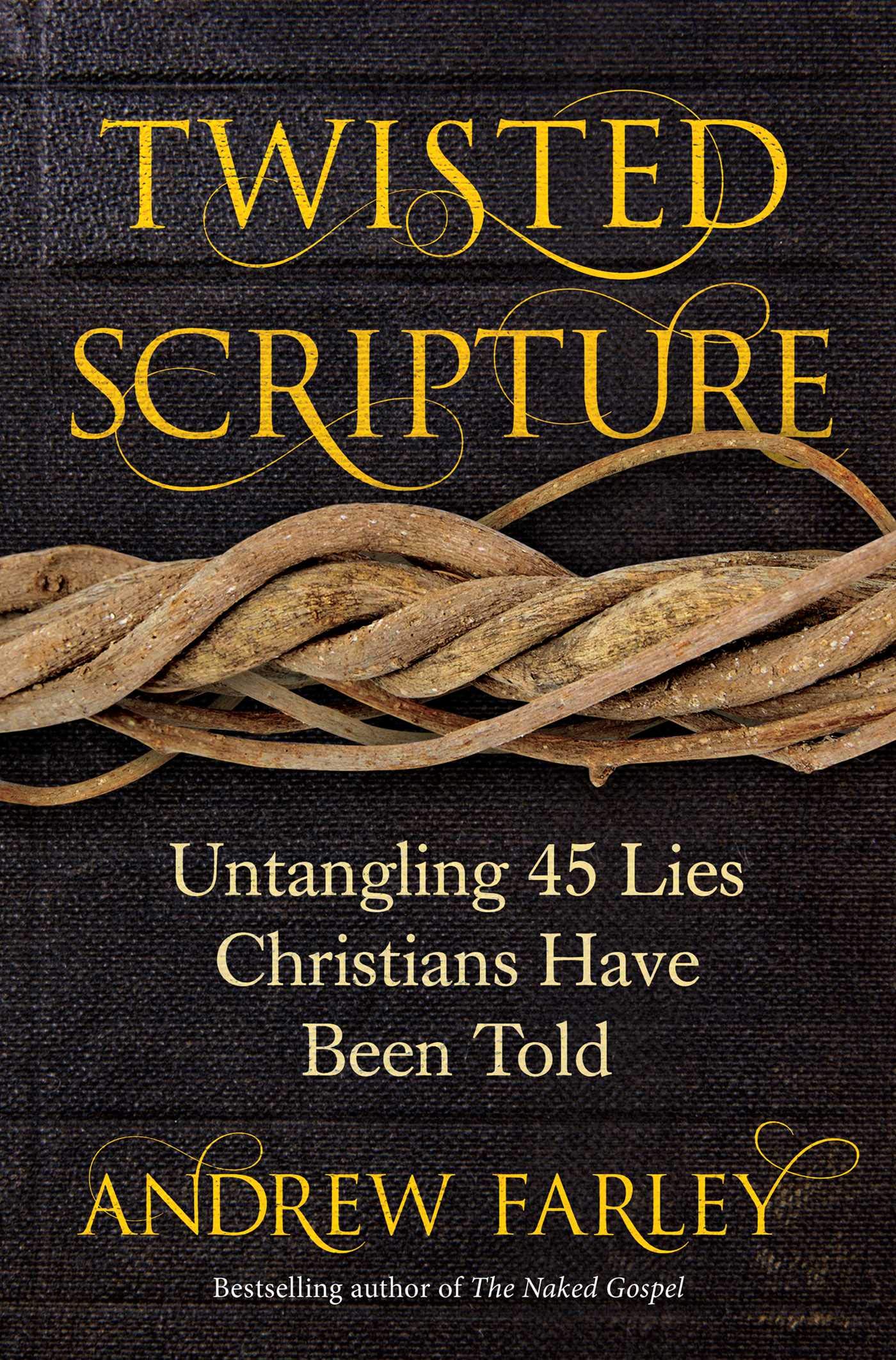
     In my last post, I recommended the book Twisted Scripture, a recently-published book by Andrew Farley.  I still do recommend it, although I told you there was one chapter I disagreed with, and that I would go into it in this post.  In one of the chapters in the book, Farley talks about God's will.  The myth he is refuting is that God's will is really hard to figure out, and that it's like hitting a target, and if we don't get a bulls-eye, then we miss out on God's perfect will for us and end up in His "permissive" will, getting God's second-best...or worse.  I agree with Farley in the sense that this scenario isn't how it works.  However, I also disagree with the other extreme, which Farley goes to.  In essence, he says that we are free to do whatever we want, because we are saved and sanctified, and are incapable of having wrong desires anymore.  Whatever decisions we make, they're God's will and God is in them, because we are believers and God is with us.  He says it is "advisable" to pray for guidance in important decisions, but ultimately, we are blessed whatever decisions we make.  I can't completely agree with this.  I do agree that we don't need to be tormented or in agony about God's will, but it is much more than "advisable" to pray for wisdom when making decisions.  It is vital.  Christians are automatically justified (made right with God) at salvation, but sanctification (becoming more like Christ) takes a lifetime, so we are still capable of wrong decisions.  Besides, not all choices are between good and bad.  Some are between good and better.  God's best for me might not be God's best for you.  We need God's guidance badly, because he does have an ultimate plan that we are a part of.  More importantly, God wants us to interact with Him, because He loves us and wants a relationship with us.

     One of the best books I have read in my Christian life is on the very subject of knowing and doing the will of God.  It is entitled Experiencing God, by Henry Blackaby.  You can order it here.  God has used this book tremendously in my life.  I recommend it highly.

Image result for experiencing god

     I've heard a lot of people's opinions about the will of God.  Some say God is obviously in control, so we can just do what we want, and He'll override anything that isn't His will.  While it is true that God is in control and absolutely can override anything, we shouldn't bet on that.  On a similar note, others have said that God doesn't really care about what we do, and that we can do what we please, so long as it isn't technically defined in the Bible as sin.  You would think this way of living would make a person happy, because it is basically permission to do what you want...but for me, that is a very depressing way to live.  I see my own neediness before God, in incapability to choose rightly without His help.  It sounds like God doesn't care about my life at all, and I'm kind of on my own, fending for myself.  This isn't how God was in the Bible.  He was very involved with His people.

     I know when I was single, waiting for my future husband (who ended up being Walter) I really struggled with this.  I had a very good friend who had felt called to the mission field.  She had broken up with a boyfriend because he didn't have that calling.  This guy really wanted to marry her.  After the breakup, he transferred to her college, and basically wore her down until she got back together with him.  When she made that choice to give up the mission field and be with this guy, she changed drastically.  She changed her theology.  When I asked her, "What about your calling to missions?" she replied, "God doesn't care about callings."  Whoa!  When I asked her, "Do you believe this man is the one God has for you?" she said, "You can marry anyone you want, as long as they're a Christian.  God doesn't care."   As a single girl, really waiting on the Lord, and having recently been through a painful breakup, my friend's words bothered me.  If God had no part in it, there was no hope for me.  I didn't have a boyfriend at the time.  Was it then my responsibility to make it happen?  I just couldn't go along with that.  After the painful relationship I had been in, I was stripped of all confidence in this area, and knew I needed God's guidance.  And besides, God isn't so "hands off" like that.  It just didn't seem like the God I had come to know.


     Whether or not my friend was actually called to the mission field and gave it up, or whether she was supposed to marry this guy (which she did, and once she did, being with him became His will--I'll touch on that later.), I disagree with her reasoning and the change in her beliefs.  God cares very much about our calling.   I believe God has a very specific plan for all of His children...and for the world.  He invites us to be a part of that plan.  That means every detail of our lives is orchestrated by God, including (especially) the big stuff like who we marry, or even if we marry.
Image may contain: Janelle Ann Stoermer and Walter Harrison Stoermer, people smiling, people standing, wedding and indoor
Janelle and Walter's wedding day
     Let's look at how God worked throughout the Bible.  God communicated directly with His people, both in the Old and New Testament.  He called Noah to build an ark (Genesis 6:13ff).  He called Abram out of his own country and promised to make him a great nation (Genesis 12:1-3).  He called Moses to lead His people out of Egypt (Exodus 3).  He called Elijah in several specific aspects of his life and ministry as a prophet in Israel (First Kings 17, 18, 19:9-21).  He called Jonah to preach to Nineveh (Jonah 1:1).  He called Peter to preach to Cornelius (Acts 10).  He called Saul of Tarsus to be the Apostle Paul (Acts 9).  This list is far from complete, but it is a start.  It establishes how God spoke to believers in both the Old and New Testaments.  God hasn't changed.  Like the believers in the book of Acts, we are under grace now, as opposed to the law.  Our relationship with God is different than that of Old Testament saints.  The way we approach God is different.  But He still speaks today.

     In all of the instances where God spoke to people that I listed above, the people involved had a choice to make, either listen and obey, or refuse.  The most famous story of disobedience is Jonah.  He ran away from God's calling, and paid dearly for it (Jonah 1 and 2).  Less considered instances or refusal or disobedience (or at least acting outside of God's leading) include Abram going down to Egypt and lying (Genesis 12:10-20), Moses arguing with God (Exodus 4:13) and disobeying in front of the people (Numbers 20:11), and Elijah running in fear from Jezebel and wanting to die (First Kings 19:1-8). In all cases, disobedience cost these people something, but it did not hinder God's ultimate plans.  Psalm 33:11 says, "But the counsel of the Lord stands forever..."  Isaiah 46:10 says, "I make known the end from the beginning, from ancient times what is still to come. I say, 'My purpose will stand, and I will do all that I please.'"

     From all of this, I consider the big takeaway to be that God is Sovereign.  Out of love for us, He includes us in His purposes, but even if we botch it up, His will still ultimately happens.  When we disobey, we're the ones who miss out.  When I was in high school, my pastor used to tell this story.  He was at a funeral, and really felt the prompting of the Holy Spirit to stand up and share the gospel.  He felt awkward and didn't really want to do it, so he kind of silently argued with God.  While he stalled, another Christian in attendance stood up and preached the gospel.  My pastor told us that God's plan still happened, but he was the one who missed out on the blessing of obedience.  We can't botch up God's plan.  We can't botch up history in some major way.  This isn't Back to the Future after all!
Image result for back to the future

         In each instance I shared above about God's speaking to individuals, every encounter with God was different.  Moses got a burning bush.  No one else in history met God in quite that way.  Elijah heard a still, small voice.  Peter had a vision (of course, he had spent three years being Jesus' disciple before that).  Paul met Jesus on the road to Damascus.  None of these people had the exact same experience.  The same is true today.  We all have our individual walks with the Lord.  But there are some principles.  We have the inner testimony of the Holy Spirit, who guides us into all truth (John 16:13).  We have the Bible.  God will never lead us to do something that violates what He has said in the Bible.  God will never call us to lie, commit adultery, murder, etc.  Those things are clearly sin.  But the Bible is much more than just a big list of what we can and can't do. It is alive! Sometimes, I'm reading a verse I've read many times, but it suddenly jumps out at me.  That's the Holy Spirit getting my attention.  Does that ever happen to you?

     Getting back to my single years and my friend who got back with her boyfriend (later husband)...as I had shared, I had been through a very hurtful relationship.  In my pain and confusion, I sort of wanted this guy back, and was grasping at straws that maybe it was God's will after all.  In my heart of hearts, I knew it wasn't right, but I needed some assurance from God.  I prayed and asked God to speak to me about it.  I opened my Bible for my quiet time.  I happened (in God's divine Providence) to be in First Samuel 16, and verse one was my answer: "And the Lord said to Samuel, 'How long will you mourn for Saul,  seeing as I have rejected him...'"  It was as if God were asking me, "How long will you mourn over this guy, seeing as I have rejected him from being the one for you?"  I knew at that moment that this was God's answer to me.  Even though I still had a lot of emotions to work through, I had joy too, knowing God loved me enough to answer me, and reveal His will.  I was assured He was in control, and I could rest in that.  Not every person reading this passage would be called by God to apply it this way (in fact, just about nobody would!), but at that moment, the Holy Spirit inside me knew it was what I needed.  When I shared this with my friend who had recently gotten back with her boyfriend and thought God didn't care about callings, she got very angry and told me I'd better be careful, because I was creating my own doctrine.  She likened me to Joseph, Smith, who founded Mormonism.  She was wrong.  I wasn't creating doctrine.  I was going deeper with God.  I was hearing Him speak to me about my situation through His word.  His Spirit was taking a passage written thousands of years ago and applying it to me that day at the dawn of the twenty-first century.  Only the Bible can have that effect, because we have the Author in our hearts, and because the Bible is "Living and Active" (Hebrews 4:12). It isn't something we conjure up.  The Bible isn't a crystal ball we look to for some random answer.  God has to do it.  The Bible has one meaning (very important!), but unlimited applications.  As for my friend, I believe I touched a nerve, because she was denying what God was calling her to do.  But I cannot speak for her.  She's not me, and I'm not her.  I'm only accountable for myself.  

     There are many verses that support the idea of God having plans for us, and guiding us.  Psalm 37:23 says, "The steps of a good man are ordered by the Lord, and he delighteth in his way."  Proverbs 3:5-6 admonishes us to "Trust in the Lord with all your heart, and lean not on your own understand in all your ways acknowledge Him, and he shall direct your paths."  In Acts 16, we are told that Paul and his companions tried to go to Asia, but the Lord kept preventing them, and He then sent them to Europe by way of a dream.  God had plans for them (and for the history of the world, but that's a story for another time).  And He has plans for us.  Plans for our future.  Plans for where we live, who we marry, what job we have. What impact we make for eternity.  All of that.  

     God also speaks to us through other believers, and through circumstances working out certain ways.  When all of these things are working together, that is often how God guides us.  I also happen to believe that if we are walking with the Lord, seeking Him daily, that when we are suddenly faced with a choice, we will have a pretty good idea already of what God would want, because we have already been hearing from Him and seeking Him.  Romans 14:23 tells us "...whatsoever is not of faith is sin."  This means that if we don't act on what we believe God leading us to do, we've sinned, even if we haven't technically broken a commandment.  Consider Jonah a moment: It wasn't technically a sin to get on a boat headed for Tarshish, but it was a sin for Jonah, because God had told him to go to Nineveh (Jonah 1:1-3).  He didn't break a written commandment, but he broke God's personal command to him.  We do the same thing sometimes.

     In spite of all of this, some people still act as if God doesn't have an interest in our lives.  Like it's our job to figure it out.  One verse that encouraged me a lot when I was single was James 1:17, "Every good and perfect gift is from above..." Another was Psalm 37:4, "Delight yourself also in the Lord, and He will give you the desires of your heart."  Both of these verses speak of God being the one to give us these things.  We're not alone, on our own, trying to do it.  These verses weren't guaranteeing that I would get whatever I wanted out of life.  No one gets that guarantee.  But it does relieve us of having to make things happen.  It's in God's court.  Our job is to obey His leading in our lives.  A definitive verse that establishes both God's calling on us and His fulfillment is First Thessalonians 5:24, "Faithful is He that calleth you, who also will do it."  

     I think my favorite passage about marriage (and in a larger sense, about God's Sovereign leading) is the story of Isaac and Rebekah, in Genesis 24.  Abraham sent his servant to choose a bride for Isaac.  The servant was clearly a godly man.  He really sought God's guidance in this most important decision.  He didn't have the benefit of the completed Word of God (or really any of it!) or the Holy Spirit in his heart, but he obviously loved and feared God.  He asked God for some very specific signs about the right woman, and God led Rebekah to him.  She was the one God had for Isaac.  It was also the first time in the Bible that it says a man loved a woman!  Isaac is my favorite Patriarch, as he was the only one who was a one-woman man.  If God had picked out Rebekah for Isaac, He does the same for us now.  And not just with the issue of marriage, but with every issue.  If He cares about who we marry, don't you think He cares about our jobs, our homes, our churches, etc?  Acts 17:26 says that God "...determined allotted periods and boundaries of their dwelling places."  This is saying God, in His Divine Providence, determined where and when we would live and be.  Why?  The next verse tells us that it is so we would know Him.  God knew that Los Angeles, California in 1982 was the very best time and place for me to be born, so that Riverside, California in 1987 was the very best time and place for me to receive Christ as my personal Savior.  Albuquerque, New Mexico in 2019 is the very best place for me to walk with Him today.  If God works out all of this, He must have a plan for our lives!

     On another note entirely, what about when we miss God's plan?  What about when we sin, or make honest mistakes, or just aren't aware of what God is doing?  Who of us hasn't missed it at times?  No one has followed God's will perfectly, and that's where grace comes in.  God loves us.  It is never too late to get back on the path of God's will for us.  There are things we may have missed out on, such as my high school pastor not getting the joy of sharing the gospel at that funeral.  But God still deeply desires to use us.  He is bigger than our sin and mistakes.  He can even redeem those things.  We can't go back to the past and undo our decisions, and God doesn't ask us to.  He asks us to move forward.  In other words, if my friend was originally called to the mission field, but she married this guy who didn't want to go and stayed in the US instead, she could start listening and obeying God, experiencing Him working in her life, but He wouldn't lead her to leave her husband and go to the mission field.  She could only move forward with her life.  We all can.  The Apostle Paul (who had many regrets) wrote in Philippians 3:13b-14: "Forgetting what is behind, and reaching for what is ahead.  I press on toward the goal to win the prize for which God has called me heavenward."  Move on in God's grace.  That's all any of us can ever do.  
Image result for press on toward the goal

Monday, May 27, 2019

Under Grace

     Last week, I read an incredible book that I highly recommend to any Christian.  It is the newly published Twisted Scripture, by Andrew Farley.  The overarching premise is that we, as believers, are under grace, not the law.  Most would agree with that...until you start to look at what that actually means.  Several of Farley's conclusions might be considered radical, but they are scriptural.  I didn't agree with him on 100% of everything, but I agreed with most of it.  Even the parts I differ from were thought-provoking.  This book both liberated and convicted me (and also refuted some of the false, legalistic teachings I have been unwittingly told).  I think this book is a must-read for every believer, whether you agree with everything he says or not.  It is worth reading.  You can order a copy here.

     Image result for twisted scripture andrew farley

     I remember as a college student, going on mission trips and being trained to do ministry.  I have wonderful memories, and know differences were made for eternity.  However, some of our leaders used a lot of legalistic manipulation to keep us where they wanted us.  A lot of condemnation was put on us.  The President of the ministry constantly told us that if our motives weren't perfect every time we did ministry, all we'd get in Heaven for a reward was a chest full of junk.  That kept us paranoid and obsessively checking our motives.  I think it is good to soul-search and make sure we're following God's leading in our lives, but no one has perfect motives 100% of the time.  And what this gentleman was really telling us was that, though we were saved by grace through faith, we really had to live by good works.  That is still a form of legalism.  It was a heavy load to carry.  My biggest fear was getting up to Heaven and not hearing Jesus say, "Well done, good and faithful servant," and instead being given a box of wood, hay and stubble.  Instead of enjoying my walk with the Lord, I lived in paranoia.
Me at 19 (summer 2001) teaching 5-day Bible clubs in Boston, Massachusetts.  In spite of legalistic leadership, I loved every minute of the ministry.  There were wonderful people in leadership too.

     We also had a very legalistic man leading devotions for us.  His devotions were constantly demeaning us.  He would accuse us of "playing Christianity for all it's worth!"  As if being a Christian on this earth gives you all the glory!  If we wanted to play something for all it was worth in order to get some sort of glory or advantage, we wouldn't pick Christianity, because, from a worldly perspective, there is much more to be had out there in the world.  I say this to refute his logic, not to encourage worldliness.  This man's devotions were very angry, basically warning us to watch ourselves (when his own moral life was far from perfect, but that's a story for another day).  He would tell us our ministry efforts had been failures if we didn't see immediate fruit.  He would cut us down, telling us that we thought we were so great going on mission trips (as if he could read our minds or something), but we weren't, only God was great, and we'd better give Him the glory, or He'd punish us.  I never took his devotions to heart the way I did the President of the ministry, so I wasn't wounded by him as much as totally annoyed.  I felt he was trying to manipulate and control us.  I still think that, although he has since passed away.
2001 Summer Missionary Team (I was nineteen that year).  The legalistic devotions leader is at the far right, leaning in.
     Don't get me wrong.  I am delighted to have gone on those mission trips.  I am delighted for the people who came to the Lord.  I am delighted that I ended up working with this ministry full-time in my 20's, and continue to volunteer with it even now.  Any ministry can have its duds.  But I sure was fed a lot of legalism from leadership back in the late 90's and early 2000's.  My husband (whom I didn't know at the time) was facing the same kinds of controlling teaching at a Bible college he attended.  He was constantly accused of being "in the flesh" every time he said or did anything someone else didn't like (not necessarily even leadership, often other students).  As if the person talking to him was God's authority on what was godly and what wasn't.  Like myself, my husband has spent time separating the good he learned from the Bible from the legalism thrown at him.  This book, Twisted Scripture, takes the power away from those would would manipulate God's people in this way.  Andrew Farley talks about how we should view heavenly rewards in light of God's grace.  He also talks about our work for Him.  He even says it isn't possible for a saved person to be "in the flesh" (though saved people do sin sometimes).  This book really removes all striving from our lives.  We can rest in God's grace, not try to strive to be perfect.  As I said, you may or may not agree with all of it.  I didn't completely.  It was still very liberating to see myself in light of God's grace.  Farley argues that many of the passages used to put burdens on Christians are often really referring to who we were before salvation, and taken out of context.  You'll have to read it for yourself.

     There were several points in Twisted Scripture that I need to mull over and think about more before I determine where I stand.  I definitely agree with the overarching premise of us being under grace.  I overall agree with Farley.  However, my next post will be about the one chapter in this book I definitely disagreed with, so be watching for it!  As a teaser:  How do you know when something is God's will?  When faced with multiple opportunities, how do you determine what God would have you do?  


Friday, May 17, 2019

When things happen...

     Have you been through this...you wait and wait for something to happen, and when it does, it happens fast!  That's how this week has been for me.

     I have shared how God led my husband and me from South Dakota to New Mexico last fall.  My first job was at a very unusual preschool with philosophies I disagreed with.  I had shared about it last fall in some blog posts about being live in the fiery furnace.  It was a time of intense spiritual warfare, and God delivered me without my getting fired.  The day after I resigned, unsure of what to do, God opened a door for me to teach 5th grade at a wonderful Christian school here in town.  It was a dream come true, and also God's impeccable timing!  I have loved every minute of it.  Two of my students have come to Christ (the rest shared that they were already believers).  I have seen tremendous spiritual victories that have brought joy to my heart.  I have been so grateful for this opportunity to serve the Lord here.
Our class with the third grade class on a field trip to work a farm!

     In March, I found out that this school's accreditation does not recognize my college degree (long, boring story behind that), and so they were unable to hire me for another school year (I was told that they had my contract for next year all printed out and ready before they found this out).  I was really disappointed, and wasn't sure what God had in store...
Image result for disappointed
     As the weeks went on, my days were still filled with working at this wonderful Christian school, in this dream job that has blessed my life in countless ways.  My husband is doing his Master's degree online, and has been working on finding a job himself, preferably ministry-related.  We prayed daily and nightly about this.  In the past, I have been the type of person who diligently applied and put out resumes until I got hired.  I also seem to "land on my feet" and have never had a gap in employment since I entered the workforce in 1999 (age 17).  However, this time around, God really didn't lead me to apply en masse even though this would have been my inclination.  One Christian preschool that I had applied at last fall came to mind, and I contacted them, asking about an opening.  They sent me the application, which I filled out and returned to them in person.  I didn't hear anything.  Time went on.  I still didn't feel God leading me to apply at other places, or even to call and follow up on this Christian preschool.
Image result for applicationsImage result for telephone

     My husband is so calm and faithful.  He trust God no matter what.  I get antsy about things, and Walter always brings me back down to earth.  On Tuesday night of this week, I was really concerned about our future (the schoolyear at this Christian school ends next week, and our savings will only help us a few months).  Walter again prayed with me.  We prayed that if I was supposed to have a job, that this Christian preschool I had applied for some weeks ago would get back to me.
Walter and Janelle

     About twelve hours later (Wednesday morning), I received an email from this preschool.  They invited me in for an interview the next day (Thursday).  I went in, and I have to say it was the longest and best interview of my life.  I have worked in Christian places before, but never in a place that cared so deeply about my personal relationship with the Lord.  They wanted to know my salvation experience in detail, and about my Christian walk over the years.  Then the pastor of the church that the preschool is under interviewed me as well, to share the church/daycare's vision for this ministry and find out about mine.  I felt like I was talking with best friends I had never met before!  These people are the genuine article.  After talking with the pastor, I was sent back to the preschool director, who shook my hand and said I'm hired!  I start Friday the 24th!  The day after this school ends.  On top of that, my current job still pays me through May 31st, so I'll get a final check from them in June.  God is so faithful!

Heights Christian Church and Day Care.  The name is even significant to be, because my childhood church was called Corona Heights Baptist Church.  The name of this one being similar kind of spoke to me.

     I am excited about how God has been working things out!  I'm also so thankful for this job that I've had most of the 2018-19 school year!  I have loved it!  I love everyone here, and leave with a great relationship with them all.  I pray God's best for them as they move on to what God has for them.

     God is faithful!