Sunday, March 1, 2020

Victory for Insecurity

     Yesterday, I had a victory in my life.  At first, it didn't look as though that would happen.  In fact, it looked like it was going to be a really annoying day with no redeemable quality at all!  And in a sense, it still kind of was a bit annoying.  But now, the victory overshadows all that.

    I was required by my job (a Christian preschool) to attend a training.  The state requires so many hours of training per year.  Understandable.  I wasn't thrilled to spend a Saturday at work, although I have some good friends among my coworkers, so I thought it might be nice to spend a little time with them.  I tried to put my best foot forward as I got up and got ready, letting my husband continue to sleep on his side of the bed.

     This training was held at our school (which is at a church), but wasn't exclusively for us.  Several schools from around the area sent their employees to receive this training.

     The speaker was from a few hours away as well.  I knew her right away, as soon as she entered.  She walked with an air of someone who wanted to be noticed, to be seen as in charge.  In fact, I gathered from watching her strut in that she cared more about the image of people thinking she was in charge than whether or not she actually was.  It was almost funny.  She looked like she had something to prove, with her chest puffed out, her nose in the air, her back arched.  And it awakened something inside of me.  A warrior I had thought long dead.

Image result for snooty self important woman

     The training started.  This woman began speaking (sounding suspiciously like a Valley Girl).  From looking at her, as well as from things she had said, I determined she was about my age (which means she was a teenager in the 90's).  I felt my defenses rising.  Can someone talk like this and still be a wonderful person?  Of course.  But the way she spoke wasn't just her speech pattern.  It was what she said.  She let us know (within the first few sentences) that she had been a cheerleader in high school--and had been very good at it.  Is there anything wrong with being a cheerleader?  Not at all.  Is there anything wrong with a speaker sharing these types of details with an audience?  Certainly not.  But there is something disconcerting about someone who has to tell you they're good at this or that.  Humility is a lot more engaging than pride, and even if someone wishes to make that impression, he or she should do it by demonstrating their ability, not brag about it.  In the next few sentences, she proceeded to tell us she was skinny (as if we were unable to see that for ourselves, and were supposed to be impressed by this.).  She told us her beautiful daughter is also skinny like her, but her son is "husky".  She hastened to add that this is because of her husband, not her.  As if we care, really!  She talked on and on in her screechy Valley Girl voice, and so much of what she said demonstrated a sense of trying to impress us with superficial things.  Maybe establish herself.  Living on her popularity status from twenty-five years ago.  Deep inside me, that warrior--that nineties teenage warrior--wanted to bring her down a notch.  I began to feel angry the more I heard.  She actually said the sentence, "I'm very successful," and bragged about her accomplishments.  Her voice, mannerisms, and gestures came across as very condescending.  She talked like we were all three-year-olds.  I thought, So this is what happens to mean girls who never grow up. I wanted to tell her, "Hey, 1995 called.  They want their shallow, conceited attitude problem back." 

     During a break, I was sitting with some of my Christian sisters from work, and we were all kind of feeling the same thing.  None of us wanted to spend several hours of a Saturday here anyway, and we were all kind of annoyed with what we were hearing.  I made a few joking comments about the speaker that made my friends laugh.  It was all in good fun, and no one outside our little group overheard us, but immediately, the Holy Spirit convicted me.  Suddenly, it wasn't fun anymore, even though I wanted it to be.

     We returned to the session, for more of the same.  I tried to endure.  But as I felt so riled, I had to face myself.  Why did she get to me so badly?

     The first thing I needed to face was something my mom always said.  "People don't build a fortress around their strengths.  They build it around their weaknesses."  This speaker might have been popular as a high schooler in the nineties.  She might not struggle with her weight.  She might have achieved a level of success.  But she wasn't genuinely happy.  She was using these things to build a fortress around her weaknesses and insecurities.  This alone gave me more compassion.  I mean, if you have to go back so many years for your sense of worth, how sad is that?  The same goes for having her worth come from being "skinny" (which isn't a good thing in and of itself anyway.  Being healthy is a good thing.  Skinny can mean malnourished).  But that brought me to the second thing I needed to face.

     I'm not so different from this insecure woman.  I had a false sense of worth too, as a teenager from the same era.  It occasionally flares up now.  I wasn't a popular cheerleader.  I was seen as smart.  I knew how to outsmart everyone, including teachers.  Everyone wanted me to help them with their homework.  I did, too, out of pride more than a desire to help.  I enjoyed having the reputation as the smart one, and I felt good because I could outsmart my peers.  Just like this speaker felt good about being skinnier than her peers.  Maybe the reason she had grated on me so badly was because I heard in her comments the same attitudes of my own heart, even if I haven't said it aloud.  Both of us were getting out self-worth from comparing ourselves to others  (for her, it was her body, for me it was my brain).  That isn't how we should measure ourselves.

     Another thing I had to face was also difficult.  In my "smart" teen days, I had my run-ins with popular snobby types.  Although most people considered me a very nice person (and I usually was), I was never kind to these types.  I rolled my eyes and did everything to show them I thought they were stupid and mean.  It hurt me that they treated people (not just me, but anyone not in their clique) so badly.  In my hurt, I used the only weapon I felt I had, my brain.  I didn't use my brain to make things right.  I used it to put them down.  That was wrong.  Not only did hearing this speaker make me face my own false sense of security in my own life, but also made me face some sins in my past that I needed to confess to the Lord.  It also made me face how hurtful popular snobs were toward me.  Dealing with old hurts isn't fun.  All those feelings of being left out.  Not being as confident as I acted.  I didn't want to deal with it.

     So what is the moral?  First of all, our self-worth should come from God, not comparing ourselves to others.  Psalm 139:14 says, I will give thanks to You, for I am fearfully and wonderfully made;
Wonderful are Your works,
And my soul knows it very well.  First Samuel 16:7 tells us that man looks on the outward, but God sees (and values) the heart.  Outward doesn't just mean physical appearance (although it can).  It can mean any disguise we wear to mask our insecurities, such as wealth, intelligence, abilities, etc.  God has good plans for each of His people (Jeremiah 29:11), work for His kingdom for each of us to carry out (Ephesians 2:10), and is on our side (Romans 8:31).  He put so much more in this speaker than skinniness and earthly success.  He put so much more into me than being seen as smart.  These things are just scratching the very surface of the depth of who God made us to be.  Ephesians 3:18 tells us we should
 grasp how wide and long and high and deep is the love of Christ.  God loves us so deeply, and we sell ourselves short when we seek our value from superficial things.  

Tuesday, February 18, 2020

Gossip

     Have you ever been hurt by gossip?  Have you ever been guilty of gossip?  Or how about this one: Have you ever been accused of gossiping when you're pretty sure that wasn't what you were doing?  I can say yes to all three questions, especially the last!  I imagine the same is true for you.


Image result for gossip

   What is gossip, and what does the Bible say about it?  Has the meaning been warped?  Do many Christians define it incorrectly?  Let's look at Scripture first, then define it.

     Second Corinthians 12:20 says, For I am afraid that perhaps when I come I may find you to be not what I wish and may be found by you to be not what you wish; that perhaps there will be strife, jealousy, angry tempers, disputes, slanders, gossip, arrogance, disturbances.  

    Clearly, the Apostle Paul didn't condone gossip, or want the believers in Corinth engaging in it.  But that doesn't answer the question: what constitutes gossip?  Some other verses can help us flesh that out...

    Ephesians 4:29 tells us, Let no unwholesome word proceed from your mouth, but only such a word as is good for edification according to the need of the moment, so that it will give grace to those who hear.  


     I think this is a good guideline for us to follow when we speak.  We should be speaking in a godly, helpful way.  We should be a blessing in our speech.


Image result for speak blessings

     Philippians 4:8 tells us to think of what is true, honorable, righteous, pure and lovely.  If that's a biblical guide for our thoughts, how much more for our words?


     James 4:11 urges us: Do not speak evil against one another, brothers.  Pretty straight forward.  


     I think Psalm 19:14 sums up what should be the heart of every believer: Let the words of my mouth, and the meditation of my heart, be acceptable in thy sight, O Lord, my strength, and my redeemer.  We should want to be pleasing to God in our thoughts, words and actions.  I love how God's word spends more time telling us what we should do (speaking to bless others and please the Lord) than what not to do.  I wish people were like this.  Instead of accusing someone of gossip, we should be encouraging them to honor the Lord. 


     Now, let's define gossip.  The problem is, if you asked 100 people what gossip is, you'd get 100 similar but slightly different answers.  I have recently asked people in my life to define gossip.  The most limiting definition I got was "talking about others, even if it's positive."  Under that definition, it would be gossip to tell my husband how my trip to the grocery store went.  Is it really gossip for me to tell him about a pleasant cashier who made friendly conversation?  Or the other customer who kindly let me in front of him in line?  I don't believe these things are gossip at all.  Under this definition of gossip, it would be wrong to share one's difficulties with a trusted counselor or confidant.  We know this isn't wrong, because James 5:16 says Therefore confess your sins to each other and pray for each other so that you may be healed.  Our sins usually involve other people, so if you are confessing your sins and struggles to a Christian friend you trust, you are likely mentioning other people.  The Bible doesn't condemn this.  Not only that, but throughout the New Testament, the Apostle Paul mentions people by name in his epistles (just a couple examples are Philippians 4:2-3, Second Timothy 4:10).  Some of what he says probably embarrassed them, but it needed to be said.  This clearly isn't gossip, or God wouldn't have allowed it to be in His Holy Word.  We American Christians of today would think someone was gossiping if they did something similar, but it isn't true gossip.  The Apostle Paul wasn't a gossip.  And it wasn't just Paul who spoke this way.  The entire book of Third John (which is just one chapter) is about people, mentioned by name, and one of them, Diotrephes, is spoken about in a negative light.  Yet the Apostle John wasn't a gossip.  Going back a bit, John the Baptist publicly called out King Herod for his sin of adultery (Luke 3:19).  Was he gossiping?  No.  I think we can learn from John the Baptist that if something is very public and affecting the population, it is right to address it.  This is not every believer's calling, but for those who are called to this kind of boldness, the rest of the body of Christ should be supportive, not just accusing them of gossiping or "judging."  Jesus Himself spoke against well-known people (Matthew 16:6).  Therefore, it is false to say that any talk about any person is gossip.


Image result for two friends confiding
  
     Think about this a second.  Think of times you were truly wounded by gossip.  I've been the subject of gossip only a handful to times, and I can honestly say that only once in my life has this been the case for me in a big way.  But just think a moment, and ask yourself, were you hurt because someone said something positive about you?  Were you hurt because someone mentioned your name?  Were you hurt because someone was concerned and mentioned you to someone they trusted?  Probably not.  If your story is similar to mine, you were probably hurt because someone was maliciously trying to slander you.  Likely, the truth was distorted.  This is hurtful gossip.  I'm thankful my big experience happened before social media.  As it was, I was in college in the very early 2000's, and had to change my email address, and even cut people out of my life.  It was humiliating.  In no way do I defend real gossip.  But I also don't agree with taking away people's liberty to speak freely.  Sometimes things become too hush-hush, when information needs to be given.  In order to deal with legitimate problems, they need to be talked about.

     When I was in college, I received some unwanted advances from a very troubled young man.  I tried to get help, but those I went to accused me of gossiping about a fellow Christian, and made me feel ashamed.  This isn't right.  People need to be safe to talk about real issues going on.  Otherwise, all we're doing is protecting the guilty and throwing the innocent to the wolves.  

     I have also been in situations where leadership accused anyone of gossip if they expressed any sort of concern that might not line up with the leader's agenda.  It was a power play for them.  They were threatened and used the accusation of gossip to silence those who disagreed with them.  That isn't right.  A good leader should consider what people say (whether or not they ultimately agree or take action).  

Image result for good leaders listening to people
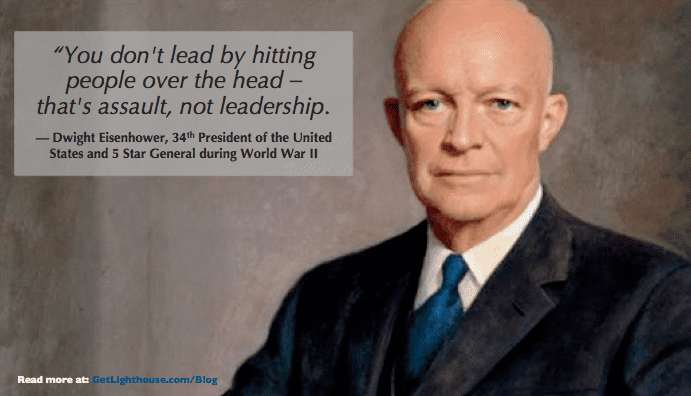
A powerful leadership quote by 34th President of the United States, Dwight D. Eisenhower

     In my early twenties, I lost one of my best friends. Long story short, this friend went from being a joyful Christian to constantly second-guessing herself and others.  I could no longer confide in her.  She accused me of gossip in every conversation.  One time, I shared about a dangerous situation I was in.  I wasn't sure what I should do or the right way to handle the danger.  I went to this old friend to share.  Her response was that I had a gossip problem.  Please know I wasn't putting this in the newspaper or on the radio.  Social media didn't exist back then, even if I wanted to share about it publicly (which I didn't).  I was confiding in her, who had been a trusted friend until shortly prior.  I wasn't gossiping about this person who was dangerous.  I was sharing my own experience and asking for godly counsel. It wasn't my job to protect the person who was doing evil.  I'm not their PR person.  If they're going to do that, the story getting out is part of the consequence of their sin.  It has never been my plan to hurt them or spread negative views about them, and I haven't, but I'm also not pretending.  My friend was wrong to equate my confiding as gossip.  Another time, this same friend of mine was deeply offended by a ministry newsletter I mailed out.  She felt I had gossiped.  What I had said was how much I praised God for providing some volunteers for our evangelism team.  I shared that a few people who had initially showed interest had not followed through, but then God had brought others along who did an excellent job.  My point had been that in the midst of not having the people I expected, God filled in the gaps.  I gave God the glory.  I didn't give the names of those who had not followed through.  They weren't important to the story.  But this friend of mine felt I gossiped about these people.  Why was she so concerned about them?  She didn't know who they were.  Their reputations hadn't been smeared.   I didn't say anything unkind about them.  Why couldn't my friend praise the Lord with me, instead of accusing me of imaginary sins?  At that point, I told this friend to take a hike.  I had no joy or freedom around her.  Years later, we reconnected (not super close, but peaceably), and we were both at better places.  

     I think part of the reason it's hard to define gossip is because it's a case by case thing.  What's gossip in one situation might not be in another.  My friend Karen gave me a good definition that I really liked:  talking in order to share information about someone in order to make others ostracize, judge, and think poorly of that person while boosting one's own social standing.  I think this gets to the heart of gossip.  It's intentionally hurtful and self-seeking.  The dictionary definition is similar, and I like it as well:  Casual or unconstrained conversation or reports about other people, typically involving details that are not confirmed as being true.  This definition is slightly less malicious.  Under this definition, it is idle talk about someone.  While this might not be as cruelly-intended, it is still wrong to just discuss people's business like that.  Talking about someone as they affect your life is one thing.  Talking about their private business when it is none of your concern is quite another.  I even feel it is wrong to read gossip about celebrities.  If they gave an interview to a trusted news source or you are reading things that are a matter of public record, that's fine, but tabloid gossip certainly isn't edifying.  Many times, the news isn't substantiated.  Reading about their private business (especially fabricated) isn't right.  They're human too, even if they live in the limelight.  Give them some dignity.  


Image result for gossip column

     Sometimes, trying to be quiet and making too much of an effort to conceal certain things lends itself to more gossip than if we simply shared a little bit.  If a prominent figure suddenly steps out of public life with no explanation, there is a lot of talk and speculation.  Sometimes, it's better when there is at least some explanation, even if it is largely kept private.  Sometimes it's hard to know, though.  Again, it's a case by case basis.  I remember one time, a ministry I was a part of had a very talented man who wrote a lot of the music that was used.  He had been with the organization for several years.  We had one of his beautiful songs that we were signing as our theme song at a conference one year.  I loved it.  About halfway through this week-long ministry conference, this musician disappeared, and suddenly, we stopped singing our theme song.  It was abruptly replaced with another song.  No one ever mentioned this man again, and when I asked about him (not his personal business, just how he was doing), I was shut down.  I was very concerned for him.  Was he okay?  Did he die?  What happened?  Did he need our prayers?  I was never able to figure it out.  This was someone we all cared about, and he basically no longer existed to us.  I'm sure the higher-ups in this ministry wanted to avoid talking in an ungodly way, but their not saying anything spurred more talk and confusion.  I'm not sure if there was a better way they could have handled it.  Maybe that was the right thing to have done.  Maybe there was no good answer they could have given us.  Still, it was awkward, and I never stopped being concerned about this talented man and his lovely family.  

     My husband had a similar story.  A man from the church he grew up in was falsely accused of a crime.  My husband, a teenager at the time, was a witness to the situation, and vouched for this man.  He encouraged others in the church to stand with him.  He was accused of gossip!  Can you believe that?  He wanted to squelch the gossip and encourage the truth, and those who didn't want to take a stand accused him of gossip.  This is a very warped view.  

     We need to be careful that what we say honors the Lord. Even things that are not gossip can still be wrong to share in certain settings.  It can be a stumbling block to others. We need God's guidance.  I will close by going back to the verse I quoted earlier, Psalm 19:14, Let the words of my mouth, and the meditation of my heart, be acceptable in thy sight, O Lord, my strength, and my redeemer.
     

Tuesday, February 11, 2020

All or Nothing

     Today, I read an online article from a Christian political forum I like.  This article made a claim any thinking person should at least question.  It said every President we have had since George Washington has been a Christian.

Image result for us presidents

     That's quite a claim, isn't it?  I am suspicious of all-or-nothing statements like that.  Going a step further, Jesus said His followers are known by their fruit (Matthew 7:16).  Even if we don't agree on specifics, we can probably all agree that not all 44 men who governed our nation (we've had 45 administrations, but Grover Cleveland's 8 years in office were split) bore fruit evident of a relationship with Jesus.  However, that doesn't mean they weren't Christians.  Some of these men have done wonderful things for our country, but that doesn't mean they were Christians.  I read the article in its entirety.  All it really did was list the church affiliations or denominations these men had claimed to belong to.  

     Being a thinking Christian, I reserve the right to question this article's validity.  Am I jumping the gun and saying certain Presidents weren't/aren't Christians?  No.  I make no assumption.  I just didn't find this article's claim believable, and if all they're going to use to back it up is the Presidents' denominational affiliations, I am not intellectually satisfied.

     First, we must answer the question, what makes someone a Christian?  The Bible is very clear in multiple places, but one of my favorites is Romans 10:9-10, That if you will confess with your mouth that Jesus is Lord, and believe in your heart that God raised Him from the dead, you will be saved, for with the heart, man believes and is justified, and with the mouth, confession is made unto salvation.  In other words, being a Christian means believing Jesus Christ is who He claimed to be (the Son of God, God the Son), and believing that His death and resurrection paid the penalty for our sins, putting our faith in Him for eternal life.  Jesus called this experience being "born again" (John 3:3).  According to the Bible, belonging to a certain church or denomination doesn't make someone a Christian (although a Christian should be in a good church for their own growth in faith).  Therefore, in light of this consideration, the article I read didn't satisfyingly prove that all 44 US Presidents were/are Christians.  It didn't convince me they weren't/aren't either.  It just didn't prove its bold claim.  Maybe all our Presidents were/are Christians (I would like to believe that I'll see them all in Heaven), but the article did not tell us about these men coming to understand who Jesus is, and receiving Him as Lord and Savior. 


     I have read a few testimonies of some of our Presidents.  I read that William McKinley came to a saving knowledge of Christ growing up, and it greatly impacted all areas of his life, including his Presidency.  I have read that Dwight Eisenhower became a born again Christian during his Presidency.  I have read the salvation testimony of George W. Bush.  I have also read the testimonies of Vice Presidents Dan Quayle and Mike Pence.  These testimonies line up with a biblical definition of becoming a Christian.   Several other Presidents and Vice-Presidents (some I have agreed with politically, some I have not) have said things about Jesus that have led me to conclude they probably do know Him as well.  Jimmy Carter actually shared that he was Born Again.  Only God knows anyone's heart.  But these statements and testimonies about Jesus and salvation are a lot more in line with the Bible than mere denominational affiliation. 

     Many modern Presidents had a close friendship with Billy Graham, the most powerful evangelist of the 20th century.  Clearly, they had access to the gospel, and that is encouraging.

     The fact that many of our Presidents had a Christian heritage and a church affiliation of some kind is assuring.  God definitely uses these things.  It just doesn't prove saving faith.

     The President I would least likely believe was a Christian (by the Bible's definition) was Thomas Jefferson.  He was a deist.  According to my research, he claimed to believe Jesus was a good moral teacher, but not the promised Savior.  That, right there, would make him not a Christian.  Perhaps he changed his mind at a later time.  I hope so.  Other Presidents have said things about the Lord, the Bible, or the priority of faith that make me question the probability of their being saved, but I don't know.  Jefferson's statements were the most boldly opposed to the Bible's definition of Christianity. 

Image result for thomas jefferson
Thomas Jefferson
     After reading the very unsatisfying article, I left a comment.  I shared that I doubted all of these men truly had a salvation experience with Jesus.  As a point, I shared a statistic that close to 80% of Americans claimed to be Christian, but upon deeper questioning, less than 25% claimed to have repented of sin and received Christ as Savior.  I wasn't trying to be negative.  Just realistic in light of the article's bold claim and flimsy evidence.  I wasn't even pinpointing certain Presidents and saying which ones I thought were and weren't saved.  I was doubting the claim more than any particular man.

     The responses I got were almost funny.  One woman told me I clearly wasn't a Christian.  She said if I was, I'd never "judge" (there goes the magic word!).  What makes it so crazy was that she went on to say that every US President was a Christian except--here she named one--and went on to use hateful and ridiculing language about him.  Who's judging now?  And telling me I'm not a Christian when I simply said something she didn't like?  We have already established what makes someone a Christian.  Being judgmental (if indeed that was what I did, and I'm not conceding that) doesn't make me unsaved.  We can't establish someone's salvation on whether or not they say judgmental things.  That would make it about works and not Christ.  Salvation is by faith, not works.  I'm a Christian because the Blood of Jesus washed my sins away when I placed my faith in Him for eternal life...not because I try to refrain from being judgmental. 

Image result for faith not works

     Several other people also jumped on my case and accused me of being judgmental of our Presidents, though they weren't as dramatic as my hateful friend who took liberties with my salvation.  It's still funny though, because I didn't mention one US President in my comment.  I was establishing that not everyone who claims Christianity is saved.  I was refuting the article, not a person.

     It is easier to accuse people of judging than to think things through.  Judging is the 21st century's unforgivable sin.  Accusing someone of judging is the big smokescreen when someone doesn't want to take responsibility.

     Matthew 7:1 (judge not lest you be judged) is such a misused and abused verse.  I must confess, at times I'm tempted to wish it wasn't in the Bible.  Martin Luther cut the book of James out of his Bible, mistakenly believing it to be heretical, and at times, I've felt that way about Matthew 7:1.  But that isn't the answer.  Martin Luther was wrong, and it would be just as wrong to remove any part of Scripture.  Jesus, knowing all things, including the future of how people would misuse it, said these words of Matthew 7:1, and so we need to examine them.  Was He saying we're never allowed to use the brains He gave us to form an opinion?  Was He telling us we have to be in favor of everything and anything?  Was He saying to ignore things that the Bible itself defines as sin?  No!!!  If He was, He would be contradicting the rest of Scripture. In Matthew 24:24, Jesus warned us not to let anyone deceive us.  He was telling us to think critically. To use good judgment.  In First John 4:1, we're told to test the spirits, because not every spirit is from God.  Again, we're being told to use good (godly) judgment to determine the truth.  Going back to Matthew 7:1, a look at the rest of the chapter and at parallel passages in the other gospels, reveals that we need to make sure we have our facts straight before making a judgment, and make sure we're not doing the sin we're about to call someone else out on.  Get the facts, and get our own lives in order before we help someone else get theirs in order.  That's what Jesus is saying.  Not anywhere in the Bible are we told to ignore sin.  We are not to believe and agree with everything.  If I told you I had an elephant in my car, and you disbelieved me, would that make you judgmental in a sinful sense?  Of course not!

     Many years ago, I served on a jury for a trial.  It was a very interesting experience.  We found the defendant guilty.  Anyway, the District Attorney kept telling us, "You have to find on the evidence, but that doesn't mean you check your common sense in at the front door."  He was right.  We come into every situation with common sense and knowledge gained from previous situations, as well as discernment from the Lord.  We need to examine what we're told (find on the evidence), but we are to use these resources God gave us. 

Image result for courtroom

     John 7:24 urges us not to judge by appearances, but to judge rightly.  I would say those who simply assume all our Presidents are Christians are disobeying that verse.  They're judging on the appearance that these men had a church affiliation.  Judging rightly would require more research into their lives, and the evidence and information isn't always going to be there, especially not with earlier ones.  Were all our Presidents Christians?  We won't know until Heaven.  As Christians, we are to study God's word, and rightly divide the word of truth (Second Timothy 2:15).  This means be thinking people, holding up everything we are told to the standard of the Bible!
     

Saturday, February 8, 2020

Salvation

     Yesterday (February 7) was the thirty-third anniversary of a very important day for me.  I remember it as if it were yesterday.  The story goes back a few days, though, to February 4, 1987--my fifth birthday. 


Me as a 5-year old
     I was very excited.  My mom was going to take my best friend and me to the circus.  I'd seen commercials for the circus, but had never been to a real one myself!  I was also excited that my age was a whole hand now.  When people asked my age, I could hold up all five fingers, no longer having to put the thumb down.  I felt very grown up. 

     Shortly before we were to leave, a frantic knock sounded on our door.  When we opened it, and found our eleven-year-old neighbor Christy, wild-eyed.  "There's a man in my house!  My mom's not home yet, and there's a guy trying to rob us!" 

     My parents had her come in, while they called the police.  It was scary, but the police arrived, and helped Christy and her family.  That situation sort of put a damper on the day.  Maybe it was a sort of sign.  Or maybe Satan was attacking because of what the Holy Spirit was stirring.

     Once everything was taken care of, my mom got me in the car, and we went to my friend's house (a few miles away) to pick her up.  We were riding along, when the car made a funny, popping sound. 

     "Oh no," Mom sighed, pulling our fifteen-year-old Pinto into the closest shopping center.  I wasn't terribly alarmed.  We had had this old vehicle as long as I remembered, and when it had problems, it always turned out to be okay in the end.  My mother, on the other hand, was very stressed.  When I became an adult, I came to understand that stress.  Car problems are hard to deal with at times, becoming vulnerable to a mechanic (who may or may not be telling you the truth), rethinking how you'll budget finances for the month, mentally rearranging all your transportation until the repair is complete, etc.  But I was only five, and this was part of the adventure.
Image result for 1972 pinto
Our car looked exactly like this picture of a 1972 Ford Pinto.  I didn't have a good picture of our actual car from that time, but I found this lookalike online.  With the more modern cars in the background, you can deduce it isn't from the actual time this story takes place, but you get the idea of the type of car we were dealing with.  It was old even then (1987)
     This was in the days when payphones were everywhere, and my mom promptly located one, at the far corner of the shopping center, right outside the grocery store.  She didn't want two little girls running all over the place while she was on the phone.  More to keep us safe than for any other reason, she told us, "While I'm on the phone, you are not to cross this line in the sidewalk.  She indicated a crack in the walkway.  Then she dialed the operator to call a tow truck. 

     Just to be funny, I smiled up at my mom and jumped over the crack she'd told us not to cross.  I wasn't even doing in maliciously.  Just being silly.  My mom, already stressed out, and engaged in conversation with a tow truck driver, reached out an arm, pulled me back, and swatted my behind.  At that moment, I became aware of something: my own depravity. 

     I felt shame.  It wasn't that my mom really got that mad.  Her tone hadn't changed at all on the phone.  She was simply under stress.  The Holy Spirit was convicting me of sin...not just the sin of crossing a literal line in the sidewalk, but the sin of who I was...everything I was without Christ.  I was a sinner, incapable of pleasing or knowing God on my own.  I might act good.  People might tell me I was good (many people did, because I was very well-behaved), but I wasn't good.  Not really.  Deep inside, at the core of who I was, I was a sinner.  I was incapable of being good.  With everything in me, I wanted to cross that line.  I knew that the sin in my heart was stronger than my resolve to fight against it.  I couldn't control it.  It controlled me.  There was nothing I could do to become free of the power sin had over me. 

Image result for depravity

    After my mom got off the phone, she hugged me and told me it was okay, I was a good girl, but I knew I wasn't really good.  The tow truck came, and we got in.  There were only two seats, so my mom held me on her lap, and we buckled in together, while my friend sat between us and the driver.  The end result was, we never made it to the circus, and to this day, I have never seen a real circus!  I don't know if I ever will. 

     My dad got home in our other car, and my parents took us to Chuck E. Cheese.  That was fun.  My friend spent the night, which was also fun.  But in the midst of all of this, I was wrestling inside with the conviction of my sin.  The hopelessness I felt in being able to overcome it. 

     This battle inside lasted three days.  A song began playing in my mind, one we sang at Children's Church, entitled, Do you know that you've been born again?  In my mind, I could hear our teacher, Mrs. MacFarland, singing it, with the kids' voices in the background.  It could hear it as if I were right in the room with all of them.  It wouldn't let up.  The question kept repeating in my head.  Did I know that I'd been born again?  I knew what it meant to be born again.  I was surrounded by the message of salvation.  My parents taught me about Jesus.  In fact, I don't remember learning John 3:16...I've always known it.  My parents said it to me every day since I was born.  I went to Sunday school, AWANA, Children's Church...you name it.  I was putting all these truths I'd been taught together in my heart and mind. 

     Finally, after wrestling for three days, on February 7, 1987, I knew what I had to do.  It was the only real option, if I were ever going to know peace.  I had to surrender myself to Christ.  He had given Himself for me on the cross, and I had to give myself to Him. 


     There was a very slight fear, because surrender is a death of sorts.  It's dying to self, to sin, to the person we are without Christ.  It's admitting I'm not good enough as I am, but with Christ, I am perfectly forgiven, capable of being everything God intended.  It is taking Jesus' death as my only way of salvation, placing my faith and hope for eternity on Him alone.  And that is what I did.  I settled it with God. 

    I approached my father and told him, "At church we sing a song that says do you know that you've been born again?  I want to do that."

     My dad later told me he had thought I was going to sing the song for him.  Imagine his surprise when I dropped to my knees and asked Jesus to come into my heart, take my sins, and let me be part of God's family from now on. 

     He was surprised, and wanted to make sure I understood what I was doing, so after I prayed, he tried to explain Jesus' death and resurrection to me.  I was kind of impatient and said, "I know that!"  I was frustrated he wasn't with the program here.  I knew about Jesus, and that's why I wanted His salvation.  But Dad just wanted to make sure I understood. He hadn't been living in my head the last three days while I wrestled with it.  I was ready to do it!  After my dad and I talked a few minutes, I asked him if I should tell Mommy. 

     "Yes," he said.  That was all I needed.  I jumped up and ran down the hall, where my mother was helping my little brother clean his room. 

     "Mommy, I asked Jesus into my heart," I exclaimed, a little shyly.  This was my first time sharing my testimony. 

     My mom was overjoyed, and pulled me into a hug.  That night, as she tucked me into bed, she told me to pray for my little brother and sister to invite Jesus into their hearts as well, which I did.  In fact, I witnessed to them every day after that. 

     February 7, 1987 was the most important day of my life.  It determined my eternal destiny.  It was the day I was born again. 

     How about you?  Have you been born again?  Are you ready for eternity? 


Saturday, January 25, 2020

Whoopings!

     I remember it like it was yesterday.  It was the summer of 1999.  I was a high school senior, and part of an evangelism team doing backyard Bible clubs.  We were doing open air witnessing to children in an apartment complex.  A friend and I were sharing the gospel with a cute little black boy who had introduced himself as Reginald..."But you can call me Reggie," he explained happily.  We shared with him God's love, and how God wanted Reggie to know him and live forever in Heaven with him.  Then, we had to get to the "bad news" about how all of us have sinned.  I asked him,  "Do you know what the punishment is for our sins?"

     "Yeah," Reggie nodded.  "My grandma gives me whoopings!"  

     My teammate and I looked at each other and had to try not to burst out laughing.  In the end, it turned out Reggie had already received Christ as his Savior, but was delighted we had shared with him anyway.

Summer 1999, I'm pictured with one of the friends on my evangelism team.

     Over the years, I've never forgotten about his grandma's "whoopings," and I have great respect for this woman I've never met.  She disciplined this little boy, and the result (as far as we could see) was a sweet child who knew Christ.

     Proverbs 23:13=14 says, Do not hold back discipline from the child, although you strike him with the rod, he will not die. You shall strike him with the rod and rescue his soul from Sheol.  

     Thirty-one states have banned corporal punishment from schools.  This is a controversial issue, but I believe the result of this has been 20 years of school shootings and students who believe the world revolves around them.  As a teacher myself, I can attest to this.  Every year, it seems they come in more and more entitled, and parents make more and more excuses.  In the last week, I have experienced two very painful injuries from such students.  The blame seems to always be put on teachers.  I wasn't calm enough when I asked them to stop.  Forgive me, but it's hard to be calm when I'm being kicked in the face, hard enough to leave a bruise.  In those cases, it's all I can do not to do something illegal, so forget calm!  Teacher's hands are tied.  There is no legal way to get things under control, because all we're allowed to do is say positive things to them. Legislators who have never set foot in a classroom tell us how we're allowed to discipline our students. 

     Professionals have medicated and given names to mental disorders based on behavior, and in a lot of cases, it doesn't help.  I'm not an expert on mental illness.  I know mental illness are very real, and in no way do I wish to invalidate someone's legitimate problem. There is a real need for medication sometimes. Those who suffer should receive grace and compassionate care that would truly help them.  We all need help sometimes.  That's part of being human. On the other hand, though I am NOT a psychologist, and I don't claim to know this,  I suspect that some of these mental disorders cropping up aren't real, but just a medical-sounding name for spoiled brat, poor parenting, or lack of discipline.  Some of these things are just plain sinful.  We're medicating sin, and therefore excusing it.  Our hands are tied as far as really helping these children.  On the other hand, I feel sorry for those who truly suffer from mental illness, because these spoiled brats getting falsely labeled with mental illness are bringing true mental illness to an incorrect public perception.  A person with a real mental illness shows up and shares their problem, and everyone thinks, "Oh no, not another one," because of all the out-of-control behavior misdiagnosed as mental illness.  In reality, those with genuine illness should receive compassionate care.  Those with just plain discipline problems need a spanking!

     It is possible for discipline to become abusive.  That isn't right, and in no way do I defend actual abuse.  Discipline should be lovingly administered.  Hebrews 12:6 tells us The Lord disciplines the one He loves.  Discipline is a sign of God's work in us, His love for us.  Our discipline toward children should have the same goal--love for them and a desire for their very best.  If all we're allowed to do is smile at them and say positive statements while they're physically harming us or others, we're not doing what is best for anyone--not the child, not the other children, not ourselves.  I'm not saying discipline is fun or easy.  It isn't.  But the lack of it produces such horrors that it needs to happen.  God holds us accountable for our words and actions.  Romans 14:12 says, so then, each of us will give an account of ourselves to God.  Children need that accountability as well.  

     Along the same lines, there are some incorrect thinking patterns feeding into this problem.  The whole it takes a village mentality sounds very idyllic, but it can be misleading.  Too many parents I have gotten to know over the years view the school, day care center, neighborhood, and church to be responsible for raising their children, instilling values into them, teaching them correct behavior.  While these institutions can and do help, they are no substitute for parental authority.  You can't pay anyone to love your child like you do.  Teachers love your children, but not like you.  Church workers love your children and pray for them, but not with a parent's love.  The same goes for kind neighbors.  All of these things should be supporting your role as a parent, but they can't raise your child for you.  As a teacher, I can speak for myself and say I dearly want to partner with parents, be a part of their team in helping their child.  But the parents are the team captain!  I want to do all I can in my role to help the child and family.  I am not the parent, though.

     This is all sort of controversial.  I have not intended to step on toes with this.  I realize there are wonderful parents out there who have children with severe problems, and they are trying hard to get a handle on it, not sure what to do.  I have not intended to be insensitive to them.  I am simply sharing some biblical truth, and my experiences as a teacher for many years.  Something is broken, and it will take the work of the Holy Spirit to fix it.  
     

Saturday, January 18, 2020

Bold and Unashamed

     We live in an over-polite world where no one wants to offend anyone else.  Even though it is easy to complain about this and think fondly about days gone by, Ecclesiastes 1:9 tells us that there is nothing new under the sun.  History marches onward, repeating itself again and again.  The wise learn from it.  The foolish perish.

Image result for history repeating itself

     Sadly, even the Christian world today is often caught up in the obsession to accommodate everyone and be non-offensive.  The whole "don't judge" phenomena has taken everyone by storm.  I often feel as if we're being asked to become unthinking robots with no opinion other than agreement with anything and everything.  Upon really examining this, though, one has to conclude that this isn't possible.  We can't turn off our humanity and become robots indefinitely.

     I have had fellow Christians tell me I should be ashamed of myself for calling sin what it is.  I've been called "legalistic" and "judgmental" for simply agreeing with what God has already put forth in His word.  I've had people tell me to take the plank out of my own eye, to stop minimizing my own sin and maximizing the sins of others.   Is there a danger of these accusations being true?  Of course.  Always.  As a Christian, I need to be watching myself, staying in the Word, listening to the Holy Spirit, and getting Christian accountability.  When I'm wrong, I should promptly admit it and make it right.  First Corinthians 10:12 says, let him who thinks he stands take heed that he does not fall.  We need constant maintenance in our lives.  I am certainly not above this.  I try (though I'm not perfect) to humbly receive correction when I am wrong.

     There is a flip side of this, though.  When God calls me (or any believer) to say something about a sin (and believe me, we don't enjoy doing it!), and people jump on us and remind us of how imperfect we are, I am reminded of a well-known line from Shakespeare's Hamlet. "The lady doth protest too much, methinks."


     When people have to go crazy against a believer who simply agrees with God, this is clearly an overreaction.  Seldom am I confronting a person for their own sin (I think there are times when we're all called to that), but rather, talking about sin or impropriety in general.  Things in society that affect everyone.  Things that have become very public, demanding we take a stand.  Things like abortion, the LGBT (etc) agenda, fornication, adultery, dishonesty, greed, selfishness.  Scripture has a lot to say about every one of these, though they aren't my aim at the moment.  See some of my other posts, or better yet, the Bible for more info on any of these things in relation to scripture.  My point here is people's reaction to believers taking a stand--sometimes other believers' reaction to those of us who take a stand.  A lot of times, those who react aren't even committing that sin or lifestyle, but just have this urge to attack anyone who makes a statement that is less than absolutely positive. They're parroting society, which is very dangerous  If the world can condition Christians to just repeat their rhetoric, we're in a bad place.  We are called to be a thinking people.  I was in a Bible study once where a zealous young woman (about age 22, and new to the group) vehemently rebuked a wise, respected older man in the group who was sharing scripturally how Jesus was the only way to Salvation and how Muslims weren't headed for Heaven.  Turns out, this young woman was a Christian herself, and when backed into a corner, she admitted the older man was right, but she just felt it was judgmental for him to say it.  This is a problem.

     Even supposing for a moment that I am overstepping bounds in stating something is sinful, those who feel the need to correct me should do it in love, not harshness or judgment.  That's right.  It is just as judgmental to criticize a fundamentalist Christian as it is to criticize anyone else.  Harping on me isn't going to make me change, but loving consideration might.  And that's even assuming that what I have said is sinful or out of line.  Sometimes it could be, but often it isn't.

     As Christians, we are called to align our beliefs and lifestyles with God's word.  Second Timothy 2:15 tell us Study to show thyself approved unto God, a workman that needeth not to be ashamed, rightly dividing the word of truth.  A chapter and a verse later, in 3:16, we are reminded that all scripture is given by inspiration of God, and is profitable for doctrine, for reproof, for correction, and instruction in righteousness.  That is our authority.  I'm not making a nasty judgment against someone because I dislike them.  I often like these people very much personally.  Out of love for them and hopes that they will come to know Christ, I speak in agreement with the Bible.  This is actually much more loving than pacifying people and agreeing with them to make them feel good.  God tells us how it will end.  He tells us that those who reject Jesus will be punished with everlasting destruction from the presence of the Lord (Second Thessalonians 1:9).  Revelation 20:15 expounds on this by saying that these unbelievers will be thrown into the lake of fire.  I don't want that for anyone!  I want everyone to be redeemed from this.  I want all to know the joy that comes from having their sins forgiven and a right relationship with God--both now and for all eternity.  That is why I speak out.  It is possible for Christians to fall into sin as well, and while they will never bear the eternal consequence for it (since Jesus already did), they will lose joy in their lives, and not be able to enjoy the full fellowship with God.  Psalm 32 testifies to this, when David talks about how miserable he was when he was living in a sinful situation.  Believers can be made miserable by their sin, and I don't want this for anyone either.  In love, as the Holy Spirit leads, I may speak up--and I hope others would do the same for me when I err. The Bible gives steps for confronting believers in sin (Matthew 18).

     A lot of people say that Jesus never judged others, but simply loved.  This isn't quite accurate.  He knew the judgment was coming, and talked about it.  Many of His parables discuss the difference between the righteous, who go on to everlasting life, and the wicked, who go to eternal punishment (Luke 13:27-28).  If there weren't a judgment, we wouldn't need a Savior, and He wouldn't have come at all.  He was very loving to people, but He never condoned sin.  In John 8:11, He told the woman caught in adultery, "Go and sin no more."  He called the Pharisees a "brood of vipers" (Matthew 12:34).  When the people in the temple were taking advantage of others, Jesus vehemently turned over their tables and disrupted what they were doing.  He didn't just smile and say, "I'm not here to judge."  He had righteous indignation.  Not quite the meek picture of Jesus a lot of people want to have.  And yet He was humble and meek as well.

Image result for jesus turning over the tables in the temple    Image result for Jesus loving people

     Jesus had a cousin named John the Baptist.  John was about six months older than Jesus, and had a very special calling on his life.  He was called by God to be a forerunner of Jesus, to prepare people for Him.  John was known as quite eccentric.  According to John 1, he didn't consider himself to be a prophet, but the one called to prepare the world for the Messiah.  He called people to repent and be baptized.  He had quite a following, but when Jesus came on the scene, John turned everyone's attention to Jesus, not himself (John 1:29).  He said, "He must increase, I must decrease." (John 3:30).  John was known for speaking very openly and blatantly about sin.  After all, he was calling people to repent.  He was preparing them for the Savior.  They wouldn't need a Savior if they weren't ready to admit to their sins.  John had a task.  He spoke openly about all that wasn't right.  He had criticized a very public sin of King Herod.  Herod had taken his brother's wife.  John didn't beat around the bush.  He publicly declared this to be wrong (Matthew 14:4).  He didn't try to avoid judging him.  He didn't try to sympathize with Herod, or mind his own business.  He spoke out.  How many today would do that, in our politically-correct world?  John had guts, but I believe he had something even more than that.  He had the mandate and approval of God.  John's speaking the truth cost him his life.
Image result for john the baptist

     Some might consider John the Baptist to be a bit out of line, or over the top.  But Jesus Himself approved of John's ministry.  In Matthew 11:11, Jesus said, "Truly I say to you, among those born of women there has not arisen anyone greater than John the Baptist."  This would have been Jesus' chance to say, "Well, he did some good stuff, but he was too legalistic and judgmental."  But He didn't say that.  John had been in God's will.  Maybe Christians today who speak out against sin are in God's will too, and should be supported, not silenced or labeled as judgmental by their brother and sisters in Christ who are just too uncomfortable to do the same.

     Some will still argue, "Yes, but Jesus said not to judge!"  They are referring to Matthew 7:1, which says, Judge not, lest you be judged.  This is probably the most well-known (and misused) verse today.  Even people who give no mind or credence to the Bible will quote this if anyone even remotely disagrees with them.  They are taking it out of context.  Jesus said this in the middle of the Sermon on the Mount.  He wasn't saying we can't hold beliefs, or disagree with anyone.  If He was, that would contradict the rest of scripture.  The verses following explain that we need to get our own lives in order, and then we can help others with their lives.  If I come down on you for something, but I'm doing the same thing, I'm going to face the same criticism (and rightfully so).  I need to get it right in my life first, before I help you.  That's what this passage is talking about.  It isn't saying we can never confront or speak out against something.  John 7:24 sheds further light on this topic when it says, Do not judge by mere appearances, but judge righteous judgment.  In other words, have all the facts before you make a judgment about a person or situation.  Don't assume (we all know what happens when we assume, right? HA! HA!).


     Nowhere in the Bible are we told to turn off the brains God gave us.  Nowhere are we told that excusing sin is compassionate.  We are told to speak the truth, whether people want to hear it or not (in season or out of season Second Timothy 4:2).  We are to be humble but confidant on the authority of God's word.  At the end of it all, do you want to look into the face of someone who thanks you for sharing the truth with them and saving their soul, or hear the cries of someone you affirmed on earth being cast into the lake of fire?  The choice is yours.

Thursday, January 2, 2020

How does it feel?

     If there is one place Christians should feel loved and accepted, it should be the Body of Christ.  We share so much--our faith in Jesus, our destiny in Heaven, our love for the Lord.  Jesus Himself said that the way people would recognize that we are His people is by our love for one another (John 13:35).  I find it interesting He didn't say that the watching world would know we are His by our love for Him, or for the unsaved (though we should be loving Him, and the unsaved).  The biggest testimony to the lost is that Christians love each other.

Image result for christians hugging in church

     Sadly, this often doesn't happen the way Jesus commanded.  I imagine all of us believers have been wounded by other Christians at times.  It is more devastating when the attack comes from Christians.  It has to be.  Here we share something so beyond ourselves.  We have every reason to cling together.  But we don't.  Not always.  It isn't just us.  It was that way in Acts.  People were coming to Jesus from different parts of Israel, and even outside of the Jewish faith.  As they got saved, they brought their cultures and conflicts with them.  This led to the church leaders having the counsel at Jerusalem in Acts 15.  What we can gather from this is that culture plays a huge part into who we are, even as Christians.  This can be a uniting or a dividing force.  What we share as Christians should be so much greater than any difference.  But so often, we lose sight of it.

     On Facebook, one page I follow is a particular Conservative Christian group.  They share a lot of really good resources and articles.  Last night, something they shared brought out a lot of ugliness in people, myself included.  The article was about how the US population was redistributing itself, due to people moving out of states like California, New York and Illinois.  Admittedly, these three states are known for liberal politics.  Think for a second, what kind of people would move out of liberal states?  The answer should be fairly obvious: Conservatives, many of whom are Christians.  The liberals have no reason to leave these states.  They are getting their own way from corrupt state governments (many of whom were voted in by deceased people who had not been cleared off the voting registration).  There is heart-breaking corruption in these places.  A lot of Conservatives feel they have no choice but to leave.  However, the people who read the article got very unkind, particularly trashing Californians (not the state, but the actual residents) talking about how stupid and worthless they all are, and how they're trying to move to others states to make them as corrupt as the one they came from.  How smart would that be?  I have just established that the Conservatives are the ones leaving.  I am a Californian, a Conservative, and a Christian, and my heart broke as I read people's hate-filled comments.  They don't know me, or the wonderful Christian people I love in my home state, but they decided to hate us.  I feel very hopeless when people say stuff like that.  I can't change what state I'm from.  No one can.  The evil behind their hatred is the same evil behind racism.  No one chooses their race, but everyone deserves a chance to prove themselves before judgment.  What is distressing is that the people making these comments about me and my fellow Californians is that they are supposedly Christians (the page is geared to conservative Christians).

Image result for angry finger pointing

     I sobbed until my whole body shook.  I felt like my heart would stop beating. I hadn't been that broken since a college boyfriend dumped me many years ago.  I am hated by people who share my Lord and eternity.  Yet they hate me, call me stupid and worthless. They assume evil, wicked things about my motives, just because I happen to be from a state with a largely undeservedly bad reputation.  I love California, and never wanted to leave it. Our reasons for leaving our home state four years ago are a long story, but it has been God's leading for my husband and me.  After living in the Midwest, the Mountain states, and the South, we have concluded that the Christian community in California is a lot more in-depth and spiritually mature than I've found elsewhere.  There is corruption in the government.  Christians need to stand up and fight it.  Those not called to be involved should pray, not put us down.  After reading these mean-spirited comments from other believers, I was left feeling like there was no place for me.  That is a horrible feeling.  No Christian should feel that way, ever.  I responded with truth to some of the abusive, ignorant comments.

     First John 4:20 says: If someone says, "I love God," and hates his brother, he is a liar; for the one who does not love his brother whom he has seen, cannot love God whom he has not seen.  Being a Christian in a world that never knew God is a hostile experience.  We can't be turning on each other.  Anyone who stops long enough to think it through should be able to figure out that no state has all good or all bad people in it.  There is always a remnant of God's people (First Kings 19:18).  California was the location of all major revival movements of the twentieth century.  There are multiple Bible colleges and seminaries there.  Even in supposedly evil Los Angeles, Christian denominations combined make up the biggest religion adhered to.  I have been in touch with a BIble-believing church in San Francisco.  They are trying to do a lot of wonderful ministry, but are attacked by the enemy in ways we can't even begin to know.  But all of that is beside the point.  Even if the Christians in California were fewer, we are still God's people, and should be loved and accepted by other believers, not attacked because of our state.  That kind of prejudice and hatred is so hurtful.  That's what I really want to say.  I hurt.  My soul aches to be loved by other Christians.  I want to belong.  I want to hear the words of Cheri Keaggy's song "Bring it all in" Come in, bring it all in.  We've got a place for you, there's enough grace for you.  God only knows where you've been.  Bring it all in.  We need to love and extend grace to each other.  We are hurting in a world that has rejected our Savior.  We can't go rejecting each other.  

     Let's pray for God to change our hearts and make us the loving people He wants us to be.  I don't feel very loving toward those who said those hateful things.  Clearly, they don't love me or my people  That isn't right.  Also, pray for Christians living in states that don't listen to their votes.  Did you know California is the only state that voted TWICE to keep marriage between one man and one woman?  Most states didn't vote at all, but those who did only did once.  California really wanted to keep things right.  No one talks about that. They just talk about how evil California supposedly is, and all it's residents along with it.  Pray for Christians in these places.  They are fighting spiritual battles you don't know about.  They don't want to fight their fellow Christians in other states as well!  They are your brothers and sisters.

Image result for fighting spiritual battles

     One thing that has comforted me was something my husband reminded me of.  Jesus was from Nazareth, and in John 1:14, Nathaniel said, "Can any good thing come out of Nazareth?"  Jesus was from a place with a bad reputation.  He was misjudged because of it.  He knows the plight of Californian Christians.  He loves us and cries with us when we are rejected by those who have been commanded to love us.  It hurts Him too.  Please pray for me, because it is so hard being a Californian out of state.  People can be so cruel.  That isn't right.  Come on, Christians, let's follow Jesus' command to love one another.  No one else will want to know our Lord until we do.