Tuesday, October 6, 2020

Clear as Mud

     "Have you come to the point in your life that you know for sure that if you died, you'd got to Heaven, or are you unsure?" I asked my new friend.

     "Oh, I'd definitely go to heaven," she said confidently, almost dismissively.

     "Let me ask this another way," I said.  "If you were to stand before God right now, and He asked you, 'Why should I let you into my Heaven, what would you say?"

     I wish you could have seen her expression.  Her mouth opened, as if she had a quick answer, but then she closed it again.  Her eyes looked up, as if she were thinking.  "Well..." she began, but her voice trailed off.  Finally, she met my gaze.  "I've never thought about that before."  

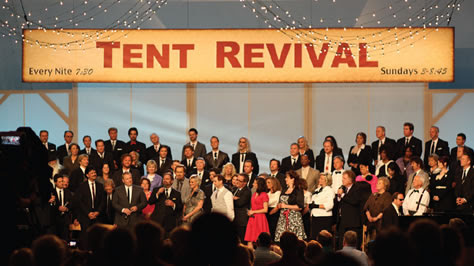
     I met this dear lady at a revival on Sunday night (a good, old-fashioned Southern tent revival right here in Arkansas).  The evening began with a steak dinner.  My husband and I had sat at the same table as her.  She came from a small north Midwestern town, where she was part of a very traditional church in a mainline denomination.  She talked a lot about her baptism as an infant, and her questioning what church to join locally.  We hit it off with her, and enjoyed talking, but as we did, I sensed that she didn't have a strong grasp of salvation.  It was as clear as mud.  It had been muddled with church traditions.  When asked if she had ever been saved, she wasn't certain.


     There are a lot of different terms people use for salvation, and most of them are biblical.  Being saved (Acts 16:31, among other scriptures).  Born again (John 3:3).  Receive Christ (John 1:12).  Invite Christ into your heart (yes, that one is biblical too, read it and weep, John MacArthur! Ephesians 3:17).  Different Christian traditions use their preferred terminology, and there is nothing wrong with that.  Some speak of making a profession of faith.  Some simply calling it becoming a Christian.  My point is, regardless of the terms used, we are recognizing a time when we realized we were lost and needed salvation, and we took Christ up on His offer of eternal life by placing our faith in Him, and His finished work on the cross.  The Bible makes is so clear.  It saddens me when it isn't clear in someone's life, because it's been muddied by confusion.  

     Am I saying traditions are bad?  No.  In fact, every church has them--even very contemporary churches.  A tradition is just a way something is acceptably done.  Whether your church tradition is organ music and ministers who wear robes, or everyone in T-shirts and jeans with the latest Christian radio hits in worship (or whether your church is somewhere between those two extremes), that is a tradition that you feel comfortable with in your church.  I think sometimes, traditions get a bad rap, but traditions can draw us closer to the Lord, because of what they represent, or their history.  However, we can lose sight of their real significance, and just do them unthinkingly.  Even worse, traditions can take the place of truth, and that's when they become dangerous.  

     My husband and I lived in a small north Midwestern town for a few years.  Spending time in that culture was how I was able to identify where this woman at the revival was coming from.  But anyway, during our time in that town, when I would ask people about their faith, many would say things like, "Well, I was confirmed at such-and-such a church."  Or "I was baptized at such-and-such church."  They were much more apt to identify as their denomination than as a Christian.  Yes, there was a gospel witness in the town as well, but it was far outweighed by Mainline churches dominated by tradition.  Some who went to those churches were definitely saved.  Others weren't.  Walter and I visited a few of these congregations out of curiosity (we come from Southern California where you're either a staunchly on fire evangelical or you are an ashiest, but there is very little in-between).  These Mainline churches were new to us.  The gospel could be found there, but it had to be ferreted out by the hearer.  It wasn't being clearly explained.  This left a lot of very confused people, who didn't even know they were confused.  

     Salvation needs to be clearly presented.  Acts 4:12 says, Neither is there salvation in any other, for there is none other name, under heaven, given among men, whereby we must be saved.   Second Corinthians 6:2 tells us that Today is the day of salvation.  The Bible makes it so clear, and it needs to be presented that way.  Something people can point back to as the day they came to Christ.  In Acts 2, Peter preached the gospel at Pentecost, and 3000 people understood and believed the message, and were saved that day.  For the rest of their lives, these people surely remembered the day they were changed for eternity.  This is evidenced all through the book of Acts.  Direct encounters with people coming to grips with who Jesus is.  There is no place in Acts (or anywhere else  in the Bible) where people had this vague sense of "Maybe I'm saved, I do all the church stuff..." and yet were saved.  In Acts 19, Paul encountered some men who were disciples, but all they knew was what John the Baptist had taught.  They didn't yet know Jesus, or anything about the Holy Spirit.  Paul set them straight, and they received Christ, and then were indwelt by the Holy Spirit.  These men were faithful to what they knew, and God was working in them, but they weren't saved until Paul evangelized them.  I believe that mirrors a lot of folks I've met who are faithful to their church tradition, but very fuzzy on salvation.  


     We are spiritually in need.  A church that clearly presents the gospel message is like someone being sick and going to their doctor, and the doctor giving them the medicine they need, clearly explaining how to take it, and what the medicine will do.  These unclear traditions about salvation are more like someone being sick and going to their doctor, and the doctor having a table with a huge meal set out.  The doctor says, "The medicine you need is buried somewhere in all this food.  I'm not going to tell you where, but if you eat all of it, you'll get the medicine at some point and get well."  There is so much uncertainty.  No definite assurance.  And what if you get too full to finish the meal, but don't know if you've gotten to the medicine yet?  

     Was this woman I spoke with at the revival saved?  She knew who Jesus was and believed in Him.  She wasn't certain about some things, but God knows where she's at.  She heard the truth, from us, and also from the evangelist who spoke (side note, this evangelist even said in a perfect drawl that "Even Yankees need Jesus!").  Our new friend (the north-Midwesterner) cracked up at that, and it eased the tension.  My prayer for her, and for everyone, is that we have assurance that we are saved, having full understanding of what it entails.  For those who actually aren't saved, my prayer is that they come to understand who Jesus is and what they must do in response.  And my prayer for myself, and those of us who share the gospel is that we'll be bold and clear in sharing this most important message, that God has entrusted to us!  

     I'm going to close with some phrases that people who are confused will use when questioned about salvation.  Note, these are actually good things, and perhaps they apply to you, but they don't provide salvation in and of themselves.  If someone is trusting in these things for their eternal life, it is a works-based religion, and they are not saved, according the scripture (Ephesians 2:9).  I encourage anyone in these discussions with someone who brings up these points to turn the conversations back to Jesus.

"I was baptized at X church."

"I help in the food pantry at X church."

"I memorized the catechism."

"I' was confirmed as a teenager."

"My late husband/wife was a [insert denomination], so I joined the church when we got married."

"I took my first communion."

"I spoke in tongues."  

"Our church has a coat-drive every winter."

"I went to a parochial school." 

"I grew up in Sunday school." 

"I had my kids all baptized at X church."  

"I'm a [insert denomination]"

"I come from a long line of [insert denomination]."  
 
Maybe you've heard more, but this is an idea.  These are good things, but they are muddying the water of salvation.  Jesus offers clear, living water!  Show it to them!  

Thursday, October 1, 2020

God's Conviction, or Satan's Accusation?

      Have you ever had a certain area of your life where you just kept falling back into the old patterns?  No matter how hard you tried, you just weren't able to get out of certain destructive sins and habits.  Maybe it was a small area that no one else noticed, but it was ripping you apart inside.  Big or small, that's called a stronghold.  


     I was told the following story.  A woman just couldn't get victory over a certain sin in her life.  Every week, she'd go to her pastor for prayer, and in the midst of this, she would always pray, "Lord, remove the cobwebs of sin from my mind!"  One day, after several weeks of hearing her pray this way, the pastor led out and prayed, "Lord, kill the spider!"  That's how strongholds are defeated, by getting to the source of the problem, not just the surface symptoms.  


    A stronghold has been defined as a mental pattern of thought, burned into our minds, usually over a period of time, which affects our attitudes and ultimately our actions.  There is a digression into it:  First, we have the stimulation.  We're stimulated by something.  Maybe it's a dirty ad popping up online when you're not even trying to look for something like that.  Maybe it's deep feelings of fear or anger when an unresolved part of your past comes up.  Maybe it's compulsive spending, or finding self-worth in the wrong places.  It could be any number of things.  For me, personally, it is fear and feelings of invalidation.  I have struggled with this a little more in the past two weeks.  I'll elaborate in a little bit.  


     With the stimulation step, you haven't sinned yet.  You weren't even seeking out the stimulation.  Something outside your control triggered it.  Now, you face the next step, temptation.  Again, you still haven't sinned.  You haven't looked at that destructive website.  You haven't reacted in fear or anger.  You haven't overspent.  But you're tempted.  Jesus Himself faced these first two stages of stimulation and temptation, but He stopped it right there.  Matthew 4 tells us about how Satan tempted Him when He was at a vulnerable state of hunger and loneliness in the desert.  That's when Satan will bring on those stimulations and temptations for you as well. 

     After stimulation and temptation comes a further digression, and this is where sin comes into it if we don't stop at the temptation stage.  Consideration follows temptation, where we rationalize why it would be good and right to indulge the temptation.  Maybe clicking on that bad website would give us insight into how certain people live, so we can minister to them better.  Maybe reacting to the invalidating situation would help in some way.  Do you see how that's making something bad look a lot more innocent?  That's what happens when we consider sin.  

     Once we've considered things, then we make a choice.  We go ahead and choose to indulge or not.  We can stop it any time in this process, but it is much harder the further we get.  

     Action follows the choice.  We act on what we chose.  We might tell ourselves it was a one-time thing.  But it never is.  That's not how temptation works.  It doesn't let you off that easily.

     Once you've taken action, you form a habit.  An enslaving habit.  And that, my friend, leads you into the realm of stronghold.  These past two weeks, I have returned to the headquarters of the ministry I have been a part of in one way or another since I was fifteen.  Some of my best and worst memories in life happened here.  When I was a young college student, I faced a very confusing situation here.  All these years later, I struggle with condemnation and invalidation about it, and how I might have handled it differently (or maybe not).  I've been at ministry headquarters now taking a course that will further the ministry.  My husband is here with me.  It is a wonderful time, and yet this long ago stronghold doesn't want to let go.  It's a battle I've had to fight in the last few days.  

     We need to be guarding our hearts.  Proverbs 4:23 says, Watch over your heart with all diligence, for from it flow the springs of life.  Choices made have much further-reaching effects than we know or can anticipate.  In his song, Guard Your Heart, Steve Green says, We dare not leave the outcome to chance, we must choose in advance.   So important.  We need to be making godly choices long before we're ever even stimulated toward a stronghold.  

     At the point of stimulation, we need to be saying (out loud helps), "I refuse to give in to this thought of: inadequacy, fear, insecurity, inferiority, discouragement etc."  Be transparent with others.  Share your struggle with someone else.  Ask God to make you an encourager to someone who is struggling.  I have a few people I am accountable to, and it feels good.  These people cheer me on when I do right, and help me when I need gentle reminders.  No one can do it all by themselves.    

    In the midst of these spiritual battles in our lives, we feel terrible inside.  I know I did the other day when struggling with this.  Is that God convicting you, or is it the devil condemning you?  There are differences.  

     When God convicts you of a sin, He is doing it in love, whereas Satan condemns you in hatred.  God convicts you gently, with the Word of God.  Satan uses feelings and memories to accuse you.  God uses conviction to draw us close to Him.  Satan uses condemnation to pull us away from the Lord.  When God convicts us, it is so we might look ahead and have hope.  When Satan condemns us, he wants us to look back and give up.  Here are a few others, that I have observed from my own life.  When God convicts me, I know exactly what He is convicting me of and what I should do about it.  When Satan condemns me, it is often ambiguous, where I'm not even certain of the specifics, and definitely don't know what I'm supposed to do from there.  When God convicts me, I don't feel badly about who and what I am, just sober about what I've done.  What Satan condemns me, I feel terrible and ashamed.  I have concluded God is not behind the struggles I've had, but that they are Satan bringing up the past to ruin my effectiveness now.  I can't let him win.  

     Satan is called the accuser of the brothers in Revelation 12:10.  The very next verse tells us how we can have victory: And they have conquered him by the blood of the Lamb and by the word of their testimony, for they loved not their lives even unto death.  The blood of the Lamb is Jesus' sacrifice for us.  He already defeated Satan and made a public display of him (Colossians 2:15).  The word of our testimony is our salvation in Christ.  Loving not our lives unto death means we are trusting the Lord even unto death, because we know our eternity is sure.  

     First John 2:1 tells us that if we sin, we have an advocate with the Father, Jesus Christ.  Just as Satan accuses, Jesus pleads for you.  The holes in His hands win over Satan's condemnation every time.  Don't get caught up in strongholds.  Move forward in victory.  As Paul said in Philippians 3:12-14, Not as though I have already obtained this or were already perfect, but I press on to make it my own, because Christ Jesus has made me His own. Brothers, I do not consider that I have made it my own.  But one thing I do: forgetting what lies behind and straining forward to what lies ahead.  I press on toward the goal for the prize of the upward call of God in Christ Jesus.  


Friday, September 18, 2020

To Wear, or not to Wear?

      2020 has been a polarizing year.  I speak mainly to my fellow Americans when I say that we have the potential to be more united than ever, but in many cases are very divided.  One issue in particular that many Christians I know are divided on is wearing masks, and on a smaller scale, following other government-mandated orders surrounding this disease.  I am going to give a lot of food for thought, and it doesn't all necessarily build on itself.  It's different thoughts and ideas.  You may agree or disagree, but I hope you'll think. You might be surprised by my view on this. 

My husband and me, wearing masks made and sent to us by a friend in Albuquerque (see the balloons?)


     I hear arguments from Christian people who generally agree on most things, but have very diverse (and strong) opinions about masks, staying home, etc.  Some view the requirement as tyranny, and the idea of wearing a mask means the government owns you, and you are being trained to be submissive for some future re-creation of the Holocaust .  Others view masks as a must, something everyone should be happy to wear, and if they aren't, it means they're selfish and want to kill others.    

     Our views on these things really stem from what we believe about Covid-19.  Many view it as blown way out of proportion and not nearly as deadly as implied, while others see it as a threat to be taken seriously.  I believe everyone needs to follow their own convictions on that.  I've seen evidence that supports both views to a point.  I am not a medical professional, so I am not going to try to explain Coronavirus.  What I have seen is that there appears to be some political motivation behind a lot of the reaction to the virus.  While some state governments have tried to prevent churches from being able to meet, these same leaders have not spoken against the rioting, which definitely caused the Covid spike in late May and early June.  I find these reactions hypocritical.  

     Some people need to get back to work or they will die--not from the virus but from homelessness and starvation.  Painting them as selfish for wanting things to move forward is a very one-sided look at the argument.  The same is true for masks.  I hear a lot of people saying that those who have a hard time with masks are hateful and selfish and wish ill will on others.  Sometimes, masks have accompanying medical problems.  Some people cannot breathe with them on (I have a hard time with it!), and others have anxiety attacks from them.  We need to be compassionate and understanding toward those people as well as those who are at higher risk for Covid.  It's a two-way street.

     My husband and I have a very unique view of this.  Since the pandemic began in March of this year, we have experienced a few places with very different rules and mentalities about it.  We spent the "quarantine" period at the beginning (AKA toilet paper shortage, etc.) in Texas.  Slowly, things began to open up, eventually.  Our church began to hold socially distanced services, masks not required.  My husband's job permanently closed because of Covid, and the Lord led us into the ministry in Arkansas.  We moved on June 17.  I don't know how Texas is now.  They may have gotten stricter since then, but they were loosening things as we left.  


Walter getting his hair cut in Texas right before our move.  Hair stylists had just been allowed to reopen.

   
  We crossed into Arkansas, and found that in that part of the state, it was stricter than Texas.  On our move up, we couldn't find anywhere open to get lunch (we couldn't go through a drive-through, because of our moving van being too large, and nowhere had take out).  That was a hassle.  

Crossing into Arkansas


     We dropped our possessions off in Little Rock, but then spent the next two and a half months in northern Arkansas.  There had been very few Coronavirus cases in that area.  Many places didn't require masks, and most restaurants were open for sit-down meals.  Depending on the city, some required customers to wear a mask until they were seated.  The church we attended up there didn't do any masks or social distancing at all.  It was easy to forget all about the pandemic.  The nearest town to us (Leslie, Arkansas) didn't enforce any mandates about it, and we could go into stores and other businesses mask-free.  People there would walk much closer to each other than six feet, squeezing past each other in store aisles.  Such doings were reminiscent of the old days, such as 2019! Remember saying "excuse me" only when you actually bumped into someone, rather than just walked a step closer than six feet?  Yeah, the good old days were relived in northern Arkansas! 

Leslie, Arkansas
Leslie, Arkansas, during the quieter time of day when most people were at work.

Leslie, Arkansas--the streets were empty, not because everyone was staying home, but because of the time of day in which I took this picture, and everyone in the small town was at work.  


   We came back to our new home in Little Rock at the end of August, and had to get used to the stricter guidelines again.  The church we have begun attending here is meeting outside, as their small building doesn't have enough room to legally meet the city's ordinances about social distancing for the number of people coming.  Some wear masks, but not all. 

     Having said all of that, we have seen people in several different cities applying principles to themselves that fit their area throughout this whole thing.  Not every area has the same rules, or the same mentality about any of this.  

     Here is my first thought.  All opinions about Coronavirus and the government's roll in our health aside (these things are their own conversations!), we are all under authority.  Romans 13:1 says, Let every soul be subject unto the higher powers. For there is no power but of God: the powers that be are ordained of God.  Likewise, First Peter 2:13-15 tell us: Submit yourselves to every ordinance of man for the Lord's sake: whether to the king, as supreme; or unto governors, as unto them that are sent by him for the punishment of evildoers, and for the praise of them that do well.  For so is the will of God, that with well doing ye may put to silence the ignorance of foolish men.  These scriptures were written by and to believers with much more hostile governments than most of us have every known, and they could still say that.  A Bible teacher I sat under used to say that any government is better than no government (think about that!), and God has allowed the powers that be.  By being cooperative, we are being a Christian testimony.  We help things move in the right direction.  

     On the flip side, there is a place for civil disobedience.  The book of Acts was full of it, believers speaking the Name of Jesus after being beaten, imprisoned, and ordered to stop.  In Acts 5:29, the apostles said, We must obey God rather than man.  Some believers in America today are facing this, with some leaders refusing to allow them to worship, or sing praises to God, even with precautions.  These believers are choosing to follow the path of the apostles, and for that, they have my undying respect.  We are not facing that here in Arkansas right now.  

     Is wearing a mask where required compromising the gospel message?  On a basic level, I don't believe it is.  If wearing one will help churches be allowed to meet, I accept that.  At the same time, I will keep my eyes and ears open, and if anything starts to get fishy, I might be pushed toward civil disobedience.  I believe there is more going on than we can see, and I want to be very careful who and what I believe in all of this.  Colossians 2:8 makes it clear that we are responsible for what we believe, and should think clearly and critically about what we're told: See to it that no one takes you captive by philosophy and empty deceit, according to human tradition, according to the elementary spirits of the world, and not according to Christ.  But simply wearing a mask when required, at this point, isn't a compromise to me.  Refusing to wear one is not the same as taking a stand for the gospel, and it won't earn me treasures in Heaven in and of itself.  I dislike wearing masks (I'm a fan of breathing!), and I won't do it when it's not required or necessary (more about that in the next paragraph), but when it is, I will submit at this point.  That is what I have to say as far as obeying mandates from the government about this so far.  Now I'm going to switch gears a little.  

     I believe this issue is related to Romans 14, where Paul talks about believers with different convictions.  Verse 13 says, ...but rather let us determine this--not to put an obstacle or a stumbling block in a brother's way.  This original passage is about some Christians eating meat offered to idols, and other Christians taking exception to that.  In more modern times, I have heard it applied to consuming alcohol, or going to certain movies--things believers may have different convictions on.  I think masks fit this category.  If someone is genuinely concerned of catching the virus, I need to be sensitive to them.  If am I going to be around them, I should be willing to wear a mask if that will help them.  I have friends with serious health risks, and they want to be careful.  I need to honor that, out of Christian love for them.  That wouldn't be a time to flaunt my "freedom" of not feeling the need to wear one.  Love for others should guide our actions.  But that cuts both ways too.  This whole chapter of Romans 14 is about letting people have their convictions.  Those who believe wearing a mask is vital need to accept that some people disagree, and that doesn't make them hateful.  We are all accountable to God.  Both sides need to stop ascribing bad motives to each other.  

     I also think that we are responsible for ourselves.  Galatians 5:6 says, For each will have to bear his own load.  Every time you walk out your front door, you take your life into your hands.  Most believe it is a reasonable risk.  If you feel it is safe for people to stay home, YOU SHOULD STAY HOME.  If you think people should wear masks, YOU SHOULD WEAR A MASK--and stay a safe distance from others.  That's on you.  Your health is your responsibility.  The only person you can control is you.  Job 19:4 says, And even if it be true that I have erred, my error remains with myself.  Trying to force people to bend to you is selfish and will only make them resent you.  Kindly explaining your concerns to them and asking them to consider you is a healthy thing to do.  What they do with your information is on them, and you still need to make the choices you believe are right for your health.  

     A pastor in our ministry recently asked the following questions, and I'm going to close with them.  

*Is my personal faith in Jesus Christ focused more on today's comfort than on the eternal blessings God has for those who trust in Him?

*What if previous generations of believers made their personal safety and well-being a higher priority than taking any risks for the sake of the gospel?

*Where in the scriptures are we told to do all we can to cling to our physical lives as pilgrims, strangers, sojourners, and aliens passing through this world?

*What kind of witness are my personal attitudes and actions being to those who don't know the Lord Jesus Christ in these days of Covid-19?

*Am I living my life more by "sight" than I am by "faith" in the Lord Jesus?

*What are we communicating to our children and grandchildren about following Jesus through our actions and attitudes in these days?

*If this were my last day on earth, am I spending it in the best way I can to honor my Lord?

Thursday, September 10, 2020

In the Presence of My Enemies

     Have you ever had an arch nemesis?  Is it right for Christians to think of others as their enemies?  Growing up, I was always told that Christians had three enemies: the world, the flesh and the devil. Furthermore, we were taught that we had no business thinking of fellow humans (especially fellow Christians) as our enemies.  As I grew up and had more experiences along the way, I found myself having a difficult time not thinking of certain people as the enemy.  I mean, sometimes people declare war on us, don't they?  I started to view the teaching I was raised with to be naive and impractical.  

     I find that, while I eventually came full circle to agree with the teaching I was given all my life, we need to be better equipped at understanding a few things.  These are having a realistic view of conflict, a healthy sense of responsibility, and a clear understanding of what forgiveness is.  

Why Does Conflict Escalate Between Men and Women? | Psychology Today

CONFLICT
     Too often, conflicts are simplified, and the underlying issues are minimized.  When I was a kid and my siblings and I would fight, my dad would tell us, "Knock it off!"  That might work for children fighting over unimportant things that will soon be forgotten.  Sometimes, though, that same approach is used for complex adult conflicts (worth noting, some children's problems are complex as well, and need more than "knock it off").  

     I have heard leaders advise those in conflict to "turn the other cheek" or "give preference to others," or even say things like, "If you have a problem with someone, you should look in the mirror, because you're really the problem."  Sometimes, real, genuine issues aren't really addressed, and resentment can set in.  I remember one time, on a mission trip, a very big conflict erupted that had been festering for a long time, due to resentment and unresolved issues.  Those in charge saw the conflict, and just let the loudest and most manipulative person tell her side, and then lectured everyone else about how we weren't loving enough and how we all needed to love each other more.  There was a major lack of discernment there. 

     Did you notice most of these misapplied ideas are basically biblical?  Jesus Himself told us to turn the other cheek (Matthew 5:39). Romans 12:10 says to give preference to one another.  There is nothing wrong with examining yourself in a conflict (I'll address that).  And yes, we should love each other more.  So, all of this advice given is correct in it's own way.  The problem is, it's being misused to just shut people up, instead of really addressing the source of the conflict, and bring about lasting peace.  Also, these biblical and virtuous phrases can be completely abused and a means to assign blame to the person facing the brunt of the problem.  

     People in the Bible had conflicts, even godly people.  Paul and Barnabas split ways because of a sharp disagreement. (Acts 15:36-41).  Later, in the epistles, Paul refers to Barnabas in a positive light.  Clearly, they needed to go their separate ways, but emotions apparently cooled, and they esteemed each other.  In the book of Philippians, Paul encourages two Christian women in the church, Euodias and Syntyche, to make amends (Philippians 4:2-3).  In this case, a parting wasn't called for.  Paul just told them to be of the same mind.  These passages indicate that it is very normal for people--even strong Christians--to have conflicts.  These scriptures also tell us that different conflicts require different solutions.  There isn't a "one size fits all" in dealing with conflict.  Using trite quotes like "look in the mirror," or "love each other more," are the equivalent of putting a band-aid on an infected wound.  It might help stop some initial bleeding, but doesn't go to the source or truly solve anything.  It doesn't heal the infection.

What did Paul and Barnabas disagree on in the Bible? - Quora

RESPONSIBILITY
     All right...we have accepted that conflicts are normal and need specific solutions.  What now?  This is the time to determine your own responsibility in the conflict, as well as the other person's.  It is also a time to deal with the pain you've experienced.  You need to take inventory of the situation.  What is your "side of the street" so to speak, and what isn't?  It is very rare that one person is 100% at fault.  Maybe you're only 5% at fault, but that's still something to consider.  In order to even determine where your fault lies, you need to take stock of the situation.  Lamentations 3:40 says, Let us examine and probe our ways, and let us return to the Lord.  

     Write out an inventory of the conflict.  I am going to explain this in terms of writing in paragraphs, but you can divide a sheet of paper into five columns as well.  Just so these five steps are separate and distinct in a way that works for you.  

     Step one, first write the person's name that you are conflicting with. Example: Joe Schmo.  

     Step two, after you have done this, start a new paragraph, and write out the cause--that is, what the person did.  Example: Made false assumption about my motives without talking to me and asking.  Made incorrect remarks about my character as a result of these assumptions.  Refused to allow me to explain. Put me down in front of others.  This paragraph is just the facts.  You wouldn't write at this step: He humiliated me.  He infuriated me.  At that point, there is no emotion behind it yet.  That comes next.  This paragraph is just the literal facts of what this person did.  

     Step three, start another new paragraph, and write out the effect--that is, what the result of their actions were.  Example: There is now awkwardness in our ministry.  Sides have been taken.  Some people are on my side and some are on Joe's.  The ministry isn't as effective.  One person was turned away from Christ as a result of seeing our conflict.  I feel embarrassed and ashamed that Joe still thinks so little of me and my motives and still hasn't let me explain..  

     Step four, start yet another new paragraph.  Write out the damage that has resulted to you (physically, emotionally, socially, spiritually, sexually, etc.).  Example: I'm socially outcast among those who took Joe's side.  My trustworthiness is now in question among others in the ministry. I no longer get joy out of serving the Lord in this capacity.   

     Step five is the hardest part.  Up until now, you have focused on the other person's wrongs in the situation, and how they affected you.  Now, upon starting a new paragraph, you are going to write about your part.  More often then not, there is some fault on both sides (there are exceptions, such as children being abused).  Maybe in your situation, the blame is 50-50.  Maybe it's 95-5.  It's time to examine that.  And just because the other person may bear more of the responsibility doesn't mean you're off the hook.  This isn't the time to compare your sins to theirs.  It's time to face responsibility.  Write out what you did.  If  you're having trouble, ask the Lord to reveal the truth to you.  He always does.  Example: When working on ministry planning for summer, I didn't ask for others' input.  I never invited Joe or others to be involved in the planning, even though I knew they wanted to contribute.  After Joe passed judgment on me, I have encouraged the conflict to go on by acting sullen and passive-aggressive toward him and those who agree with him.  

     Still part of step 5, after you have determined where your responsibility lies, in the same paragraph, ask yourself these questions: What character defect did I demonstrate?  In the example I've been using, the person might conclude,  Pride and/or fear. I don't know.  This is a made-up scenario (I hope no one's real name is Joe Schmo!).  After determining your character defect in the situation, ask another question: Who do I need to make amends with?  In the example I've been using here, The obvious answer would be Joe and others.  Then go make amends (unless doing so would further harm that person, yourself, or someone else).  Matthew 5:23-24 is very clear about this: Therefore, if you are presenting your offering at the altar, and there remember that your brother has something against you, leave your offering before the altar and go; first be reconciled to your brother, and then come and present your offering. As soon as you realize your fault, make it right on your end.

Making Amends - Experience Life

     When you make amends with someone, you are not taking responsibility for their part.  You are taking responsibility for yours.  This may prompt the other person to also acknowledge their fault, and lead to total restoration, truly making things right on all sides.  That is what we would hope for.  On the other hand, the other person may accept your amends without acknowledging their own wrongs toward you.  That is hard on the ego, but you will still have done the right thing, and the other person's sin is between them and God.  Their lack of responsibility for their part will disable your ability to have total restoration, but you can probably still politely interact with them when needed.  In still other cases, the person might not think your apology goes far enough.  They may try to pin their sins onto you, or throw cheap shots at you.  Don't accept that.  Just make right what is truly your fault, but do not take on their sins.  This may lead to a permanent rift, but that isn't your fault.  You can move forward in freedom.  You'll feel a lot better.  Since the only person you can control is you, making things right doesn't necessarily lead to "kiss and make up."  

     As I alluded to, there are cases when making amends would be more harm than help.  You need to determine that based on the situation. If you're dealing with a small part you played in a conflict with a very unreasonable person, trying to make amends for the small part you played could be emotionally harming yourself.  There are other situations where tender feelings or deep hurts are involved, and you might be treading on thin ice.  Also, if the other person doesn't know you sinned against them, it may be a good idea to keep that between you and God.  Our pastor's wife used to share a story where this woman at church that she thought was a friend came up to her after the service one day, gave her a hug, and said, "I need to apologize to you.  I've hated you all this time and only pretended to be your friend.  I want to be real friends now!"  This woman walked away feeling great, but the pastor's wife was devastated, and went into depression for a while.  That would be an example of a time when making amends could harm someone.    We all have thoughts we shouldn't about others.  Those should be given to the Lord, not to the person.  Sometimes, confessing your sin to the Lord is enough.  Each situation is unique, and we need God's guidance about whether or not to approach people.  
 
    The inventory is a helpful tool in working out issues in your own heart, and determining where responsibility lies.  Romans 12:18 gives good insight into this.  If possible, so far as it depends on you, be at peace with all men.  As far as we can, we should live peacefully with others.  A lot of people simplify this by saying that God expects us to always get along with everyone, no matter what, and if we don't, we're the problem.  That's not what this verse is saying.  The fact that it starts with the word If indicates that it won't always be possible.  The verse also has a qualifier.  So far as it depends on you.  We should be doing our part to get along, but as I stated above, it isn't 100% our responsibility. This verse recognizes that others might not do their part, and that can make having a peaceable relationship impossible.  We're not in control of others.  They all have a free will, and may choose wrongly.  That's not on us.  I refuse to take the guilt of other people's sin.  I have enough of my own to let God work on in me.  I don't need anyone else's!

False Guilt: What it Is, How to Overcome It

FORGIVENESS
     The Bible actually acknowledges that some people are our enemies.  In light of Romans 12:18, I am led to believe that this is the case after we have done our part to try to have peace with them.  The Bible never just leaves us to indulge bitterness against those who have made themselves our enemies.  Jesus said to love our enemies, do good to them, bless them and pray for them (Luke 6:27-28).  In Romans 12:19-21, right after we are told to live at peace, we are told Never take your own revenge, beloved, but leave room for the wrath of God, for it is written, Vengeance is Mine, I will repay, says the Lord.  But if your enemy is hungry, feed him, and if he is thirsty, give him a drink; For in so doing, you will heap coals on his head.  Do not be overcome by evil, but overcome evil with good.   Some good food for thought in dealing with so-called enemies.  We try to live at peace.  If that isn't possible, we're still to do good to them and pray for them.  It doesn't mean we go overboard trying to be their best friend.  That would be unhealthy. A woman I taught Sunday school with used to call that, "Loving them from a distance."  That is wise, really.   

     There may be more to the situation than you know.  God can work on both your heart and the other person's.  Rest assured that no one really "gets away" with anything.  If the person is a believer, he will give an account to God at the judgment seat of Christ, which we will all do.  Second Corinthians 5:10 says, For we must all appear before the judgment seat of Christ, so that each one may be recompensed for his deeds in the body, according to what he has done, whether good or bad.  This is not talking about salvation, but about rewards we earn by our lives for the Lord.  We'll all give an account to the Lord for the way we lived.  There is much we are not told about this, but I believe this meeting with Christ is individual, one-on-one.  When we give our account to God, we will agree completely with Him.  None of us will have a prefect life to show.  At that time all things will be right.  

     If the person who hurt you is an unbeliever, they have bigger problems to worry about.  They will stand before the Great White Throne Judgment before being cast forever into the Lake of Fire, the second death.  We shouldn't want that for anyone.

     Truly, though, we shouldn't think of humans as our enemies.  Ephesians 6:12 tells us, For our struggle is not against flesh and blood...  Satan is the enemy.  Our hearts should break for people who have made themselves his pawns.  Regardless of what a human has done, Satan is your real enemy.  Love people from a distance if necessary, but never lose sight of the real battle.  

God, Help Me To See My Real Enemy | Ray Noah

     A lot of people act as if forgiveness means we pretend the conflict never happened, in some cases even allowing destructive behaviors to continue.  This false view of forgiveness has led to bitterness.  God never intended us to pretend away the things that have hurt our hearts.  Those things shape who we are, and can work for our good if we let them.  God doesn't want us to deny they happened.  We need to be honest.  The truth will set you free (John 8:32).  As I said in the last section, we need to acknowledge them by writing an inventory of what happened.  Only when we see the situation for what it really is can we choose forgiveness.  I can't emphasize enough that you need never, ever submit to abuse or mistreatment. Abuse isn't just physical violence either.  

     Forgiveness doesn't always mean restoration.  A few years ago, I was struggling to forgive someone, a fellow Christian woman.  She and I had led some students in a Bible study together.  We just didn't bring out the best in each other, and the three years we taught together were a time of real striving and struggle.  Eventually, some things escalated.  Sadly, she chose to lie about me in order to get me removed from this ministry.  Was I angry?  You'd better believe it!  She tarnished my reputation in our small town.  I lost friendships.  Some real embarrassment and damaged happened in my life.  Over time, God worked things for His best, and led me to places that I would never have been had it not been for this experience.  Still, this woman never made any sort of amends with me.  Due to the situation, I determined that it would be more harm than good to make amends for my parts in it.  To this day, this woman and I have many friends in common.  I was really struggling not to resent her.  Then one day, God brought a sort of picture to my mind.  This picture was of Jesus on the cross.  The men were mocking him, and He just looked at them with the most love I had ever seen in anyone's eyes before.  He loved them so greatly, and what they did was so much worse than this woman had done to me.  He forgave them right then and there (Luke 23:34).  I was ashamed of my own struggle to forgive.  But then, the picture changed.  Jesus was resurrected, visiting the disciples and others who had believed in Him--people who would make up the early church, and spend the rest of their lives spreading the gospel.  These pictures that came to mind were consistent with scripture.  As far as we know, Jesus never went back to those people who mocked him.  He loved and forgave them, but then He moved on with His mission, and invested in those meant to carry it out.  That gave me so much freedom in realizing that I never had to be friends with this woman.  I never had to invest into her life.  I can love and forgive with God's help, but my focus should be on those who help me carrying out my God-given mission.  This woman's life is her business.  Walk away from unsafe people.  This isn't unforgiveness.  It is freedom.  

     Wrapping it all up, conflicts are as complex as the people involved in them.  Sometimes there is a simple resolution, and other times there isn't.  Using trite little quotes doesn't get to the bottom of anything, nor does it bring lasting peace.  Christians need to have a healthy view of these things, in order to truly forgive and move on to walk in victory!
Monday, August 31, 2020

Fruit Inspectors???

     Hmmm...look at his life  He claims to be a Christian, but his walk doesn't match his talk.  Does this sound familiar?  Have you ever examined inconsistencies in people's lives...or doubted yourself because of your own failures to live up to what you say you believe?  I've heard people say we shouldn't judge, but we should be fruit inspectors.  If we don't see fruit in someone's life, we can only conclude they aren't saved...right?


     There are a lot of Theological positions that Christians can disagree on.  I've studied them all in Bible college, and I've rubbed shoulders with believers of almost every one of these positions while doing ministry.  I have been blessed and enriched by Christian people who come at things from different angles than I always have.  I have been challenged and sharpened.  As I said, there are a lot of different things believers can take a position on.  As far as I'm concerned, though, there is only one major theological issue that I consider vitally important to come to an agreement on, and that is this: What is involved in our salvation? 

     Those of us who believe the Bible know that salvation comes through faith in Christ's sacrificial death and resurrection.  But what is our part?  This is an area of great division.  It is an area my husband and I have been studying for the last few years.  There are two major positions.  These are Lordship salvation, and Free Grace (which the Lordship Salvation crowd refer to as easy believism).  I'm going to examine both of these positions and suggest an unavoidable conclusion.  

     Lordship Salvation is, as the name suggests making Christ Lord of every area of one's life.  It is surrender and submission.  A well-known proponent of this position is John MacArthur, who pastors Grace Community Church in the San Fernando Valley area of Los Angeles.  MacArthur is currently a modern-day hero in California, where he has stood up to the governor's demands that churches not meet.  For his courage, John MacArthur is facing threats and legal action, as well as garnering a great deal of support and respect from believers all over the nation.  His courage and conviction are clearly admirable.   Lets look at what is involved in Lordship Salvation, which he and so many others are teaching.  

     A common alter call song in churches for decades has been the hymn, I Surrender All.  Published in 1896, this song urges people to forsake all for the sake of Christ.  Likewise, a popular praise chorus from when I was growing up, Spirit Song, by John Wimber, urges people to "Let Him have the things that hold you, and His Spirit like a dove, will descend upon your life and make you whole."  The second verse in the song says to, "give Him all your tears and sadness, give him all your years of pain, and you'll enter into life in Jesus' name."  Is this kind of surrender biblical?  Is it right to surrender it all to Him, losing our lives to find them?  Yes. the Apostle Paul said in Philippians 3:7, But whatever things were gain to me, those things I have counted loss for the sake of Christ.   Other scriptures also indicate a call to surrender.  Jesus said in Luke 9:23, If any man will come after me, let him deny himself, take up his cross daily, and follow me.  Jesus adds in Mark 8:35, For whoever wishes to save his life will lose it, but whoever loses his life for My sake and the gospel's will save it.  Several times in the gospels, people came to Jesus, and He challenged them with areas of their lives that weren't truly surrendered, such as the rich young ruler (Mark 10:17-27).  These passages illustrate the reality of what is involved in discipleship.  Romans 10:9 itself says, That if you confess with your mouth Jesus as Lord, and believe in your heart that God raised Him from the dead, you will be saved.  This verse, which I have often heard in invitations, seems indicative of Lordship salvation, if we must confess Him as Lord in addition to belief in His death and resurrection.  Additionally, John 14:15 says, If you love Me, keep My commandments.  This seems to show that true love for the Lord involves obedience.  

     On the other hand, Free Grace promotes that salvation is a distinct and separate experience from discipleship.  Salvation, this position argues, is by grace through faith.  Once a person is saved, indwelt by the Holy Spirit, they are able to grow and follow Christ, surrendering more and more of themselves to Him.  To this belief, that surrender comes after salvation, not before, not simultaneously.  After.  A proponent of this view was the late Zane C. Hodges, who authored the book Absolutely Free.  Other well-known proponents of Free Grace Theology include J. Vernon McGee, Charles Stanley and Chuck Swindoll.  While proponents of Lordship Salvation refer to this view as Easy Believism, this isn't the term preferred by those who follow it.  They would simply refer to it as Free Grace Theology.  

Dr J. Vernon McGee (@JVernonMcGee) | Twitter
J. Vernon McGee is one of my favorite proponents of Free Grace theology

     An alter call hymn more in line with this position would be Just As I Am, published in 1835.  Unlike I Surrender All, this song talks about coming to Christ just as you are, no strings attached.  The condition for salvation given in the song is "that thy blood was shed for me."  A more modern song with the same message is the Crystal Lewis invitation song, Come Just as You Are.  This song has been used at at Harvest Crusades, where evangelist Greg Laurie urges people to come as they are to a saving faith in Christ.  

     The Free Grace position would argue that the scriptures which promote surrender are referring to discipleship after salvation.  These surrender scriptures are vital for living a successful Christian life, but not for salvation itself.  Scriptural arguments in favor of Free Grace include Ephesians 2:8-9, For by grace you have been saved through faith.  And this is not your own doing; it is the gift of God, not a result of works so that no one may boast.  There you have it.  Salvation is by grace through faith, not of our own doing.  Surrendering all would be our own doing, so this verse seems to rule out total surrender as as condition for salvation.  In John 6:28, Jesus is asked, What shall we do, that we should work the works of God? and He answered in verse 29, This is the work of God, that you believe in Him whom He has sent.  The only work is to believe in Jesus.  When Nicodemus came to Jesus by night, Jesus plainly told him, unless one is born again, he cannot see the kingdom of God.  (John 3:3).  Later on, Jesus explains what this means: whoever believes in Him will have eternal life (John 3:15), that whoever believes in Him shall not perish, but have eternal life (John 3:16b), He who believes in Him is not judged; he who does not believe is judged already, because he has not believed in the name of the only begotten Son of God. (John 3:18).  Jesus is talking about having salvation, not about living out the Christian life, and He keeps emphasizing belief in Him.  In going back to Romans 10:9, which says we must confess Jesus as Lord, we need to look at what that is saying.  Jesus is the Lord.  He is God.  Part of saving faith is recognizing He is who He claimed to be.  This, again, is about belief, not trying to give everything up for the gospel.  Any passage that talks explicitly about salvation talks about faith in Jesus Christ, not about giving everything up for Him.  

     In Luke 15:11-32, Jesus tells the story of the prodigal son.  This young man demanded his father give him his inheritance.  Once he had it, he left, living a sinful and wasteful lifestyle.  His sin caught up to him when his money was spent, he was broke, a famine had hit, and he was starving.  He decided to go back to his father, but in recognizing his sin, he decided to offer to be a servant, knowing he was no longer worthy to be a son.  When he reached his father, his father ran and hugged him, and didn't even give him a chance to offer to become a servant.  The father rejoiced that his son had come home, and celebrated.  This is indicative of free grace.  He didn't even give the son the opportunity to surrender himself as a servant, and certainly didn't expect it of him.  He didn't tell his son, "Well, you didn't act in a way that proves you're my son, so I'm not sure about you now.  Maybe you're not really my son.  I'm starting to doubt it.  I need to see more surrender before I take you back."  No!  This father loved and forgave his sin, without his son doing anything besides coming back.  That's salvation.  That is free grace.

Bible Fun For Kids: Parable of the Prodigal Son | Prodigal son, Parables,  Bible stories

     In John 4, Jesus talked to the woman at the well.  This is an amazing story, but I want to focus on the end of it.  Jesus asked the woman to go get her husband in verse 16, to which the woman replies that she has no husband.  Jesus answers, You have correctly said, 'I have no husband'; for you have had five husbands, and the one whom you have now is not your husband.  The woman immediately changes the subject, obviously shocked and embarrassed to have her immoral lifestyle brought up by Jesus, a stranger to her.  But she was also amazed.  She knew there was something to this.  She was being drawn to salvation.  In verse 25, the woman mentions the Messiah, to which Jesus replies in verse 26, I who speak to you am He.  At that moment, the woman believed.  She got up and ran and told everyone in town (who had previously refused to associate with her) about Jesus.  They all came to hear Him, and many believed.  This woman's faith is evident in the fact that she told her neighbors.  Yet there is no evidence that she was cleaning up her life.  We don't know what the rest of her life looked like.  Jesus didn't tell her she needed to clean up her act before she could believe.  He pointed out her sin, and told her who He was.  This is what is needed for salvation.  

     First Corinthians 3 talks about how, with our Christian lives, we earn rewards in Heaven.  Some believers, while they are saved, will lose all their rewards, because they didn't live for the Lord.  Verse 15 says, he will suffer loss; but he himself will be saved, yet so as through fire.  This scripture is so clear that there will be people in Heaven who have nothing to show for their lives on earth--no rewards--but they are saved.  Clearly, these believers didn't surrender all areas of their lives.  They didn't let the Lord change them.  They didn't obey the Lord's calling on them.  But they believed in Christ for salvation, and He forgave their sins.  This is what brings eternal life.  These people are heartbreaking in a way, because God has so much more for them.  But they have victory where it counts, because the only real victory is Christ's victory, and they have taken that on by faith.  

Home - Saved As By Fire

     I have heard some in the Lordship salvation camp say, "There is no such thing as a carnal Christian.  You're either sold out to Christ, or you're not saved."  This is so untrue.  The passage I just shared from First Corinthians 3 would reveal that there are many carnal Christians!  I mean, haven't any of these people making this fallacious claim been to a church potluck or business meeting?  You don't have to look very far to see carnal Christians.  Sometimes, we don't have to look further than the mirror.  We shouldn't be carnal.  We don't have to be carnal. But sometimes we are.  

     I have examined people's lives before, and wondered if they were really saved.  I have struggled with assurance of salvation (particularly as a teenager), because my life didn't always match up to my faith.  But that's why we need God!  As I've grown, and seen God work in my life and the lives of others, I have realized that we can't know someone else's heart condition.  If someone claiming to be a Christian isn't acting like one, acknowledge the fact that what they're doing is wrong, maybe even bring it to their attention if it is appropriate to do so, but don't doubt they're saved just because they're carnal.  In my mind, the only reason to doubt someone else's salvation is if they claim to believe in Christ, but then claim something unbiblical, such as, "I believe in Jesus, but I kind of think Buddha is true too.  I think all religions are right."  Clearly, one can't believe that and be saved, because it is incompatible with biblical teaching.  But if someone says they believe in Christ, and just aren't up to the right standard, that doesn't mean they're not saved.  They may be weak.  They may need you!  

     As you can tell by now, I am on the side of free grace.  I think the idea of Lordship Salvation can seem appealing at times, because we know how God wants us to live.  Also, our pride gets in the way.  We are doing well in our lives, and we see people really not living for the Lord, and we compare them to ourselves.  That is arrogance, but we can all fall into it.  I think an even more foundational reason, though, is because we truly don't understand or grasp the grace of God.  We can't understand it.  John Newton was right when he called it "Amazing Grace."  It is amazing.  It is beyond our comprehension.  But it's our reality.  He saves us.  He loves us.  He wants us!  That's why He told stories about the prodigal son, or the lost sheep.  I don't want to be too hard on believers who subscribe to Lordship salvation.  I respect many of them a lot.  I simply disagree on this point.  They call my position "Easy Believism,"  or "Cheap Grace."  My husband said it best when he responded to this, "It'd better be cheap!  I don't have anything to offer!"  

     I mentioned a few songs in this post, and I'll close with another, published in 1865.  I believe this song clearly illustrates how free salvation is, and yet what we owe the Lord once we are saved: 
Jesus paid it all, all to him I owe
Sin had left a crimson stain
He washed it white as snow

Sunday, August 2, 2020

Shame on You!

     "People will burn in hell, and it's all your fault!" the woman hissed in my face.  In a more self-righteous tone, she told me, "You need to learn to love your neighbor."

     I was having a confrontation with an authority figure.  It was really humiliating.  In fact, the whole story was completely convoluted.  I'll call it the Bathing Suit Fiasco.

     Years ago, in California, I worked for the same ministry my husband and I are with now.  One of our programs is a summer missionary program called Christian Youth in Action.  It is a wonderful opportunity for high school students to learn to share their faith and spend their summer teaching Bible clubs for kids.  I started out as a teenage summer missionary myself.  I believe in this ministry!  However, one particular summer, after I had gone on full-time staff, I had a horrible experience.  

     Our training was held at California Baptist University, in my hometown of Riverside, California.  Being from Riverside, I knew a lot of the people who attended and worked at the university.  I was in a young adult Bible study with several of them.  I was also responsible for setting up the Bible clubs in town for the teens to teach. 

Riverside, California - Simple English Wikipedia, the free ...
Riverside, California, my hometown and favorite city on earth

     Because we were on the University's campus, we needed to abide by their rules.  One rule was that for swimming pool usage, females had to wear a one-piece bathing suit.  This wasn't our rule, it was the university's, and by using their facility, we were agreeing with it.  Of course, several young women showed up with bikinis, even though they had received a copy of the rules. 

     Our state director's wife, Mrs. Z. decided she was going to give these girls "grace" and let them wear their bikinis to the pool anyway.  Modesty aside, it would be fine for her to do this if it were her swimming pool, but it wasn't.  She had no power to change the rules.  It wasn't her place to extend what she considered to be "grace".  And even if it was, what did this say to the girls who did obey the rules?  

     Once Mrs. Z changed the rule, she made me (a junior staff) take the teens to the pool.  The lifeguard (whom I happened to know personally) stopped us right away and asked, "Janelle, I can't let these girls swim in the pool with those swimsuits on.  Why are you trying to break our rules?"  It was humiliating.  I was being seen as someone who didn't respect boundaries.  I agreed with the lifeguard, apologized, and took the bikini-clad girls back to Mrs. Z and explained that the lifeguard wouldn't let them swim unless they had a one-piece swimsuit.  

Adorably Modest


     Mrs. Z came unglued at me!  She shouted at me and told me I had no grace, and I was legalistic, and people would be in hell because of me.  Whoa!  She then demanded I take the girls back to the pool and let them swim.  What?  I told her the lifeguard wouldn't allow us.  I added that I knew the lifeguard personally, and had been very embarrassed by being kicked out already.  Mrs. Z just told me, "You're too prideful."

     Let's look at this a minute.  Maybe I'm too prideful, maybe I'm not, but that had very little to do with anything.  As for her accusations, let's examine that.  We all knew the rules of the university pool was that girls had to bring a one-piece suit.  Whether or not we agree with that standard, it is their pool and we had to abide by it if we wanted to swim in their pool.  If anyone was "legalistic" it was the university, not me personally.  I don't consider the university at fault at all, though.  The girls had gotten the rules before coming, and still tried to bring suits that were deemed inappropriate.  It was their own fault if the rule was enforced and they didn't get to swim.  What did that say about their character?  Were these the types of girls we wanted to be summer missionaries with us--ones who pushed limits?  Why was this my problem?  Why was Mrs. Z shaming me?  Why did she think she was above the rules herself?  And is not being able to swim really the most abusive thing that can happen to someone?  Of course not!  So they didn't get to swim for an hour.  So what?  And what's this about sending people to hell?  These teenage girls were professing Christians (and I have every reason to believe they were genuinely saved).  That would make it impossible for them to be in hell.  How is me taking them back from the pool after the lifeguard made us leave the same as sending them to hell?  And even supposing that I did something terrible to these girls by obeying the lifeguard, their reaction to that is their responsibility.  If they chose to reject Jesus over that (which isn't possible, since they were already saved), that would be on them, not me!  There is no finger-pointing at the Judgment.  We are each responsible for ourselves, our beliefs, and choices.  

     The situation got much, much worse, and led to me stepping away from this ministry for a time.  Mrs. Z was very, very hard on me.  I felt ashamed.  Here was this older woman I had admired and worked for, and she was insulting me--a twenty-two-year-old.  

     There is a difference between guilt and shame.  If I do wrong, I am guilty, whether I feel it or not.  I might feel guilty, thinking or knowing I've done wrong.  But guilt is pretty basic.  Either you did it or you didn't..  In God's economy, we're all guilty (James 2:10).  We're all sinners (Romans 3:23).  Jesus' death makes our forgiveness and redemption possible.  
    
     Shame is similar to guilt, but a little bit different.  Shame involves how you feel about yourself, who you are.  It isn't just feeling guilty about something you may or may not have done.  It's feeling bad about who you are.  Mrs. Z put blame on me for something I couldn't have controlled (the lifeguard upholding the bathing suit rule).  Who was really guilty?  The girls, for bringing the wrong swimsuits, and Mrs. Z, for trying to bend rules she didn't have the authority to bend.  I wasn't guilty of anything.  I agreed with the lifeguard, but we're all entitled to our opinions.  I think bikini swimsuits are generally immodest.  It's okay if you disagree with me.  I think none the less of you, and hope you think none the less of me.  That is not a hill I'm willing to die on.  In this whole fiasco, our opinions about the swimsuits in question weren't the issue.  There was a rule, some girls wanted to break it, and Mrs. Z wanted to enable them to break it, and when the lifeguard didn't stand for that, I was the scapegoat.  She wasn't just putting guilt on me, she was shaming my character.  She was telling me that I was sending people to hell and turning them away from Christ. She asserted I didn't show love to my neighbors.  She made some very unkind assumptions about what was in my heart.   That is over the top and out of proportion for the situation. 

     Has anyone ever shamed you?  Made assertions about your motives that just weren't true, but made you feel terrible inside?  Clearly, the Bathing Suit Fiasco touched a nerve in Mrs. Z.  That's unfortunate.  But she had no cause to say such hateful things to me.  I've had others shame me.  I had someone tell me I should be ashamed because I hold different political views than they do.  Once, when I was on a mission trip, I received some unwanted advances from a young man.  When I went to a staff for help, this woman told me that the guy in question was godly, and I was just there to chase boys.  Ashamed, I didn't try to get any further help for the problem, and ended up experiencing sexual harassment.  Shame is a powerful weapon.  What does God say about us as believers?  

     Romans 8:1 is a favorite scripture.  It says, Therefore there is now no condemnation for those who are in Christ Jesus. That means no shame.  I am in Christ.  I love the Lord.  I fail, but try to do right with His help.  I'm not sending anyone to hell (ironically, I was an evangelist in my job).  Jesus took the shame and punishment on the cross.  I don't have to bear it.  Later on in Romans 8, we read some of the sweetest words in scripture: Who will bring a charge against God's elect?  God is the one who justifies.  Who is the one who condemns?  Christ Jesus is He who died, yes rather who was raised, who is at the right hand of God, who also intercedes for us. (verses 33-34).  Even if I had been hard on those girls (which I wasn't, I just obeyed the lifeguard), Jesus intercedes for me, and is still working on me.  No one can lay a charge against me (or you), because Jesus took the punishment already, giving us His prefect righteousness.  Isaiah 54:4 says, Fear not, for you will not be put to shame; And do not feel humiliated, for you will not be disgraced.  But you will forget the shame of your youth... 

     If Mrs. Z truly felt I handled the situation wrongly (I was little more than an innocent bystander), she should have lovingly pulled me aside and had a talk with me, asking me questions and gauging where I was coming from.  She didn't do this.  Maybe you've had similar situations.  Remember, there is no condemnation.  Regardless of how misunderstood you feel, you have the righteousness of Christ.