Tuesday, September 20, 2022

Fear of Man

     "I remember one time," the speaker told us, "My boss asked me to come see him when I was available.  I was so nervous about it!  I spent the next few hours wondering if I was fired, and thinking of what plans I'd need to make.  If I wasn't actually being fired, but was being reprimanded for something else, I decided to plan my arguments ahead of time.  I came up with all sorts of things I would say in response to what I imagined he would say to me.  Finally, I went to his office, completely nervous..."

     I was at a women's event at my church.  The guest speaker was Christian author Trillia J. Newbell (look her up on Amazon.  I'll put her website at the bottom of this blog).  

Trillia Newbell

     I completely related to what she was saying.  I could easily imagine her nervousness all day, waiting to talk to the boss.  I've been in similar situations, really nervous.  Last week, I was nervous about a dental visit, and I really let it get to me.  

     Trillia concluded her story.  "...and the boss asked me if he could borrow a book he had seen me reading earlier."  Everyone laughed at how benign the boss' request ended up being, and I related to the little message of things are usually a lot smaller than we make them.  But her challenge to us went even deeper, and more convicting.  She relayed that she jokingly told the boss, "Do you know what you put me through today?" and everyone chuckled, but then, more seriously, she pointed out that she had done it to herself, and she had made a god out of her boss by obsessing about what he would say, and what she would say to him, and how she would respond, and what she might have to do as a result of what he said or did.  She was giving this man power over her day, and over her life.  I did the same with my dental appointment (which, but the way, went well--no cavities).  How many times do I let other people become a god to me, rather than leaning into the true God, the one who really has power over my life?  
My extra clean smile, just after my dental appointment last week.

     Having this much concern over the people in our lives is what the Bible calls the fear of man.  Proverbs 29:25 says, The fear of man lays a snare, but whoever trusts in the Lord is safe.  This doesn't say every person wants to lay a snare for you, but it does say fearing man over God is the snare.  That is so true.  A verse that has always encouraged me about this subject is Psalm 118:8, It is better to trust in the Lord than to put confidence in man.  Even the best people let us down, because they are imperfect.  They are not all-powerful like God.  

     One of the reasons I was so afraid of seeing the dentist was because I feel very vulnerable to dentists.  I do not have a degree in dental hygiene.  I do not know how to read an X-ray.  They can tell me anything about my teeth, and I pretty much have no choice but to take their word for it (and pay whatever bill they throw at me for the damage).  I had a dentist who wasn't very honest when I was a teenager.  I have a lot of fear of dentists having power over me.  And yet I now see I made the dentist a god--a god I ran from for a long time (this recent dental visit was my first in the 21st century).  I have taken very good care of my teeth for years, and didn't have any cavities.  I worried all these years for nothing--literally nothing!  And, I feared the dentist more than the Lord.  God is the one who goes with us.  This example with the dentist, or Trillia's example with her boss, are almost humorous.  But what about when the stakes are raised a little?

     There are two ways of fearing man.  Being afraid of what people can do to us to the exclusion of trusting in the Lord, and there is finding hope in a person instead of God.  Both are bad, and I think it can be easy for us to fall into them.  Let's examine both.

     First, let's look at that fear of people harming us.  Some people live in nations of despotic leaders, and everything they do is a risk.  I think of some of the believers in Communist countries Brother Andrew wrote about in his book God's Smuggler.  They had to be so careful.  That book describes different degrees of concern the people had.  Some Soviet-bloc Christians were great risk-takers, while others were very circumspect.  Brother Andrew himself had some close calls with government agents.  It might have been easy for them to fear these godless leaders who had the authority to imprison and even execute them.  Yet even in those situations, Matthew 10:28 says, And do not fear those who kill the body but cannot kill the soul. Rather fear him who can destroy both soul and body in hell.  Also, Jesus, speaking to Pontius Pilate, pointed out about humans in power: You would have no power over me if it were not given to you from above... (John 19:11).  Human leaders only have the power God gives them.  God is really in control.  His purposes are served through human leaders, and He will one day deal with all evil.  God will give every believer the grace to face what he or she must in this life.  He did that for Corrie ten Boom when she spent a year in a concentration camp for helping Jews escape Nazi-dominated Holland.  
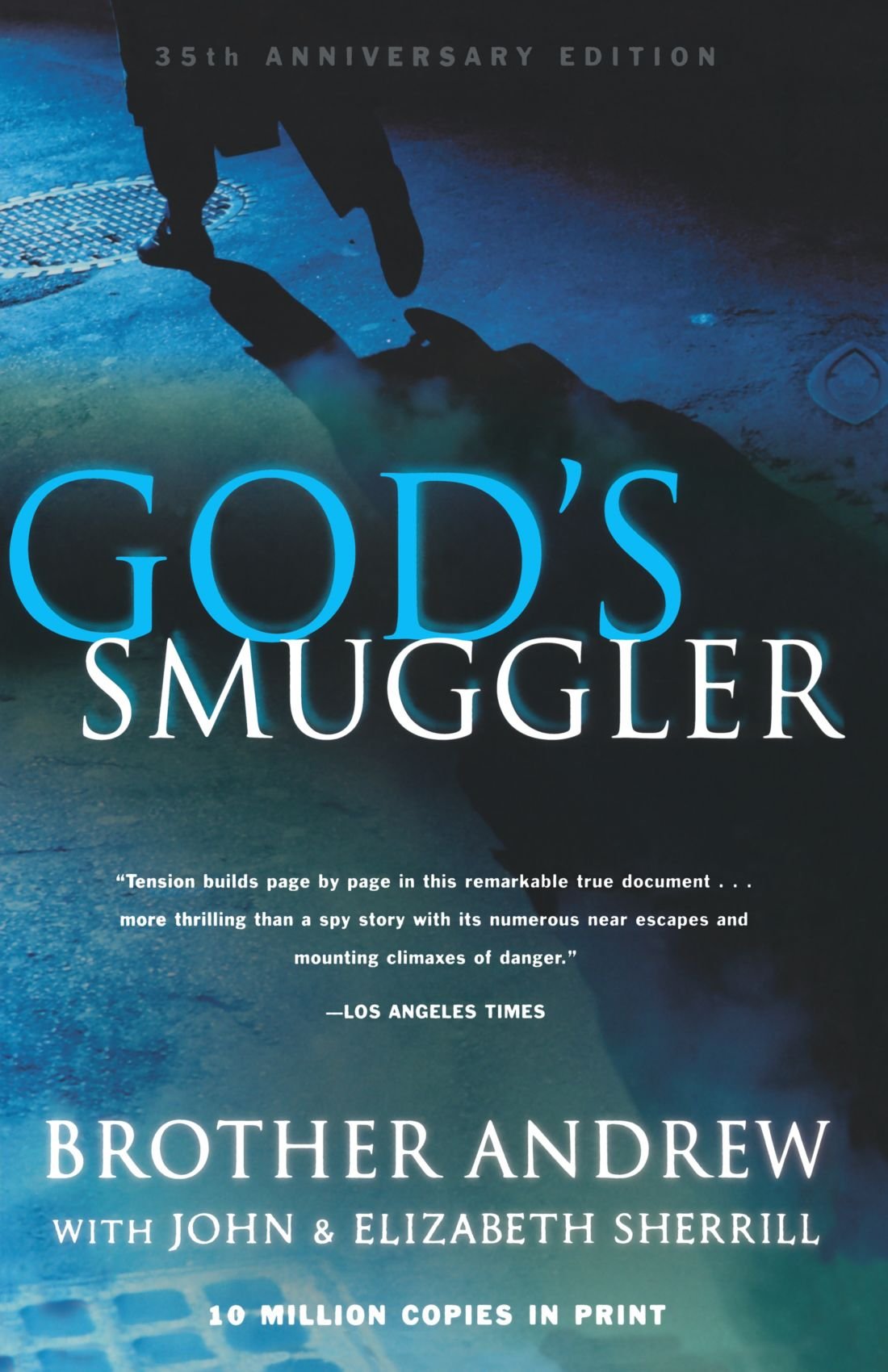
God's Smuggler, one of my favorite books.  Order here.

Corrie ten Boom's book The Hiding Place, another amazing book.  Order here.
   
     I would venture to guess most of us reading this live in nations with relative freedom.  Do we need those reminders too?  It is true that we don't have apparent risks...or do we?  A September 2 article in the Washington Post reports that a nurse practitioner named Paige Casey was fired from CVS's Minute Clinic for refusing to prescribe abortion-causing drugs.  Casey had originally told her employer that it went against her faith, and that was accepted, but their policy changed earlier this year, and Casey was told her faith would no longer be accommodated.  When she was still unwilling to prescribe these drugs, she was let go.  A lawsuit has been filed against CVS by Alliance Defending Freedom, and they are representing Paige Casey.  I will put the link to this article at the bottom of this post.  

     Page Casey's case is just one example.  During the height of the pandemic, churches in some areas were threatened and penalized for continuing to meet (in some US states, and even more so in Canada).  I personally saw this as persecution against Christians.  The way I see it, the pandemic was used as an excuse to go around our first amendment rights (and don't get me started on everything else I believe the pandemic was designed to do...that's for another time and place).  How many of us Americans have been trusting the Bill of Rights for our protection instead of God?  If you've done that, this experience in 2020 hopefully cured us of that.  

     It might seem like it's gotten bad in very recent history, but true followers of Christ have always gone against the grain, and faced persecution.  Even in the midst of religious freedom, and in times of a more Christian culture, those who really loved the Lord with all their hearts were the odd ones out.  Jesus said it would be that way.  Sarah Jane Foster is a case in point.  She was a young missionary from Maine in the late 1860's.  She was a teacher to the Freedmen in the South after the Civil War.  As Christians today, we might look back at the 19th century as a time of Christian perfection--but it surely was not!  Sarah Jane loved the Lord, and loved other people.  She not only taught her students reading and writing, but also about the Gospel of Christ.  She saw many in the community receive Christ as Savior.  She built loving friendships with the Freedmen, and appears to have had some romantic feelings toward one of them.  Suddenly, she wasn't a do-gooder anymore.  She was treating people the way Jesus would, as equals.  And the higher-ups of her sending organization didn't like it.  They were fine with her doing good deeds toward those they deemed as a little bit inferior and needed a little boost.  They were fine with her teaching reading and writing.  For Sarah Jane Foster, that wasn't enough.  The love of Christ was compelling her to go beyond social norms--just as it does for us today.  Sarah was penalized by being moved to another post, shortly before she died at age 29 of yellow fever.  Her diary and letters were put together into book form in 1990 (which I will give the link to at the bottom).  
Sarah Jane Foster, 1839-1868

     I have shared some of my own story in my writing, and some of you have done the same.  Some of us have experienced "going against the grain" for the Lord, in small and large ways.  This happens to Christians in every nation, in every community.  We ruffle the feathers of those who don't buy it.  Sometimes, fellow Christians (or those claiming to be fellow Christians--we'll let God sort that out) are the worst.  The implications are offensive to them.  If we are right, they are wrong, and they don't want to face that.  So what do we do?  Fear the loss of job, loss of favor, fines we may receive, and other consequences that might come?  It is only natural to be afraid.  I imagine Shadrach, Meshach and Abednego at least felt fear (we aren't told that, but they were human too).  But we are commanded to truly fear (revere) only God.  We are also given promises: ...in quietness and in confidence shall be your strength... (Isiah 30:15).  We are to be like the believers in Hebrews 11, who confessed that they were strangers and pilgrims on the earth. (Verse 13).  Everything in our lives is under His control, including the day we die.  And when we do, we run right into His arms, reunited with all Christians who ever came before us.  

     I was seventeen when the Columbine High School shooting took place in Colorado.  I was the same age as many of those who were killed.  Two girls at that time were hailed as Christian martyrs: Rachel Scott and Cassie Bernall.  From all accounts, Rachel (the first student to die that day) was asked if she believed in God, and she replied, "You know I do," and was killed for her response.  Cassie's story is a little less definite, because she was shot in the school library, and there was a lot of confusion.  Another student in the library, Valeen Schnurr was asked if she believed in God, and said yes.  She was shot (but survived), and some confused her voice with Cassie's.  Some thought maybe there were two similar exchanges, one with Cassie and one with Valeen, but by most accounts now, it is believed that the exchange attributed to Cassie was actually Valeen (but Cassie was a Christian, even if not a martyr).  At any rate, students made a stand for the Lord that day, and some lost their lives for it.  I remember asking my dad, "Why would God let this happen?"  I was very shaken up, since these kids were my age.  Rachel Scott had been planning a mission trip that summer, just as I was.  I related to them.  My dad replied by reminding me of Psalm 116:15, which states: Precious in the sight of the Lord is the death of his saints.  The believers who died that day ran right into the arms of their Savior, which we all will one day.  If God's got that covered, can't we trust Him in this life?  Don't fear those who wish you harm.  God is bigger.  
Rachel Scott, Columbine High School martyr, 1981-1999

     What about the other side of fearing men over God?  What about when we let our security rest in someone or something else more than God?  I alluded to the idea earlier of trusting the Bill of Rights instead of God.  Many have put their hope in trusted leaders.  There have been many wonderful leaders, but none of them deserve our faith and allegiance over God.  One US President in my lifetime said in his State of the Union address one year to put our religion aside and just put being fellow Americans as the top priority.  Interestingly, this man did not put his divisive ideologies aside in order to have unity with others, so it was hypocritical of him to ask that of us--but even if he were entirely sincere in saying it, he would be wrong.  Our faith in God must come before our allegiance to anyone or anything else.  Luke 10:27 reminds us we are to love the Lord your God with all your heart and with all your soul and with all your strength and with all your mind... It is okay to trust people, leaders, and established order to a point.  It just isn't where our security should rest.  

     So the next time your boss asks to talk to you later, or you have an upcoming dental appointment, or the government wants to close down churches in the name of public safety, or your job is threatened, or someone has a loaded gun pointed at you, fear the Lord and let Him comfort you with this passage: Do not be anxious about anything, but in everything by prayer and supplication with thanksgiving let your requests be made known to God. And the peace of God, which surpasses all understanding, will guard your hearts and your minds in Christ Jesus.  Philippians 4:6-7)

Trillia Newball's website: https://www.trillianewbell.com/

Friday, September 9, 2022

God Never Forgets

   God is infinite, whereas we live in the confines of time.   This means God's perspective is vastly different than ours.  His is perfect, while ours is limited.  Isaiah 40:28 says that ...there is no searching of his understanding.  Isaiah 55:9 reminds us For as the heavens are higher than the earth, so are my ways higher than your ways, and my thoughts than your thoughts.  

     As humans contending with life on earth, we move on in time.  Our perspectives change.  We forget.  But God never forgets. I had an experience this week that reminded me of this fact.

     I received a message from an old friend, basically out of the blue.  She reached out and shared how her life has gone in some bad directions, and she has experienced some very deep hurt.  I hadn't talked with this friend since we were teenagers (mid-90s).  It seemed both odd and flattering that she thought enough of our old friendship to reach out and share this personal info with me.  And suddenly, I was transported back in time, over 25 years.  

Me (the tallest girl pictured) as a young adolescent, 1993--the age I was when I met this friend, though she is not with me in the picture. The two younger girls with me here eventually outgrew me, and now I'm the shortest of the three of us!

     As a teenage girl, I desperately longed to witness to this friend.  My heart felt very burdened for her.  I knew she wasn't saved.  Her family was part of a cult.  They used some Christian lingo, but didn't know the real gospel.  That made witnessing to her very complicated, since she thought she knew the truths I did.  I never really figured out a way to convey the truth to her in a way she would understand.  I regretted that.  I remember one particular day, sitting down to write her a letter about Christ, but no matter what I wrote, it didn't seem like it would explain how the truth of the Bible was different from her cult. I never sent the letter.  Life moved onward, and we lost touch.  I forgot about her, and my burden to share Christ with her.  I had other things to focus on.  But that didn't mean God forgot her, or my burden to share with her.

     Suddenly, now, in 2022, I had this long-ago friend sharing her struggles with me.  And that memory of wanting to share the gospel with her came back so strongly, it was as if I were living it all over again.  I was once again that teenager from another century, sitting down to write that letter.  This was my time!  The fulfillment of something I once longed for, but had forgotten.  

     Praying as I did so, I replied, depending on God's help with the right words to show compassion and friendliness.  Then, I told her about Christ, and what He has done for me, and can do for her.  I don't know what she will do with this information, or our friendship.  That isn't up to me.  But God called on me to share Him with one who needs him so desperately.  It was an honor to serve.  Please pray for her salvation. 

   This experience was more than witnessing to an unsaved individual (thought it was that, and that is vital).  It was also seeing God being faithful to the desire of a teenager-turned-middle-ager. And if He did this with my burden to share with a friend, He does it with the other burdens that He has given us.  He never forgets what is important to us.  Psalm 37:4 says Delight yourself also in the Lord, and He shall give you the desires of your heart.  The fulfillment is in His timing.  Isaiah 46:10 says, Declaring the end from the beginning, and from ancient times the things that are not yet done, saying, My counsel shall stand, and I will do all my pleasure.  Ecclesiastes 3:11 adds that, He has made everything beautiful in its time...  God knows the difference between a real heart's desire from Him, and what is just a passing fancy.  

     I think of Simeon.  He waited his whole life for the Messiah.   God had told him he would live to see Him in his lifetime.   When Simeon saw baby Jesus, he knew the joy of a fulfilled desire, and knew he had lived his purpose.  He said in Luke 2:29-32, Sovereign Lord, as you have promised, you may now dismiss your servant in peace.  For my eyes have seen your salvation, which you have prepared in the sight of all nations: a light for revelation to the Gentiles, and glory to your people Israel.  

     Life moves on, but God never forgets.  He keeps everything that matters to you, even after you've given up.  The moral is, don't give up!  Give into Him!  He specializes in bringing dead dreams to life when they're committed to Him! I'll close with a quote by Martin Luther:  I have held many things in my hands, and I have lost them all; but whatever I have placed in God's hands, that I still possess.

Monday, August 29, 2022

Follow your heart?

      How much can the human heart be trusted to steer us correctly in life?  If you're like me, you have heard a lot of people use phrases like, "Follow your heart," or "Listen to your feelings."  On the other hand, I have also heard many wise Christians use the opposite advice, reminding us that, The heart is deceitful...and desperately wicked... (Jeremiah 17:9).   The Apostle Paul himself reminds us that, For I know that in me (that is, in my flesh,) dwelleth no good thing: for to will is present with me; but how to perform that which is good I find not. (Romans 7:18).  In our sinful nature, we are unable to do rightly, decide rightly, or please God.  Does this mean that we are to squelch every inclination we have and just force ourselves to do things we have no heart for?  Some would say yes.  One dear friend of mine used to really struggle with this, and felt that making decisions was basically surrendering to do the exact opposite of her heart's desires, and that must be God's will, since it made her miserable.  She was very sincere, but, I will venture, very mistaken (and she knows this now, having grown in her own walk with the Lord).  

     We need to examine a few things.  In this post, I'll be looking at 1) How God leads and directs our lives, 2) the difference between heat-of-the-moment feelings and a true heart's desire, and 3) the way Christians in the Spirit are different from those in the flesh, or unbelievers.  

How God Leads and Directs Our Lives

     I remember once, I was offered a ministry position in a different city than I was serving in at that time.  The idea of leaving where I was at, and going to this other city really didn't appeal to me just then.  The way I sensed God leading me just didn't fit with this opportunity, so I turned it down.  When I did, though, I made the mistake of using the phrase, "I don't feel led to that right now."  The person making the offer quickly seized on this and said, "You can't go by your feelings, honey."  Was she right, or was I?  Did God mean for me to take up this offer, simply because to do so was to deny my feelings, and feelings were allegedly bad?  How does God lead us? 

     If you've followed me for any length of time, you know that I hold that the Bible is the inerrant, inspired word of God, and is our final authority.  Anything you think you are led to do must align with what God has said in His Word.  If I feel led to shoplift, I can know right off the bat that it isn't God's will, because God has said in His Word, Thou shalt not steal. (Exodus 20:15).  

     Not only does the truth in God's word direct us on what is and isn't right, but the Author of the Bible lives in all believers, and He illuminates scriptures for us.  Have you ever had a time when you were reading the Bible, and a verse you'd read a hundred times suddenly jumped out at you in a new way, giving you a sense of knowledge of what you were supposed to do in a situation you were facing?  I have!  That is how the Holy Spirit uses the Bible in our lives, and that also brings me to the next point on this--the Holy Spirit indwells believers, giving us guidance in our hearts.  Isaiah 30:21 says, Your ears shall hear a word behind you, saying, “This is the way, walk in it,” Whenever you turn to the right hand Or whenever you turn to the left.  Jesus told the disciples that the Holy Spirit would guide believers into all truth (John 16:13).  The Holy Spirit and the Word of God will guide you into what you are to do.  God wants to enable you to know and do His will!  The Holy Spirit also guides you in your prayer life.  As you pray and see answers, that can also be a source of guidance.  

     God also uses fellow believers and circumstances happening in your life to guide your steps.  When all of these things line up--what God is saying to you in the Bible, the inner testimony of the Holy Spirit, the way He is guiding and answering your prayers, what other Christians in your life are telling you, and the way things seem to be orchestrated--you can often very easily tell what God's will is.  Bottom line, though, if you are saved, the Lord knows how to reach you and communicate with you.  You will hear Him if you truly want to.  

     Funny story.  I read a book many years ago about hearing God's voice.  The author of this book tried to list every way God could speak to a Christian.  They really got into the nitty-gritty.  One of the ways they had listed was billboards!  They said that sometimes, billboards have verses on them, and someone the author knew was driving along, and a billboard had a verse that spoke right to their need and gave them the answer they were praying for.  To this, I say, praise the Lord!  But I think trying to list every conceivable way God could speak to you is going to be endless if you're going to get that specific.   You'd also have to list T-shirts, because you can meet someone wearing a T-shirt with a verse on it, or bumper stickers on cars in front of you on the road, because bumper stickers can have verses on them.   99.99% of the time, a billboard isn't going to tell you God's plan for your life--but as with the case of Balaam's donkey, God can use anything!  

Heat of the Moment Feelings vs. True Heart's Desire

     Feelings are very real.  It was important to God that we have them--evidenced by the fact that He gave them to us!  They are part of reality, but they are not the lens by which we are supposed to judge reality.  In short, feelings are not bad!  God made all things well, and He made our emotions.  Even unpleasant emotions are not bad.  Like most things, it's what you do with them.  There have been moments where I felt so enraged toward someone.  That wasn't sinful.  Ephesians 4:26 says, Be angry and do not sin...   This leads us to conclude that anger itself is not a sin.  But we are not to indulge our anger, or other emotions.  Jesus called us to deny ourselves, take up our crosses, and follow Him (Matthew 16:24).  Our emotions might change from moment to moment.  A lot can factor into what we're feeling, including what you ate, your health, if you are tired, or any other number of possibilities.  It is never wise to follow our emotions or let them control us.  But these feelings are real, and the best way to manage them is by acknowledging them, and giving them to God, and letting Him bring healing where needed.  You can even use your emotions to produce something beautiful, instead of letting them use you to produce something ugly.  I do my best writing when I feel something very strongly.  But I also do my worst behavior toward others if I'm not careful!  

     God cares about how you feel.  Psalm 56:8 comforts us with these words: You have kept count of my tossings; put my tears in your bottle. Are they not in your book?  God ministers to us in our sorrows and hurts, and He communes with us in our happiness and triumphs.  My mother used to tell me that, every time you cried, God sent an angel to give you a hug.  I don't know whether this is true or not, but it is a lovely thought, and it does reflect the compassion of God described in scripture.  

     Unlike passing emotions, there are heart's desires that I believe are God-given.  They can affect one's emotions.  They can go hand-in-hand with what someone is feeling, but they're so much deeper.  They become a part of who that person is--an extension of himself.  I believe Hannah expressed those heart's desires in First Samuel 1:10-12.  It's something deep in your heart that won't let go.  It isn't just wanting something.  I want a 2022 Lincoln Corsair!  But that isn't a deep heart's desire for me.  I haven't longed, hungered, thirsted, and wept for a 2022 Lincoln Corsair.  I haven't taken it to the Lord, from a broken heart and wounded spirit.  I believe we do that with true heart's desires. 

     Sometimes, those heart's desires are tested, and we experience the death of a dream.  Joseph experienced that in Genesis.  In Chapter 37, we read of Joseph sharing some dreams given to him.  Dreams of leadership and greatness.  Then, the next years of his life are anything but the dreams in his heart.  He was sold as a slave, sexually harassed, lied about, disbelieved, imprisoned, and forgotten. He must have thought he was mistaken about his dreams, but he never got hard toward God,  Finally, in chapter 41 (and after about 13 years of suffering), Joseph's dreams came true.  But the result wasn't just for his gratification.  It was so he could be used to save the world from a famine, and to save his family--thereby preserving the nation of Israel!  His dreams were real, but they had to come about in God's timing.  The same is true for us.  We have to surrender to the Lordship of Christ in all areas, and let Him work.  Sometimes, He changes our heart's desires, proving that they weren't real desires of Him in the first place.  If God has given you a heart's desire, that you really, truly believe in your heart is of Him, hold onto that, but hold onto Him tighter, and let Him work it out.  He will show you what to do, and when to do it.  Your job is to obey and wait.  Ask God to clarify His will when you get discouraged.  It is okay to ask Him for a glimpse into what He is doing.  Along the journey, God has plans for you that you can't even imagine.  

     I remember when I was twenty years old.  I had just started out as a full-time missionary (stateside).  I was excited, but very broken.  I was what you would call poor in spirit.  Several of my hopes and dreams had been disappointed.  My heart had been broken.  I had been hurt and manipulated, and those who hurt me were being hailed as paragons of virtue by our ministry at the time (worth noting, the President of this ministry later apologized to me on behalf of the ministry for what had happened).  Those were low, dark days for me.  Sometimes, getting out of bed in the morning was hard.  There were moments I didn't know if I could even take the next breath, that's how badly I hurt all the time.  If I wasn't directly with other people, I was crying.  Hard.  Weeping, until my whole body shook.  I daily asked God to take me home during that time.  I was more afraid of life than I was of death.  If you are familiar with the Christian poem Footprints, you'll understand what I mean when I say that those were one-footprint days.  And yet during that dark, difficult time, some of the best fruit of my life was reaped.  Barely managing every day, I invited a teenager girl to our summer missionary training camp, believing her to already be a Christian (she thought she was too), but she ended up getting saved as she led a group of five children to the Lord!  From there, I got to disciple this young woman, and she is now a full-time missionary herself!  That time in my life was not my heart's desire, but it was so vital for eternity!  Every moment is!  Even at our darkest times, God is working and using us, sometimes when we have no idea!  We might not have "arrived" yet, but God is making someone else's dream (and His purposes) come true through you!  A song that was popular during that time was Shout to the North, and some of the lyrics really speak to that time: ...You are strong when you feel weak.  In your brokenness complete...  I was broken, but I was complete, and God used me.  He gently guided me every day, and led me to a better place.  

     Some verses that have encouraged me on my journey are as follows:

...we went through fire and through water; But you brought us out to rich fulfillment.  Psalm 66:12

I would have lost heart, unless I had believed that I would see the goodness of the LORD In the land of the living.  Psalm 27:13

For as the heavens are higher than the earth, So are My ways higher than your ways, And My thoughts than your thoughts.  Isaiah 55:9

Do you not know? Have you not heard?  The Everlasting God, the Lord, the Creator of the ends of the earth does not become weary or tired.  His understanding is inscrutable.  He gives strength to the weary, And to him who lacks might He increases power.  Though youths grow weary and tired, And vigorous young men stumble badly, Yet those who wait for the Lord will gain new strength; They will mount up with wings like eagles, They will run and not get tired, They will walk and not become weary.  Isaiah 40:28-31

Truly, truly, I say to you, unless a grain of wheat falls into the earth and dies, it remains alone; but if it dies, it bears much fruit.  John 12:24

And my life verse, Romans 8:28, And we know that in all things, God works for the good of those who love Him, who have been called according to His purposes.  

     These and other verse remind us that there is eternal meaning behind everything that happens to us, and that God hasn't forgotten us.  He is working out His perfect will, and our heart's desires matter to Him.  But ultimately, true surrender means:

These all died in faith, not having received the promises, but having seen them afar off were assured of them, embraced them and confessed that they were strangers and pilgrims on the earth.  Hebrews 11:13.  

     We must be surrendered to Him, above even our own hopes and desires.  We will receive our heart's desires in eternity--we can take that to the bank!  God will fulfill us in Heaven so far beyond anything we can even imagine on earth.  This above verse of Hebrews 11:13 is talking about Old Testament saints, who faithfully waited for the Messiah.  He did not come in their lifetime, but they believed in Him anyway, and that was their salvation!  The application for us is two-fold.  First, Christ is our salvation, and we must look to Him in faith.  Second, we might not see things happen the exact way we hope, but we must trust Him, and know our purposes will be served, both now and in eternity.  

     All of that to say, God does place desires in our hearts, and, letting Him guide us, we can see Him work!  Hold out for what God is leading you to wait for.  If an opportunity comes that just doesn't line up with how God is leading you, or that heart's desire, it is okay to say no!  It doesn't mean you're going by emotions.  

The Spirit, the Flesh, and Unbelievers

     Early in this post I mentioned some verses that illustrate why people shouldn't follow their hearts.  It should be pointed out, though, that these verses about our hearts being evil are referring to our natural state--the way we were before salvation.  A heart without Jesus Christ, and the indwelling change the Holy Spirit makes.  As Christians, we have the mind of Christ! (First Corinthians 2:16).  We have been raised with Christ (Colossians 3:1).  We are sealed with the Holy Spirit (Ephesians 1:13).  A very great promise about our new life is found in Galatians 2:20:  I am crucified with Christ: nevertheless I live; yet not I, but Christ liveth in me: and the life which I now live in the flesh I live by the faith of the Son of God, who loved me, and gave himself for me.  Jesus' death is given to our sinful self, so that it doesn't have power over us anymore, and His victory is given to us now!  He empowers us to live, choose and do righteously, according to the will of God.  In this state of walking in the Spirit, we can follow the inclinations God puts into our hearts.  

     We still have that sinful nature, also known as the flesh.  As we saw earlier, Paul wrote in Romans 7:18 that in his flesh there "dwelleth no good thing."  While we are being made more and more like Jesus, our sinful nature doesn't improve.  The good news is, we have victory over it, and never have to sin!  Because of this, we need to seek to be in the spirit, and not the flesh.  All we have to do is ask the Lord to help us, and He will!  He will enable you to live in victory over your flesh!  There are Christians who are letting the flesh rule them (sometimes I'm one of them).  But it doesn't have to be that way, and it doesn't give us the happiness it gives a non-believer, because we have the Spirit of God living in us, convicting us of sin, and helping us to do right.  When we sin, we grieve the Spirit.  We are at war within.  Galatians 5:17 explains it this way:  For the flesh lusteth against the Spirit, and the Spirit against the flesh: and these are contrary the one to the other: so that ye cannot do the things that ye would.  The Spirit wants to give you victory.  You already have the mind of Christ, and His victory has been given to you!  It's up to you to choose it daily!  When a Christian is operating in the flesh, following their heart is very disastrous!  

     Non-believers are also in the flesh, and have no other alternative.  These people are dead in their trespasses and sins (Ephesians 2:1).  They are blinded by Satan (Second Corinthians 4:4).  They have a depraved mind (Romans 1:28).  They are in a very bad way if they follow their hearts.  For them, their heart really is deceitful and wicked.  They probably are operating out of emotions, more than a God-given heart's desire.  They are not seeking the Lord for His guidance.  God can still guide these people, and His goal is to guide them to His Son!  For them, these assertions about the heart being wicked is the truth.  Telling an unsaved person to follow their heart is a recipe for disaster.  

In Conclusion 
     
     If you are a born again Christian, being guided by the Bible and led by the Spirit, you can prayerfully pursue the direction you believe God is leading you.  Be careful, because you still have the flesh, and we are all capable of operating in it.  But I will close with this sweet verse: Delight yourself also in the Lord, and He shall give you the desires of your heart.  (Psalm 37:4)


Wednesday, August 24, 2022

Rightly Divided

     Just to get you thinking...

     How should church worship be conducted?  

     Do you believe in predestination or free will in regards to salvation?  

Do you believe that Christians are secure in their salvation, or can a believer fall from grace?  

Are all spiritual gifts mentioned in the Bible still in operation today, or have some ceased?  

Should women be ordained as pastors?  

Is alcohol consumption wrong?  

Is it more spiritual for a church to be non-denominational, or part of a historically-respected association?  

What constitutes modest clothing, and does modesty really matter anyway, or is it just legalism?  

     Now that I've asked all these questions to get you thinking, I ask another question:  How do you arrive at your personal convictions on these and other issues?  You probably have an opinion about some of these things (possibly all).  I'll say up front that, while I may mention some of these things in this post (and actually have covered a few in other posts in the past), I will not attempt to answer most of them here.  My goal today is to focus on how Christians should arrive at their convictions--not on what convictions they should have.  That's up to you to do that work, under the guidance of the Holy Spirit.  

     Before I jump into any of this, I want to state that there are godly, spiritually-mature believers on both sides of all the theological quandaries I mentioned (read Romans 14 for a breakdown of how this works when believers have opposing convictions).  The very first step of forming any biblical belief is to recognize that there are wonderful Christians who may have drawn different conclusions than yours.  There are essential doctrines of what it means to be a Christian.  These are truths we must all agree upon to be a Christian (by the biblical definition).  These essentials include the inerrancy of scripture, the deity of Christ, salvation through Christ alone, salvation being received by grace through faith, the death and bodily resurrection of Jesus, monotheism (the belief that there is only one God), and the Holy Trinity.  Those who share these beliefs are Christian brothers and sisters to one another.  There is room for disagreement on lesser things, as long as we agree on these essentials.  John Wesley is often crediting for the now-commonly used statement: "In the essentials, unity; in the non-essentials, liberty; in all things, charity."  Regardless of who originated the quote, it is very true.  We can't form our beliefs correctly if we villainize our brothers and sisters in Christ.  In fact, be very wary of leaders who speak against fellow Christians who differ on these non-essentials.  Every single question I started this post with would fit into the category of non-essentials, by the way.  No one who differs from you on any of those things is your enemy.  If we have that straight, we can move on.  

     Having said that, are our beliefs on non-essentials simply unimportant? Not at all.  They matter greatly.  What you believe about these and other theological positions will often determine what church you're led to attend, or what ministry opportunities to take advantage of, and other choices you make.  They matter.  Just not to the extent that we devalue Christians who take a different position.  

     Rather than just examining how we are to draw the right conclusions about things, let us look at how people often do so--incorrectly--followed by the right response!  I am going to give four examples, and as I do, I'll be delving deeper into some of these theological issues--but even as I do this, I am not telling you which side to believe in these doctrines.  

Incorrect Process 1: Reaction to another belief

     During the Protestant Reformation, the Catholic church tried to assert their trustworthiness as a true church by claiming to have experienced miracles.  Reformer John Calvin responded that the purpose of miracles was to authenticate divine revelation and the church's doctrines.  He argued that, since the Reformation was getting people back to the beliefs of the apostles (which had already been authenticated in the book of Acts), no miracles were necessary, and therefore (he concluded) the alleged miracles claimed by the Catholic church could not be real.  This argument launched the doctrine of cessationism (the belief that miraculous signs, such as prophesy, speaking in tongues, healing, and other such things were no longer needed for today, because we have the complete word of God, and it has already been authenticated).  By the way, the opposing belief to this is continuationism, which teaches that God has not changed from how He has worked in the Bible, and all gifts are available today, and, if done biblically, should be accepted.  Some continuationists take this belief further than that, and go into unbiblical experiences in the name of spirituality.  

     In the centuries to follow, other theologians would agree with Calvin's cessationism, and even add to his assertions on this subject.  In the 1700's, the Wesleyan-Methodists (a protestant group founded by John and Charles Wesley) started emphasizing the work of the Spirit in believer's lives to give them assurance of their faith.  As a result of this spiritual (and subjective) experience the Methodists were claiming to have, those who followed cessationism claimed this violated the truth.  All experiences that were not read directly out of the Bible were suspect.  This concern grew even more so at the rise of the Pentecostal Movement in the early 20th century.  It has been pointed out by cessationists that the founders of false religions (from Islam to Mormonism) have claimed to have these spiritual experiences, and, according to some cessationists, this is evidence enough that spiritual experiences of any kind are not to be trusted at all.  

     Today, many Christians follow cessationism as a belief.  One of the biggest proponents of this belief right now is John MacArthur.  Many people today who follow cessationism express discomfort when other Christians claim to experience things like divine guidance, hearing God's voice, or any personal relationship with God.  Some have even gotten concerned when someone claims to have had God speak to their personal situation during their Bible reading.  In other words, from what could be gathered, these particular cessationists believed that the Bible was an infallible guidebook, and we needed to obey it, but that it didn't address us personally, or speak into our lives directly.  The Holy Spirit was de-emphasized by those in these interactions.  Man's relationships with God seemed more formulaic and robotic than personal.  

    I am not going to make a declarative stance right now about cessationism or continuationism here.  There are, however, a few facts worth noting.  This belief was started by John Calvin as a reaction to claims made by the Catholic Church.  Calvin drew his conclusions as a reaction, as have other cessationists through the years.  It is never wise to make your beliefs based on an "equal and opposite reaction" to something you disagree with.  That's still letting that other belief control you.  I believe the right thing for Calvin (or anyone) to have done would be to completely disregard the alleged miracles being claimed (speaking neither for nor against them), and instead to just look at the Word of God for truth.  I believe John Calvin was faithful in many, many ways, and was a true hero of the faith.  But he wasn't perfect, just as we are not, and I think he made an error by forming a doctrinal belief about miracles and signs.  

     On the other hand, at the opposite extreme of cessationism, we have people (like the Catholic church in the scenario with John Calvin) claiming their experiences authenticated truth, rather than the other way around.  There are churches today that believe God gives people new revelations equal to scripture, and that God is continuing to reveal new truths to people.  One church, which I visited with friends many years ago, has this belief listed on their website: We believe that God in His sovereignty, is progressively giving fresh and deeper revelation of the truth contained in His Word. This leaves the door open for leadership to claim they understand the Bible differently than it was intended, and creating their own doctrines. When I visited this church, the pastor claimed to be an Apostle, just like Paul and Peter. He put himself above accountability. People in the church gave each other "prophecies" for one another, which were just manipulative statements that the person wasn't allowed to disagree with, because it was allegedly from God. One woman there told me that God has given her a secret about me. Nothing I saw there was of God, even though it was made to look very spiritual. There were no boundaries. None of the orderliness the Bible calls for (First Corinthians 14:40).

So how would you form the right belief between very guarded cessationism and utter chaos? As I said, I'm not going to tell you what to believe. I am telling you not to choose your belief (whatever it is) as a reaction to wrong things. I shouldn't say, "I don't like how strongly cessationism seems to limit what we can expect from God, so I'll go to this extreme church that believes in everything, and allows me to interpret my experiences however I want." Nor should I say, "I don't like these ungrounded, emotional churches with no order. I'll become a cessationist, so I can believe that's all fake." If you choose either side (or somewhere in the middle) I hope it is after a lot of study in God's word, under the guidance of the Spirit. First Thessalonians 5:21 says, Test all things; hold fast what is good.  Examine what the Bible says on a given subject.  Look in the Old and New Testaments.  Read commentaries (but also realize the writers of commentaries have their own biases).  Interpret any experience you have in light of the Bible, not the other way around.  I'm still not advising you to believe a certain way, but I will say this: Unlike a strict cessationist, I do believe our experiences have some value in teaching us about life, and our relationship with God, but (unlike those on the opposite end of the spectrum from cessationism) I do not believe these experiences are our source of truth.  The Bible is our guide, and as we interpret what happens around us in light of it, we come to know God better (you can read a lot more about that in the very biblical book, Experiencing God, by Henry Blackaby).  You may look at it or order it here.  

Incorrect Process 2: Choosing your beliefs based on your own liking or disliking.  
     As a young woman, I was exposed to the Calvinism/Arminian argument.  If you are not familiar, you can read a lot about it online, but basically, Calvinism (named after John Calvin) is the belief that God pre-ordains our salvation by His own Sovereign choice.  Proponents of Calvinism also assert that a Christian cannot lose his or her salvation (this doctrine is known as Perseverance of the Saints).  The opposing side, Arminianism, also takes its name from its founder, Jacobus Arminius.  Arminianism emphasizes man's free will in choosing to receive Christ in salvation (this theological position does believe in election, but they would say that election is based on God's foreknowledge of who would respond favorably to the Gospel, whereas Calvinism teaches God arbitrarily chose who would be saved, not based on foreknowledge of anything people would do, but just His own Sovereignty).  When taken to its logical conclusion, Arminianism concludes that a Christian can lose his or her salvation.  It should be noted that, while a lot of Christians debate this, it is still a non-essential issue, and most Christians fall somewhere in the middle, believing some of the points of Calvinism, and believing the Arminian arguments on other points.       

     As I said, I was exposed to this debate as a college student.  My own background was more on the Calvinist side, but my Bible college was Arminian in their theology.  Our profs were very, very fair to all Christians of varying positions on this, and explained it very respectfully, humbly sharing where they stood on the issue, and encouraging everyone there to read the Bible, and form their beliefs on that.  When our professor explained some of the very fine points of both sides, I said, "Wow, I don't like that," about certain things.  I was ready to pick my side based on whether or not I liked it.  My very wise professor said, "Well, you shouldn't choose your theology on whether or not you like it.  You choose to believe what is true, whether you like it or not."   He was so right.  

     We may not like everything God has said, but it is no less true.  When Walter and I were engaged, I didn't like that God's word required us to remain celibate until marriage, but it does (First Corinthians 6:18, Hebrews 13:4), and we needed to obey.  I don't always like the political leaders over me, and I don't like that the Bible says I need to pray for them anyway, but it does (First Timothy 2:2), and I must do it.  Do you see what I'm getting at?  My liking or disliking something doesn't make it true or false.  I needed to choose my belief about Calvinism/Arminianism by reading the Bible and studying what both positions teach in light of that--not because I like or dislike them.  We need to do away with our own personal biases, and go straight to what the Bible is really teaching.  Before we get into deep study, we need to pray the prayer found in Psalm 139, Search me, O God, and know my heart; try me, and know my thoughts: And see if there be any wicked way in me, and lead me in the way everlasting.  We want God's truth, not our own prejudices.  There are people out there today completely denying God's word, because they dislike what God has said.  We can't be like that.  We are to hold fast to the hope we profess... (Hebrews 10:23).  Don't choose your beliefs based on your likes and dislikes.  

False Process 3: Choosing beliefs of your favorite Bible teachers.  
     Another way you should be careful choosing beliefs is to not fall in the trap of choosing your beliefs based on your favorite Bible teachers.  They may be wonderful, and theologically sound, but this does not mean they are perfect.  They are human, just like us.  They have their own biases.  If you decide you agree with them, make sure it is because you, too, have searched it out scripturally, and drawn the conclusion for yourself, not just blindly followed your favorite teacher.  First Corinthians 3:4 warns that the same problem was going on in the first century.  Believers were aligning themselves with Paul and Apollos, and then arguing over who was better.  The point is, neither!  They were being carnal.  We are to be like the Bereans.  Acts 17:11 says, Now the Berean Jews were of more noble character than those in Thessalonica, for they received the message with great eagerness and examined the Scriptures every day to see if what Paul said was true.  We are to examine scripture, not blindly believe any leader.  

     A good leader will urge you to go to the Bible and check him out.  3 John verse 4 says, I have no greater joy than to hear that my children are walking in the truth.  The Apostle John deeply loved these people, and it gave him joy that they were walking in the truth.  That's what a godly leader wants.  Pastor Jon McCartney, of First Baptist Church of Tooele, UT said, "One of the things I tell our congregation almost every Sunday is, you have sermon notes.  Virtually every verse I quote from scripture is on there, because you need to go home and check me out.  You need to see what the Bible has to say.  Not what Jon says.  Not what Joseph says.  Not what anybody says but God.  What does God say about these issues?  You need to check these things out.  It is your soul--your eternal soul--that is on the line.  And, there is no reset button at the judgment.  There is no finger-pointing, 'but he misled me.'  You have an obligation for the sake of your soul, as well as to be able to share the truth with your family--the people you love--to check out what God's word has to say on these issues, and not what somebody else had to say.  And the answers are only found within the Word of God, which is the Bible."    

False Process 4: Choosing beliefs based on how proponents of those beliefs treat you


     One final thing I am going to point out is that we should not choose our beliefs based on how proponents of that belief have treated us.  There are kind people with false beliefs, and cruel people with true beliefs.  They can make a certain belief attractive or unattractive, but that should not be why you choose to believe it.  If the nicest person you ever met believed humans could breathe underwater, would you try it, since the person was so kind?  Of course not!  When I was in high school, I was invited to a very charismatic church by some friends.  In fact, this is the church that I mentioned earlier that claims to believe in continuing revelation.   Back then, there was no internet to look this church up and see how odd their beliefs were, so my parents let me go with these friends.  While I was with them, I had some very negative experiences.  Their pastor (claiming to be an apostle) made some very offensive statements.  Their father yelled at me and told me I had no faith, while at the same time, manipulating me into buying their gasoline on the way home.  A woman in the group said God had told her a secret about me, and it wasn't good.  These experiences hurt my feelings.  But would it be right to conclude that their extreme charismatic beliefs were wrong just because they offended me?  No.  I needed to look at the Bible.  Hopefully, I would have found that their belief about continuing revelation is false (...If any man shall add unto these things, God shall add unto him the plagues that are written in this book.  -Revelation 22:18), and that if their so-called prophecies were true, they would have lined up with the Bible, not furthered the agenda of the speaker.  That kind of critical thinking and searching of scripture is the right way to solve these concerns, not just choosing to think it's wrong because of how bad the experiences is.   

     I have examined some common but incorrect ways people (myself included at times) have picked their beliefs.  As stated, they may react to a wrong belief by going to the opposite extreme.  They may choose beliefs because they like them.  They may simply adopt the beliefs of their favorite teachers or role models.  Finally, they may choose their beliefs based on how proponents of this belief have treated them.  What we should do is examine the Bible for itself, under the direction of the Holy Spirit.  We are told that the word of God is living and active, and sharper than any two-edged sword, even penetrating as far as the division of soul and spirit, of both joints and marrow, and able to judge the thoughts and intentions of the heart. (Hebrews 4:12), and to Study to shew thyself approved unto God, a workman that needeth not to be ashamed, rightly dividing the word of truth. (Second Timothy 2:15).  Let's get at it!