Saturday, May 11, 2019

FUNdamentals


     "Oh no," my husband sounded concerned a week ago.

     I looked up from the book I was reading.  "What is it, honey?"

     He turned from the computer to meet my gaze.  "A Christian author died today.  She was our age.  She had a husband and two kids"

     Wondering if I might know who it was, I asked the author's name.

   He squinted at the screen.  "Rachel Held Evans."

  I racked my brain, but didn't recall the name.  Naturally, I looked her up.


Image result for rachel held evans
Rachel Held Evans
     As a Christian writer myself, I am always interested in my fellow authors of faith.  I saw that Rachel had written four books.  Wanting to check her out, I purchased the shortest, least expensive book.  Since I bought it on Amazon kindle, it was available immediately.  I read it in a couple of hours.  My heart truly goes out to her husband and children, and my prayers are with them as they carry on.

     As I read her book Faith Unraveled; How a Girl Who Knew All the Answers Learned to Ask Questions, I was disappointed.  She joins the long list of post-evangelical female authors who want to share their journey from the "confines" of fundamentalist Christianity to the "liberation" of this vague, undefinable faith that they still consider somewhere on the Christian spectrum.  A year ago, I read and reviewed a similar book When We Were on Fire, by Addie Zierman.  Similar stuff.  Another outspoken woman in this category writes the blog Parenting as a Liberal, Feminist Christian, in which all she routinely rants about things that evangelical Christians value or do (such as dressing modestly, voting for candidates who espouse biblical values, or having costume parties at churches on Halloween in lieu of trick-or-treating).  As if any of this stuff hurts her!  What pain does she experience when my church has a "Trunk-or-Treat" outreach?  How about when I choose to wear a one-piece swimsuit?!?  Come on!

     All three of these beautiful women have something in common.  They were raised in solid Christian faith and, by their own admission, made a commitment to Christ at a young age.  Then, somewhere in early adulthood, they hit a point where they were done.  All three (as well as others like them) still claim to be Christians, but with a "redefined" faith.  Addie Zierman uses the term "reimagining" her faith.  

     Both the labels of "fundamentalist" and "evangelical" fit my belief system.  I am a fundamentalist Christian.  I am an evangelical.  But to be honest, I don't use those titles much.  I'm a born-again Christian whose faith aligns with the Bible.  The terms "fundamentalist" as well as "evangelical," while applicable, are often abused and misunderstood.  They are associated with statistics more than personal faith.  Those words get people's radars up.  I don't want to do that.  

     Before I talk about Rachel Held Evan's book in depth, I want to clarify what fundamentalism means.  The term cropped up for Bible-believers in the 1920's, amidst the rise of modernism--self-proclaimed Christians who did not want to believe the Bible as literally.  A big push in this was the Scopes Trial, in 1925.  The trial was held in Dayton, Tennessee, and involved the legal right to teach Evolution in public schools.  While, at that time, Creationism won the battle, some real damage happened.  Fundamental Christians (those who believed in a literal 6-day creation from the book of Genesis) were made to look stupid, and at odds with science.  This is a mistaken idea.  Evolution is a theory.  In a sense, so is Creationism.  Both require faith.  Neither theory could actually be called science, because, for something to be scientific, it must be observable, measurable and repeatable.  Neither Evolution nor Creation fits this definition of science.  Both are a matter of faith.  Both sides look at available evidence from their own viewpoint.  In truth, there is no conclusive evidence to support Evolution.  We still have apes today, and we have humans today.  Yet, we don't have some link between walking around.  If we truly evolved from apes, there probably wouldn't be apes anymore, or if there were, not only would there still be apes and humans, but there would be links, and there aren't (note--this argument, while valid, is not used as much today, since Evolutionists are now no longer claiming we evolved from apes, but that we evolved from a common ancestor to apes.  There is still no evidence to support our supposed sub-human ancestors).  Also, no one can say what ultimately caused the Big Bang.  Additionally, explosions cause disorder, not the order we find in our solar system.  These are just some very basic arguments against Evolution that I was taught in junior high by a Christian lawyer who came to speak to our class, and I was convinced for life of the fallacies of Evolution.  I studied even more in-depth as I got older, and am more convinced than ever in the truth of Creationism as found in Genesis.  For a long time, both Biblical Christians and outspoken atheists have mistakenly agreed that God and science were in disagreement.  This isn't true.  God created science, and there are Christian scientists who are much smarter than I am who reveal many ways that the evidence supports the claims of scripture.    But science aside, Fundamentalists take the Bible at its word.  This puts them (us, as I am one of them) at odds with those who do not.

Image result for Bible
     I find it easier to converse with someone who just flat-out disbelieves the Bible and always has than with those who were once Bible-believers and now deny a lot of it, but still hang on to some semblance of Christianity.  The former have never encountered and denied Jesus.  The latter are usually very bitter and angry.  Also, I find their arguments fraught with fallacy.  I am going to use Rachel Held Evans as an example.  I will say, before I begin, that she is one of few I have read that is not mean or angry.  I felt like I actually liked her as a person while I read it.  

     In her book, she recounts her journey.  She grew up in a Christian family in the South.  She made a commitment to the Lord at age 5 (much as I, myself, did). She went to AWANA, Sunday school, and had the benefit of a Christian education.  As I read this part of her story, I felt I was reading my own life story (except I'm not from the deep South).   Since she is my age, I related to her in that way as well.  While she was going to AWANA and Christian school in Alabama, I was doing the same in California.  It was a happy life.

     Rachel struggled with doubts here and there, but her major crisis of faith happened in the early 2000's, while she was attending a Christian college.  Shortly after 9/11, she saw a Muslim woman being killed by her own people on TV.  It was incredibly tragic.  Human life is a gift from God (Psalm 139:14).  The crowning glory of creation (Genesis 1:27).  Any loss is a tragedy (Exodus 20:13).  Like many of us were during that time, Rachel was deeply troubled, wondering where this woman would spend eternity.  She was Muslim, and according to the Bible, no one comes to the Father except through Jesus Christ (John 14:6).  But did this woman have an opportunity to hear the gospel?  She was in a Muslim country.  She had been raised on the teachings of Islam.  According to information Rachel later discovered, this woman was in an abusive marriage.  How did this poor woman have a chance to hear the gospel?  Would God take all of it into account?  This led Rachel to wonder if she, herself, was a Christian because she was an American, much the way this woman was Muslim by virtue of being a Middle Easterner.  What did God do with people who never heard the gospel?  Was it fair of God to condemn anyone to Hell who didn't follow Him?  Were there exceptions?  If so, what were they?  Was there hope for this Muslim woman who had died on TV?

Image result for picture of a muslim woman and a christian
     
     This led Rachel to deeply question her faith.  She spent time thinking and studying.  She asked a lot of questions, and the answers she got did not satisfy her.  She eventually came to the point of faith that was very vague.  When evangelists asked her if she was saved, she answered, "Jesus and I are still working on that one."  She continually defined Christianity as an American religion that excluded other nations and cultures.  She blames the Iraq and Afghanistan wars (and George W. Bush personally) for her faith struggles.  She admits parts of the Bible she doesn't like or know what to do with.  She is uncertain about whether she still believes in Creation or if she is now an Evolutionist. She repeatedly states that there is a lot of scientific evidence to support Evolution, but never once shares what that evidence is.  She kind of picks and chooses what parts she still follows.  She actually said that she doesn't like the phrase "picks and chooses" because she claims to put a lot more thought into it than simple picking and choosing.  She refers to her faith as "evolving".  She says in her blog (which I looked up after reading the book), "Jesus is the one thing I'm willing to risk being wrong about."  Well, now she is face to face with God, so there is obviously no more vagueness.  

     Here is my response to this.  I find it ironic that she left evangelical Christianity because her questions weren't answered to her satisfaction, and yet joined this vague faith with no solid answers and that's somehow okay.  As Christians, it is okay not to have all the answers.  It's enough that God does.  He is all knowing, and we are not.  But where she was at when she wrote the book confuses me.  Kind of hypocritical to leave a faith because of unanswered questions, and then being part of a faith movement without any answers at all.  

     As for this Muslim woman who died, and all who die without Christ: First John 3:20 says, "God is greater than our heart, and knows all things."  God knew what was in this woman's heart.  God has greater understanding that Rachel did, or than any of us does.  Isaiah 40:28 says that there is no searching of His understanding.  We know from Second Peter 3:9 that God is not willing that any should perish, but that all should come to repentance.  We also know that God made one way to get to Heaven.  One way to have eternal life with Him.  The Bible is very clear about this.  In John 14:6, Jesus makes the bold claim, "I am the way, the truth and the life, no one comes to the Father, except through Me."  According to this verse, no one--not one person--can come to the Father without Jesus Christ.  If there was any other way, would Jesus have died?  No way!  He prayed in the garden to have that cup pass from Him (Matthew 26:39).  In essence, He was praying, "If there is any other way for people to be saved without My having to do this, let that be it!"  But ultimately, he surrendered to the Father's will, knowing there was no other way for us to be saved.  Being so inclusive to other religions might seem kind toward those people, but is it kind to Jesus?  It is a slap in the face to all He suffered.  Romans 1:20 gives us some insight into this as well.  "For since the creation of the world God's eternal qualities--His eternal power and divine nature--have been clearly seen, being understood by what is made, so that people are without excuse."  God reveals Himself to everyone.  His creation speaks of Him.  Titus 2:11 likewise tells us "The grace of God that brings salvation has appeared to all men."  Everyone has some sense of God at work.  If they accept what little they receive, I believe God gives them more.  John 1:16 says, "For from His fullness we have received, grace upon grace."  I believe this means that if people receive that little bit of grace of God made available, He will work further in them, revealing more and more of Himself to them.  I don't know where this Muslim woman who was killed was at.  Maybe she was questioning Islam and trying to know Jesus.  Maybe she was firmly convinced Islam was the way.  God has it sorted out.  It isn't up to me...or Rachel...to determine if God was fair to this woman.  

     Secondly, Rachel kept asserting that Christianity is an American religion that excludes other countries and cultures, and that people choose Christianity because they are Americans.  That is entirely untrue.  Christianity began in Israel.  God had been working out the story of our faith since the beginning,  After Adam and Eve fell into sin (and brought the entire human race down with them), God promised to send a Savior to pay the penalty for our sins and bring people back to a right relationship with God.  This promise was given in the Garden of Eden, somewhere between the Tigris and Euphrates rivers (modern day Middle East).  As history rolled along, God chose a people for Himself from which the Messiah would come.  This was the nation of Israel.  There were times in the Old Testament when God asked the Israelites to do things that seem cruel and strange to us today, such as wiping out all living people and animals of the Amalekites (First Samuel 15).  But God had reasons for this.  Remember, God was preserving Israel to be a place His Son could come through, and Satan was constantly fighting it (just read the book of Esther for starters!).  There were many wicked people who were a threat to Israel, and, for the sake of God's people (present and future), they had to be done away with.  Many scholars even believe the Amalekites and others had diseases that would have harmed Israel.  That's my two cents on that.  It makes sense.  Many other times, God grafted outsiders into His people of faith (such as Rahab).  Clearly, God loved all people, so there were obviously reasons for what God had His people carry out.  But anyway, throughout History, God gave clues about the coming Savior through the prophets, most notably Isaiah.  Jesus finally came, and He fulfilled every prophecy, including being born of a Virgin, being born in Bethlehem, and raised in Nazareth.  Most importantly, He fulfilled Isaiah 53, dying for our sins!  Because of this, salvation is available to all!  The gospel spread out from Israel, eventually to the ends of the earth.  America is blessed to have been started as a nation of refuge for believers who were persecuted in Europe.  But Christianity is not exclusively American, nor is America exclusively Christian.  As of 2015, 75% of Americans said they were Christians.  However only 29% of Americans claim to be born again, which means many people use the label of Christian without actually being saved at all.  This also puts true believers in a minority in a supposedly Christian country.  Perhaps many in the US are sympathetic to Christianity, but being sympathetic doesn't mean a person actually believes for himself.  Many nations (particularly third-world countries) have a higher percentage of practicing Christians than the United States.  And there is a Christian presence in every nation, including Iraq and Afghanistan.  This should refute the idea that Christianity is an American religion, or that people in Islam countries have no chance to ever hear the gospel.  Perhaps the woman who was killed had heard the gospel.  We simply don't know.  If someone does consider themselves a Christian simply because they are an American, they clearly aren't a Christian, nor do they even know basic history.  

     Jesus said it would be that way.  Matthew 7:13-14 warns: "Enter by the narrow gate, for broad is the gate and wide is the path that leads to destruction, and there are many who go by it, because straight is the gate, and narrow is the way that leads to life, and there are few who find it."  As Christians, we will always be in the minority until we get to Heaven.  I am blessed to be in a nation where people are open to Christianity, and where we are able to openly worship and share our faith.  I have never been in jail for the gospel, but I have been in trouble for it. I've had my job threatened for it.  I've even had the police called on me once for it (the police wouldn't come because I wasn't breaking the law).  As believers, we go against the grain.  We irritate those who don't buy it.  They can't "live and let live."  Former Vice-President Dan Quayle has said in his 1994 memoir Standing Firm, "But unfortunately, Conservative Christians are fair game for caricature and abuse...Sadly, prejudice against Conservative Christians is the only acceptable form of bigotry in today's America."  He wrote this after four years in the nation's second-highest office, being mocked, maligned and misunderstood for his Christian faith the entire time.  

Image result for broad and narrow way

     I also consider it very foolish Rachel to blame George W. Bush or the wars for losing her faith. Bush was the only President I know of who shared that he read his Bible daily, and had since long before his Presidency.  He is hardly responsible for turning someone from the Bible if he was reading it and trying to follow it so diligently.  And regardless of that, the President of the United States may be the highest office in this country and come with a lot of power...but not that much power!  No one can make someone else lose their faith.  There is no finger pointing at the judgment.  We can't stand before God and point at people and say, "so-and-so did stuff I disliked so I rejected You."  We are responsible for our own soul.  And excuse me for getting political for a second, but, regardless of a person's opinion of how former President Bush handled the Middle East after 9/11, Al Qaeda struck us first.  Rachel kept making it sound like it was brother versus brother, both sides were good, and there's this big question about who was really right.  That is very inaccurate.  War is a very complex and complicated subject, and there are many intelligent people who disagree with each other on how things should have been handled.  Personally, I supported Bush at the time, and still do agree with how he handled it.  It's okay if you disagree with me.  It's a moot point now, and that isn't my purpose here.  I just think her arguments are uninformed and emotionally-based.  If we're going to blame Presidents, I disagree with many things former President Obama did, but I didn't give up my faith over it.  I respected and prayed for my President.  We should all be doing that, because the Office of the President is a hard place to be.

     Rachel went on to talk about how she doesn't hold to certain parts of the Bible.  Yet she used the Bible (mostly out of context) to defend many of her new views.  She took the authority away from it, then tried to use it as an authority.  Again, this is inconsistent.  If you can't believe all of the Bible, why believe any of it?  What is the means by which a person decides which parts to keep and which parts to discard?  What if people disagree about what parts should be discarded?  There is no consistency in this.  I have more respect for people who discard all of it than people who cut out parts they don't like but keep the parts they do.  The Bible is an all-or-nothing book.  God is an all-or-nothing God.  Believing part of the Bible is like believing someone who lies to you a lot.  How do you know when they're telling you the truth?  Either the Bible is completely true, or it is completely false.  There is no room for vague interpretations in it.  

     My biggest issue with Rachel's book is that she went from a solid faith to something vague, and no longer claimed to have assurance of salvation.  "Jesus and I are still working on it," she said.  That sounds so nice, but First John 5:13 says, "...you may know that you have eternal life, and that you believe on the name of the Son of God."  God wants us to be certain of our salvation.  Second Peter 1:10 says to "give diligence to make your calling and election sure."  That means to have assurance of our salvation.  God wants us to know, not just "work on it".  The Bible is very clear about what must be done to have eternal life.  Jesus himself said, "You must be born again," in John 3:3.  The Apostle Paul expounded on what that entails.  "Believe on the Lord Jesus Christ, and you will be saved." Acts 16:31.  Romans 10:9 has always been a favorite of mine.  "If you will confess with your mouth that Jesus is Lord, and believe in your heart that God raised Him from the dead, you will be saved."  We need to be reborn by placing our faith in the finished work of Jesus Christ on the cross.  That is salvation.  Nothing vague about it.  

     I feel that Rachel (as well as the other post-evangelical women I mentioned) majorly disregard Isaiah 40:13, "Who hath directed the Spirit of the Lord, or, being His counselor, hath taught Him?"  We are finite.  We are the created.  We have no business deciding how God should do it.  We have no business "redefining" or "reimagining" the faith so clearly put fourth in the Bible.  If there are incorrect things happening in the name of Christ, those things should be corrected using the Bible.  Martin Luther did this in 1517 when he nailed his 95 theses to the door of the Wittenberg Castle Church, thus beginning the Protestant Reformation.  But just rejecting parts of the faith because they seem mean or exclusive is not up to us.  God is the authority.  We are not.  The road is narrow.  Everyone has the option of choosing to enter by the narrow way.  But no one has the option of widening it, making it all-encompassing.  As I said earlier, that's a slap in the face to everything Jesus went through on our behalf to say, "Well, Islam is another way to God."  If that was so, Jesus would never have suffered.  It would have been unnecessary. The same is true for saying certain things are not sin that the Bible calls sin.  If it isn't sin, Jesus didn't need to die for it...and yet He did. 

     It is sobering that right now, Rachel is standing before the judgment seat of Christ, giving an account for what she did with her faith.  But what is more sobering is that I will one day do the same.  Am I keeping in step with the Bible, or am I stepping off and saying what I think the Bible should mean?  Am I proclaiming the full counsel of God, or am I purporting my opinion to be God's will?  Something to be careful about.

     As I had said, I still felt I liked Rachel as I read her story, even though I disagreed with her conclusions.  I didn't quite feel the same about the others mentioned.  Addie seems sort of whiney, and others seem just plain angry.  I can only imagine the hurts these women carry.  Addie's book was similar to Rachel's in that she went from firm beliefs to a lot of vagueness.  Her journey wasn't as studious.  She was hurt and offended by Christian people, and some of the "sub culture" of American Christianity.  She is even more vague than Rachel, in that she doesn't really state where she stands now, or what place the Bible has in her life.  The implication is that she believes the same way, but gripes about things in Christian culture she doesn't like.  She is a good writer, and, being about her age (a little older), I relate to the American Christian world she grew up in.  Some parts of it were good and biblical.  Others included silly fads that are no longer in existence.  But my argument for that is this: every subculture has its own catchphrases and trends that might seem odd to an outsider.  I've been friends with people who are Muslim, Mormon, Jehovah's Witness, Hindu, and Jewish.  All of them had phrases that I needed to have them explain to me as an outsider.  Dislike the catchphrases all you like, but don't put it entirely on evangelical Christians.  Every subgroup has them.  Also, Addie took exception with certain biblical phrases, such as "born again".  That is straight out of the Bible (out of the mouth of Jesus!).  We can't take exception to that.  All through Addie's book, she looked to people more than God.  That is so clear.  There is no part in the book where she really seeks the Lord for Himself, in His word and prayer.  She always looks at other Christians for validation.  They let her down, and she really loses it for a while.  I am not denying the pain, but I admit to not having a lot of patience for people who deny the Lord based on rude Christians. I've had my own pain due to rude Christians, and I didn't deny Jesus.  Someone being mean to me doesn't make the Bible suddenly untrue.  Addie's insecurities played a huge role in her decision making.  Yet now, she's suddenly an expert on "reimagining" Christianity.  She doesn't state what the basis for this change comes from.  If she is looking to the Bible to determine what things people are saying should be part of our faith, then I agree with her.  But most of what she said was so vague, I really couldn't tell.  There was no authority of any kind (not the Bible, not anything).

     Other authors I have read along these lines produce writings that are incredibly bitter.  One such female post-evangelical stated in one blog that anyone who disagreed with Obamacare is a racist who hates Obama for his skin color.  Whoa!  I know Obamacare had some benefits that helped certain people I know, and I'm glad for that.  However, it ended up costing me a lot of money and difficulty while it was in effect.  While I disagree with parts of Obamacare, I happen to think Barrack Obama is an attractive man.  I have nothing against his physical appearance or ancestry.  Even though I didn't vote for him, I wasn't one of the people claiming he wasn't an American citizen.  I certainly don't hate him, or anyone else.  I prayed for him the whole time he was in office.  I think his family is lovely, especially his beautiful daughters.  This author saying that I hate him simply because I disagree with parts of his plan is so over the top and not an intellectual answer at all.  These women accuse fundamentalist Christians of being too political, but they use all kinds of political arguments.  I am not sure where these women stand spiritually.  This same author says in the intro to her blog that being a Christian means she believes in the Nicene Creed.  This creed does proclaim the truth of God and the gospel, but I still find it disappointing that she doesn't share that she is a Christian based on the Word of God.  She came across to me as very, very angry.  She takes swipes at evangelicals every chance she gets.  Again, as with the others I mention, she doesn't share what she actually believes about Jesus or the Bible.  

     There are things in Christian culture I don't always like either.  When I was a teenager in high school in the 90's, I was just about the only person I knew who didn't like the DC Talk song Jesus Freak.  My reason for this opinion is long and philosophical, so I won't go into it now.  I actually didn't like DC Talk in general either.  On a different note, a big concern I have right now is that many of my fellow Christians in my original home state of California follow John MacArthur.  I happen to believe he is the most divisive man in Christianity today, and very mean-spirited on top of that.  I have lost good friends to him, who decided I was a heretic because I didn't do things exactly the way John MacArthur said they should be (forget what Jesus said!).  I've had John MacArthur followers at ministry conferences in Los Angeles (where I presented workshops) confront me very vehemently, as if they were contending for the faith, simply because I used a phrase they had been told wasn't right (such as "invite Jesus into your heart--which is actually found in Ephesians 3:17).  That so many of my fellow Christians in California follow him scares me.  But will I give up my faith for it?  Not on your life!  John MacArthur isn't Jesus.  I won't let John MacArthur define me or my faith.  He hasn't been building the church for 2000 years!  Another thing in some Christian circles that concerns me is that many churches are trying too hard to be relevant and "cool" to today's culture.  They end up making fools of themselves and not really reaching anyone. I get concerned when any fad/trend sounds good, but people who espouse it don't follow it (such as teens in my 90's youth group who wore WWJD bracelets but didn't live for Christ at all, or kids who "kissed dating goodbye" but were sexually active and hoping people wouldn't find out). I object to the hypocrisy more than the trend (I wore a WWJD bracelet, and read the book myself).  All of these Christian culture things concern me, but they are not a means for me to criticize other Christians, or my faith.  Jesus settled it on the cross.  It's done.  I'm done 
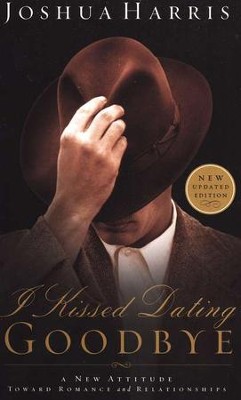
  I Kissed Dating Goodbye, A New Attitude Toward Romance and  Relationships  -     By: Joshua HarrisImage result for wwjd braceletImage result for cool church

     I am a committed Fundamentalist. I'm committed to Jesus Christ, not fundamentalism as an idea.  Nothing anyone has said has steered me from the Bible as my source of Truth.  I have a relationship with the Lord.  His Holy Spirit lives in my heart.  I could no sooner disbelieve Him than I could disbelieve the existence of my mother.  I don't hate those who disagree with me.  I can withstand intellectual arguments.  Christianity has stood up to scrutiny for years.  What I refuse to withstand is mean-spirited anger.  I will walk away from that ten times out of ten!  I've had my own "faith journey", which has involved crises, questions, rejection, pain, and triumph.  I came out on God's side.  To counter the grievances of these vague "post evangelicals", I have written my own story in a book.  I think you would like it.  It answers the age-old question: "What really happens on a mission trip???" Among other things.  You can order it for 99 cents from Amazon right here. I sincerely hope you will, and get in touch with me!  You can look up my author page on Facebook as well, to get the latest updates on books and bargains (such as giveaways!).  Go to Facebook and look up Janelle Stoermer, author.  Blessings to you!
Why I Still Believe

Saturday, May 4, 2019

Oral Report

     Do you remember giving an oral report growing up?  Maybe you were nervous.  Maybe you worried your mind would go blank in front of the class.  Maybe you were worried about making silly mistakes.  Well, you needn't have feared!  Yesterday, one of my students gave one of the craziest oral reports ever, one to put all other possible erroneous reports out of mind!

     As I've shared, I teach 5th grade at a Christian school here in Albuquerque, New Mexico.  It's a small, close-knit school.  I only have twelve students in my fifth grade class.  Yet even in a class of twelve, they certainly have their very different personalities!  Take Ian* (not his real name).

     Before the oral report, we had a music practice.  Our class is rehearsing a song to perform for the rest of the school the last day.  It is a worship song.  Yesterday, a woman came in to teach them the sign language for the song as well.  All the kids were doing really well, learning the signs...all but Ian.  He was standing there with a bored look on his face, his hands shoved deep into his pockets.  It really ruined the effect of the others all doing their best.

Image may contain: one or more people and indoor
Our School chapel/auditorium, where we will  perform our song. FYI, this picture was taken at a school music recital.
     "Ian, give it a try," I encouraged.  Ian looked at me as if I had asked him to shoot his mother, and then burst out crying.  The music stopped.  The signing stopped.  All eyes were on Ian.  His classmates and I are used to these little outbursts, but the music teacher and signing visitor were perplexed.

     Ian held up our practice time for a good ten minutes with the scene he caused.  The music teacher was trying to calm him down.  Ian was eating up the attention, yet stubbornly refusing to speak or explain.  Ian is a great kid, but our class has been a victim of these scenes a few times.

     "Ian," the sign language lady smiled.  "If you don't want to sign, you can go stand over by Mr. Moss (music teacher) and sing the song with him while he plays it on the guitar."

     Ian ignored this suggestion and kept crying.  I had had enough.

     "Ian, two choices," I said kindly but firmly.  "You can try the sign language with the others, or you can go stand over by Mr. Moss.  Which do you prefer?"

     Pouting, Ian shrugged.  He was hamming it up and enjoying every minute of it.  He liked that everything had stopped for him.

     "Then I choose for you.  Go stand by Mr. Moss."  He slowly complied, sniffling dramatically.

     The rest of practice went well.  We all had fun.  The others all learned the sign language quickly.

     As we walked back down the hall to our classroom, I told Ian that it was okay for him to share that he didn't feel comfortable signing, but he was never allowed to just not answer like that.

     "Can't help it," he said, now happy as a clam.  "I'm just a private person."

     He sure cried and made a scene privately, didn't he?

     It was time for the class' oral reports.  We have been reading biographies of missionaries or other heroes of the faith this year, and I had put the kids in teams to do more in-depth reports on these great Christian people whom we had already read about.
Image result for corrie ten boom
Corrie ten Boom

Jim Elliot

Amy Carmichael
Image result for david wilkerson
David Wilkerson (founder of Teen Challenge, and author of The Cross and the Switchblade)
Image result for fanny crosby
Fanny Crosby, blind hymn writer
     One other missionary included in our reports (as well as our book list this past year) was Brother Andrew, who smuggled Bibles into Soviet bloc countries during the Cold War.  His book, God's Smuggler is one of my favorite books.  It reads like an exciting spy novel, but is a true story of God at work.  Click here to check it out.  It was a delight to share it with the students.  I had assigned two boys to do the oral report on Brother Andrew.  
God's Smuggler by [Andrew, Brother]

Image result for Brother Andrew
Brother Andrew, the Bible Smuggler
     As you may have guessed, Ian was on the team doing the report on Brother Andrew.  The students had weeks to work on it.  I gave them time in class every day to work with their partner.  I told them to come to me if they needed help.  I let them use the books we had read about these people, and also looked up information on the Internet for them.  Several students asked me questions and requested help.  I was glad to help them.  Ian only asked me to print a few pictures of Brother Andrew for his display board, but never seemed to need information.  It was his job to ask.
The team doing their report on David Wilkerson.  They received an A+
     It wasn't planned this way, but Ian and his partner went last.  Up until this point, the teams had all gotten somewhere in the A range for grades on the reports.  I expected similar success for Ian's team, especially because his partner strives for good grades.  

     In order for what happened next to make sense, I'll give a really short explanation about Brother Andrew.  If you're unfamiliar, Brother Andrew used that name as a protection of his privacy and the privacy of believers in the Soviet Union when he was smuggling Bibles into that region.  He was from Holland, and impacted much of Europe with his ministry.  As a younger man, he had fought the Dutch war in Indonesia.  An injury during the war was what ultimately brought him to Christ, and into the ministry.  I highly recommend the book.  Anyway...

     The two boys walked up to the front of the classroom.  Ian (the private person, you'll remember) began by exclaiming loudly, gesturing dramatically with his arms, "Brother Andrew fought in anesthesia, and I have no idea what the heck that is, because no one bothers to tell me anything!"  

     I cringed!  He meant Indonesia, not anesthesia.  It was his business to know what it meant!  He'd had weeks to work on this report, not to mention that we had all read the book.  

     "Yeah," his partner picked up.  "That part was in chapter two of the book."

     "No!"  Ian corrected him.  "It was chapter three!  I remember now!"  

     "I'm sure it was two!"

     They had a mild argument before deciding that this part of the story had covered chapters two and three.  

     After explaining virtually nothing about Brother Andrew's short-lived military career, Ian backed up.  "When Brother Andrew was a kid, he played a mean trick on some neighbors and put glass on their chimney and ruined the cookies!  Anything but cookies!  Come on!"

     The back story to this was that a young Brother Andrew had put a glass pane over a neighbor's chimney, backing it up, and thereby filling the house with smoke.  The neighbors caught on to what he had done, but instead of being angry, they offered him a cookie that they had been cooking (which were not ruined, by the way).  These people ended up supporting his ministry later on.  Ian's version explained nothing!  

     He carried on another two or three minutes about how horrible it was to ruin cookies.  His arm went dramatically across his forehead.  Alas, poor Ian, I knew him well!  Pretty impressive for a self-proclaimed private person.

     His partner went on to explain a few things about the Bible smuggling.  His facts were a bit off as well, and mostly preceded by the words, "I believe," indicating he was not sure of his facts.  

     Then Ian took back over.  "This report was really hard, because the book was no help at all!  Thanks a lot book!  And the Internet was even worse.  Thanks a lot, Internet!"  

     And now you know all about Brother Andrew!  You also know that if you ever felt you bombed an oral report, you were still better than Ian's report!  To quote Mark Twain, Let us draw the curtain of charity over the rest of the scene.

Sunday, April 28, 2019

Misused

     "Remember," my 5th grade Sunday School teacher Mrs. Casado reminded us, "Satan will wrap a lie up in truth, or a truth up in a lie.  He knows you're too smart to believe an outright lie, so he disguises it."  She had been telling us this for several weeks now.  She had us memorizing some scripture verses.  I was proud to have memorized them all...but I would soon be humbled by a serious reality. 

     "Satan will feed you 99% truth to get you to swallow one lie," Mrs. Casado went on.  She used the example of the serpent in the Garden of Eden in Genesis 3.  Satan (in the serpent's form), twisted the truth into a convincing-sounding half-truth (lie).  It was enough like the real thing that Eve swallowed it, and Adam followed suit.  After Mrs. Casado finished recounting the familiar story, she played a game with us to prove her point.  She would quote the verses we had been memorizing, and we had to say true or false, based on whether or not she was quoting it accurately.  She then recited these verses, but she would change just one word, which would change the verse's meaning.  And you know what?  None of us caught on.  We thought she was saying the verses correctly.  She used the same wording and phrasing...except that one small change.  We were pretty easy to fool, even though we'd memorized these verses.

     The moral of the story is that, as Christians, we need to be discerning, well-versed in God's word.  Otherwise, those small deceptions will get us.  It happens more than you think, and as proof, I'm going to share some examples of misused biblical (or in some cases, unbiblical) phrases that people are saying out of context.  Satan is having a heyday with our beliefs and thoughts.

     
GOD WON'T GIVE YOU MORE THAN YOU CAN HANDLE
     If I've heard this once, I've heard it a hundred times.  People use it as an encouragement.  I even had a very strong Christian teen tell me his favorite verse was, "God won't give you more than you can handle..." he paused and added, "I can't remember where it's found, though."  Well, the reason he couldn't recall the reference was because those words are not in the Bible.  
     I believe this saying came from a few different concepts.  First Corinthians 10:13 says, "There hath no temptation taken you, but such as is common to man, but God is faithful, who will not suffer you to be tempted above that which ye are able, but will with the temptation make a way of escape, that ye may be able to bear it."  This verse is saying that God will never let us be in a situation where we have to sin.   He promises that there is always another option.  Temptation doesn't have to overcome us.  But this isn't telling us that we can handle life on our own terms.  
     Job 7:16 records Job (after he has suffered unimaginable tragedy and physical pain) saying, "I am tired of living."  Sounds like he was dealing with more than he could handle.  A New Testament example of this is found in Second Corinthians 1:8, where Paul says, "For we would not have you ignorant, brothers, for our trouble which came to us in Asia: that we were pressed beyond measure, beyond strength, insomuch as we despaired even of life."  These God-loving people were pushed beyond what they could handle.  So are we.  But, there is a promise we can cling to.  The same promise that was available to the Apostle Paul.  Jesus said it at the last supper.  John 16:33, "...in this world you will have trouble.  But take heart!  I have overcome the world."  Similarly, Second Corinthians 12:9 promises, "My grace is sufficient for you."  God won't give us what we can't handle WITHOUT HIS HELP.  That's what we should be telling each other.  Don't leave off that last part.
The Apostle Paul facing persecution
GOD WANTS YOU TO BE HAPPY
     There's a sense in which this is true, but not in the way it is used much of the time.  Jesus promised us in John 10:10, "...I have come that they may have life, and have it abundantly."  Psalm 16:11 says, "You will show me the path of life; in Your presence is fullness of joy.  At Your right hand are pleasures forevermore."  Throughout the Bible, God's people are encouraged to trust in God's goodness, and reminded that He has good plans for us, that will fulfill us and give us joy.  But these things only come with the Lordship of Christ in our lives.  Doing "what makes me happy" won't cut it.  First Peter 1:16 says, "...be holy, as I am holy."  God's goal is for us to be holy, not merely happy.  I might be happy if the Dodgers win the World Series, but someone rooting for the other team might be very unhappy.  God's plans are so much bigger than this.  His joy in our lives has a root in what Christ has done for us, and what lies ahead for Christians.  He gives meaning to our lives, even things that seem sad or pointless.  He blesses us with joy and even happiness.  But not permission to go do whatever we want because it will make us "happy."  So...does God want us to be happy?  In a sense, but only to the point that we have HIS joy in our hearts, and are growing in holiness.  
GOD HELPS THOSE WHO HELP THEMSELVES
     While this is a hard-working American saying, it isn't found in the Bible.  The Bible does encourage a good work ethic.  Colossians 3:23 says, "Whatever you do, work at it with all your heart, as working for the Lord, not for men."  But the Bible also says, "My God will supply all your needs, according to His glorious riches in Christ Jesus." (Philippians 4:19).  The implication of "God helps those who help themselves" is that God will only help us if we're doing it all by ourselves anyway.  That's backwards.  We need God's guidance before we can "help ourselves."  The actual phrase has been attributed to Benjamin Franklin (who wasn't even a Christian), but it is actually found in the even earlier writing of British politician Algernon Sidney.  The sentiment itself goes back even further, appearing in ancient Greek tragedies.  It also appears in Islamic texts.  So, this is not a biblical phrase.  Every good and perfect gift comes from above (James 1:17).
Benjamin Franklin
DON'T JUDGE
     I saved the best for last. All the previous sayings I've analyzed lead up to this one, and I'll explain.   I could write a book on "Don't judge."  The tough part about this one is that it actually does appear in the Bible.  I'm not refuting the biblical use of it, but I am going to refute the way it is misused and thrown around.  
     The phrase, "Don't judge lest you be judged," is found in Matthew 7:1.  A pastor friend of mine always says that it has surpassed John 3:16 as the most well-known verse.  Even non-Christian people who give no credence to the Bible will quote Matthew 7:1 at anyone who disagrees with them.  I have a few responses to that.  My first one is simply, "Unless you can follow the rest of what Jesus said and taught, don't throw this at me."  
     The second response is logic.  Accusing someone of judging is actually a judgmental thing to do.  Anyone who accuses someone else of judging is a hypocrite.  
     When Jesus warned us against judging in Matthew 7:1, He wasn't telling us that it's wrong to confront sin for what it is.  He wasn't telling us we have to agree with everyone.  What He was doing was telling us not to make false assumptions about others without having all the facts.  If I happen by the pastor's house in the middle of the night and see the car of a single woman from the church parked in his driveway, I shouldn't assume, "Hmm, I bet they're having an affair."  That's judging without knowing the truth.  There could be many reasons her car is there.  Maybe the pastor and his wife are giving her counsel.  Maybe the pastor's family's car is in the shop and they're borrowing hers.  Maybe her car is broken and the pastor offered to fix it for her.  Maybe it's not even her car!  There could be a lot of possibilities, so we shouldn't jump to the worst conclusion.  
     People use the "don't judge" card to rebuke anyone whose opinion differs from their own.  It's meant to shame anyone who doesn't agree with them.  Shaming is a big deal in this day and age.  We have an ultra-sensitive society where any criticism is perceived as mean-spirited shaming.  That's just not the truth.  Even so, these people hypocritically turn around and shame those who disagree with them by accusing them of judging.  What they're actually saying is, "You're not allowed to have an opinion that differs from mine."  Is that mature or fair?  No!  Is that right?  No!  Nobody has the right to tell you what you're allowed to feel or think about something.  
     What does the Bible actually say about this?  Second Timothy 2:15 says, "Study to show thyself approved unto God, a workman that needeth not to be ashamed, rightly dividing the word of truth."  Rightly dividing the word of truth means correctly applying the Bible to situations.  It's making a judgment according to God's word.  That kind of judging is not only allowed by God, but commanded!  In the next chapter, it says in Second Timothy 3:16 that all scripture is given by inspiration of God, and is useful for doctrine [knowing what truth is], for reproof [rebuking those in sin], correction [pointing out where someone is off-base], and instruction in righteousness [helping that person back onto the right path]."  God says we are to use His word to correct those in sin.  Nowhere does it say that sin is acceptable.  Nowhere does it say we are to ignore sin.  Many people use examples such as, "Jesus was friends with those in sin."  Yes, He was, and we should be too.  But we must remember that Jesus told them "Go and sin no more."  He didn't think their sin was okay.  God's word remains true.  God never contradicts His written word.  I've met people who say it's "legalistic" to hold to the Bible.  They are wrong.  Legalism is putting man-made rules as higher importance than loving people.  But following what God has said in His word is not legalism.  Matthew 5:18 says, "...till heaven and earth pass away, one jot or one tittle shall in no wise pass from the law, till all be fulfilled."  God's law remains.  The law can't save us.  It never could.  We are sinners.  God's grace saves us, made possible by Jesus' death on the cross.  But He doesn't save us to give us the freedom to sin.  He saves us to rescue us from the power of sin.  
     Since God's word gives us permission (actually commands us!) to correct those in sin, I'm going to go out on a limb here.  
     One of my favorite Christian singers as a teenager in the 90's was Ray Boltz.  His songs contained deep theological truths.  Jesus was glorified through his deeply biblical lyrics.  His career started to wane when I was in my twenties in the early 2000's.  I kind of lost track of him after his last album came out in 2002.  Then, in 2008, he made headlines by coming out to the public as homosexual.  He had come out to his family a few years earlier.  Though he and his wife enjoyed a happy marriage of over thirty years, and remain on good terms, they divorced when he came out publicly.  
The cover of my all-time favorite Ray Boltz album, 1995.  This album includes his huge hit, "I Pledge Allegiance to the Lamb."   This entire album can be heard by clicking on this link: https://www.youtube.com/watch?v=1lCiaScpuVU
     I still love his Christian songs from the 90's.  A lot of his songs are up on YouTube, and I'll play them while I work on writing.  They minister to me as much now as they did then.  But what's interesting about it is that you can read people's comments.  For almost every song, someone comments about his current lifestyle.  Some people comment that we need to pray for his repentance.  Others comment (usually vehemently and angrily) that we can't judge him.  Here is my take on that.  It's true that we can't judge (make false assumptions about) his heart or experiences, because we can't see those.  I can't imagine how much he struggled over the years.  However, according to Second Timothy 2:15, I need to rightly divide the word of truth--use the Bible's teaching to form an opinion about this.  Both the Old and New Testament refer to acting on homosexuality as a sin (Leviticus 18:22 and Romans chapter 1, for starters).  The feelings themselves are not a sin, but are a propensity toward a particular sin, just like I was born with a propensity to lie, that had to be overcome in the Holy Spirit.  I've heard excuses made for these passages about homosexuality.  I've heard people say that the Old Testament passages don't count because we're under grace.  However, that contradicts what I stated earlier from Matthew 5:18.  It also ignores the fact that grace doesn't free us from righteousness, but from the power of sin.  I've heard people say that the New Testament passages really don't refer to homosexuality, but to people who molest children, and that these passages were translated improperly.  However, again, this doesn't go with the rest of scripture.  The passage from Romans 1 refers to a digression into this lifestyle.  I've also heard some people point out that Jesus was silent on the issue of homosexuality.  Their logic is that Jesus is at least neutral, if not open to it.  But if you listen to what's not there, it's pretty important.  Jesus referred to marriage as being between one man and one woman for life (Matthew 19:4-6), and that those who couldn't accept it should remain unmarried (Matthew 19:11).  In fact, the book of Genesis, the very creation of humanity, involved men and women being in lifelong relationship as husband and wife.  There is never a reference in scripture made such as "Husbands love your wives, or your husbands if you happen to be gay."  It just isn't there.  No validity is given to gay relationships, even if you did remove all the passages that proclaim it to be a sin (which you shouldn't do anyway).  
     In the case of Ray Boltz, his story goes like this (according to him):  He struggled with same-sex attraction for years.  He was ashamed and never told a soul, not even his wife of over thirty years.  He had a happy life, ministry, and family.  But deep inside, he tried to fight his attraction to men.  There is no point in his own story that he shares about getting any kind of help or accountability.  He just tried to silently fight it.  Then, as he hit middle age, he went into a very deep depression and finally came clean.  With his wife's agreement, he ended his marriage and embraced a lifestyle that he had formerly believed to be a sin.  Let's look at that a moment.
     Homosexuality is such a buzzword these days.  Let's take it out of his story for a second in order to see more objectively.  Let's just say that this man struggled for years with something that went against his beliefs.  He struggled under the surface, never confessing or telling a soul.  He finally couldn't take it anymore, so he broke his marriage vows and embraced something he formerly disagreed with.  Does that sound right?  There's never a point where he reads the Bible and says, "Wow, I've been wrong about this,  I guess it's okay for me to act on this" It isn't in there.  He changes his views based on his experience.  I love the saying, "We're only as sick as our secrets."  He should have been getting accountability over the years.  We were never meant to handle things on our own.  James 5:16 says, "Confess your sins one to another, and pray for each other, that you may be healed."  That is missing from Ray's story.  
     I have known some delightful people who were gay and lesbian.  I do not believe homosexuals are inferior or worse than anyone else.  I truly don't.  We all have sin we are predisposed to.  But victory is possible (First Corinthians 10:13, which I shared earlier).  Jesus said in Luke 9:36, "If anyone will come after me, he must deny himself, take up his cross daily, and follow me."  That means all of us.  Homosexuals are not exempt from this.  This passage would lead me to believe that if someone struggles with same-sex attraction, he needs to deny himself that desire and choose to follow Jesus.  That is exactly what a single person who has deeply sexual desires needs to do with those desires.  That's what a married person who has eyes for someone besides their spouse needs to do. It's what I needed to do one summer many years ago at camp when I was tempted to steal a coke from a broken vending machine. Feeling those things isn't the sin.  It's indulging (and I didn't steal the coke!).  I personally believe some of the people who will receive some of the greatest rewards in heaven will be those who did exactly what Jesus asks--they denied these desires, even as the world told them it was right and good for them to indulge.  
     Some people harp on Christians and say we talk too much about homosexuality these days.  I believe the only reason we mention it is because the agenda is being shoved under our noses constantly.  Our rights to even disagree with it are threatened.  Gay couples are going to churches and demanding to be married, then raising hell when pastors politely decline.  Christian bakers and photographers are being sued for politely declining to take part in homosexual weddings.  We are being bullied.  You don't see Christians going into a Mosque and demanding them to perform a Christian ceremony for us and then suing them for declining.  Yet that's what many of these militant folks from the LGBT(etc) community are doing to Christian churches (and I know not everyone in this community are doing it.  In fact, the true majority of homosexuals are just regular folks, getting up every day, doing their jobs, and going home, and are not politically militant).  Public schools are being required to teach kids to embrace homosexuality (even on the preschool level--I have worked in it and have seen it firsthand).  What other group is pushing this?  Do you see Rabbis forcing schools to celebrate Hanukkah (which wouldn't be a bad idea, actually)?  Do you see the National Association of Realtors going into schools and requiring kids to learn how to sell houses?  Of course not!  There is a forcing going on here.  I once had my car vandalized by gay activists.  In light of all this stuff going on, we have to address it.  Not only that, but we need a biblical answer for those who are struggling and have questions.  

     I recently read an article about a woman who purports herself to be a born-again Christian, and I have no cause to doubt that.  She said for many years, she believed homosexuality, as well as transgenderism, to be against God's will.  However, then she had an experience.  She proceeded to take this experience and reinterpret the Bible, much as Ray Boltz did.  This woman had four sons.  The youngest boy, Joseph, started displaying effeminate qualities as a baby.  This made the mother uncomfortable.  Others started noticing as he got older, and asked the mother, "Is your kid gay or something?"  This was very humiliating for her.  When Joseph could talk, he began insisting he was a girl.  He tried to wear dresses and girl underwear (which he got off a doll).  The mother was beside herself, affirming Joseph was a boy.  There is no mention of Joseph's father, or how he felt about this.  Finally, this child wore his down, and when Joseph was four, the mom let him transition to considering himself a girl.  There was a name change.  Joseph now wears dresses and has long hair.  Since he's only six years old, he looks like a cute little girl right now.  Puberty will change that.  And even now, under the dresses, are male sex organs.  Now, this mother claims that she is being "persecuted" by her fellow Christians.  I find it hard to believe she is really being persecuted (as in death threats or violence) from Christian people.  She is being disagreed with and doesn't like it.  Joseph was born with male parts.  There is nothing else to it.  That is what determines whether a person is male or female.  You can't be born with the wrong parts.  A person's parts tell us what they are.  A fork can't claim to be a spoon with the wrong parts.  The prongs make it a fork.  Enough said.  I can't claim to understand all the ins and outs that go on with someone who feels that they are a different sex than their body reveals them to be.  I'm no expert.  I can't "judge" (make assumptions about) what they feel and experience inside, nor can I "judge" what Joseph's mother went through in order to draw the conclusions she did.  But I know that God makes no mistakes.  He doesn't create females with male parts.  If you believe in that, you can't believe God is perfect or holy, or that His word is true.  I believe Jesus can comfort and help those who struggle with feeling they are a different sex than their body parts would reveal.  Jesus experienced being God, confined to a human body.  He can give the grace needed.  Joseph's mother did not do any personal Bible study on this issue at all.  She claims that, as she went through this battle with Joseph's identity, she just studied the way Jesus treated people, with kindness and love, whereas the Pharisees were hard on others.  That's how she decided her son was a girl.  She completely ignored that Jesus loved people while redeeming them from sin.  She ignored the fact that the Pharisees were following man-made laws, not God's laws.  She chose to believe this cancelled out God's laws completely.  She used the legalism card, calling those who hold to what God says as legalistic and comparing them to Pharisees.  I honestly feel sorry for Joseph.  He has a rough life ahead of him.  There are eternal consequences for these decisions.  

     A few years ago, I was in a Bible study.  We were going through Romans 1.  That passage is very clear that homosexuality is not God's plan.  But instead of following what the Bible actually said, these Christian people in the study took the passage to mean all these politically-correct falsehoods.  They were saying things like, "Well, I think this passage means Christians need to stop judging the poor, sweet, innocent homosexual agenda."  They were getting more and more down on Christians.  My spirit was very troubled, and I knew I had to speak. I half-expected rotten fruit to fly my direction, but I built the case I made above, and to my surprise everyone stopped short and listened.  What's more, they all said I was right, and completely changed their tune.  These were Bible-believing Christians.  Yet they were so deceived by the false statements they'd been fed that they were just going along with it.  Parroting the party line.  A reminder of the truth turned them back.  Gave them pause to think about it.
     Entirely off of homosexuality, people use the "don't judge" card on other topics as well.  One of my students, whom I have previous mentioned in my blog, comes from a home with a nominal Catholic mother who has taught her son that all religions are the same, and that you can't judge religions.  This boy brought that into the classroom.  This boy would spout that out any time I spoke an absolute truth.  We read the missionary story about Amy Carmichael, who led Hindus to the Lord in India. This boy was outraged and said, "She can't do that!  That's judging religions!"  I just asked him, "Who says she can't?"  He didn't have an answer.  He also got very angry when I said that every knee would one day bow, and every tongue would confess that Jesus Christ is Lord.  He yelled, "God can't judge other religions like that!"  I said, "God can do whatever He wants.  He's God, and He never asked your opinion."  This shut him up.  When it comes to other religions, we need to be kind, but rightly divide the word of truth!  This boy is now a Christian, as I shared in my last blog post!
Amy Carmichael
     All the previous falsely-used phrases ("God won't give you more than you can handle," "God wants you to be happy," "God helps those who help themselves.") play into this final one of "Don't Judge".  People swallow these first lies, and then they're ready to accept things they would never have accepted.  And if people know the truth about these things, they'll know what to do when they're faced with these hard issues.  

Wednesday, April 17, 2019

Hard-Fought Victory

     Ever work incredibly hard, amidst great challenges, and wonder why?  Why bother?  What good am I doing?  I've faced that recently.  You may have read my March 22 post "Tightrope."  I'll summarize, but I still encourage you to read the whole story.


     I teach fifth grade at a small Christian school.  One of my students is being raised by a mostly irreligious mother and strongly influenced by Mormon friends.  He attends the Mormon Church more than anywhere.  And yet he also attends our Evangelical Christian School.  His mother has taught him that all religious are the same and equally valid as far as God is concerned.  This boy has also been very vocal in opposing me during Bible.  He has been a very verbal fan of Adolf Hitler, and also of Mormonism.  He wrote a very disrespectful essay about me as his teacher.


     You know what they say, things get worse before they get better.  During the course of Bible one day, he spoke out defiantly, "I think I'd kind of like to go to hell, because you could roast marshmallows on the fire there."  The other kids all gasped at his impertinence.  I gently told him what the Bible says about hell.  Second Thessalonians 1:9 says that those in hell will be punished with everlasting destruction from the presence of the Lord.  I explained that all good things (including marshmallows) are gifts from God (James 1:17).  So to be away from God's presence means torment and pain for eternity with no relief.  Nothing to look forward to.  No joy.  No goodness.  I told him that the unsaved, ultimately, are thrown into a lake of fire for all eternity.  He grew quiet at this.  I had no idea what was getting through.  He has said many times that God is mean to make people go to hell.  I have pointed out again that God didn't create hell for people, but for Satan and his followers.  Our sin separates from a Holy God, but God made an escape from hell by sending Jesus.  God wants everyone to turn from their sin and embrace Christ.  Second Peter 3:9 says that God is not willing that any should perish, but that all should come to repentance.  I explained, though, that the choice is ours.  I let that simmer.

     We had been reading many missionary biographies.  Most recently, we read about Jim Elliot, who was martyred in Ecuador in 1956 while trying to reach the violent Auca Indian tribe with the gospel.  Because of his witness and legacy, the Auca tribe are now largely Christian, including the man who speared him. The Aucas are now referred to the Waodani, meaning "true people."
Jim Elliot
     As we read Jim Elliot's exciting biography, the class had no idea how the story ended for Jim.  They were convinced he was going to see the Aucas receive Christ and live happily ever after.  When we reached the end, and how Jim and his four companions gave their lives in trying to reach these people, and how their wives remained and shared the gospel with them later, there wasn't a dry eye in the classroom.  This boy who wanted to go to hell looked very serious and said, "I think I want to be a missionary like Jim Elliot."

     The next day, he came into class with an entirely different frame of mind.  He was quiet, thoughtful, respectful and humble.  I thought, "He's planning his next attack."  But I was wrong...and glad to be.  About halfway through the day, he raised his hand.

     "Yes?"

     "Can I share something with the class?"

     I was half-concerned it would be more Hitler "fun facts" or espousing Mormonism.  But his whole new attitude was curious, so I said yes.  He stood up.

     "I didn't believe in Jesus before.  Even though I prayed a prayer a long time ago, I didn't mean it.  But now I do.  Last night, I was thinking about Jesus at home, and I realized that I do want Him as my Savior, so I asked Him to come into my heart--for real this time."


     Everyone in the class broke into applause.  He wrote the date of his salvation on the inside cover of his Bible.  April 11, 2019.  Even though it has been a little less than a week, I have seen tremendous change.  He has continued being sweet and respectful to everyone.  He hasn't brought up Hitler or anything else controversial.  During Bible time, he sides with God's people, instead of the enemies.  He used to not care about his grads, or even try.  But this week, he got an A on a math test (he used to get F's and not care).  
     When I see this miracle--this hard-fought victory--taking place before my eyes, I'm reminded of WHY.  Why I'm in this battle.  Why all believers are in it.  Because they're worth it.  All human life is worth saving.  Jesus settled that on the cross.  I am so thankful all of my students are now on their way to Heaven!

Wednesday, April 3, 2019

Love Story

     If there was any mortal I was taught to revere, it was him.  And why not?  My own mother came to Christ as a result of his story (shortly after it happened).  The ministry I worked for had his biography as an illustrated kids story we shared in our Good News Clubs.  One of our most respected teachers at Institute had actually known him personally. I am currently reading his biography with my fifth grade class at the Christian School.  He had given his all--his very life, as it turned out--for the sake of the gospel.  I am referring to Jim Elliot (and, to a secondary degree, his wife Elisabeth).
Jim Elliot

Elisabeth and Jim Elliot--their love story has inspired countless couples.
     I'll give a synopsis about Jim Elliott's amazing story in the next paragraph, but my main intent in this post is to interact with it--both the good and the bad.  Beautiful things come out of these remarkable stories...but very bad things come out of trying to follow God's plan for your role model's life instead of your own.  So many lessons from this story have impacted me, and those around me.

     Jim Elliot was born in Oregon in 1927. He grew up in a strongly Christian home, coming to Christ himself at age 6.  He was a very focused, goal-oriented person.  He knew early on that he was called to the mission field, and his entire life was in preparation of this eventuality.  He avoided anything that didn't directly contribute to that end.  He was a very spiritually-minded young man.  In Bible college, he was known to approach random people and ask, "What's your verse of the day?"  Needless to say, many people avoided him, not wanting to be accosted with a question they weren't prepared to answer.  He refused to attend football games, or anything entertaining that didn't serve a spiritual purpose.  Dating was on the top of that list.  He was certain he was called to be single.  He believed he could serve the Lord better as a single man.  He looked down on those who dated as weaker Christians.  But then he met Elisabeth, his roommate's sister.  His convictions didn't exactly go out the window, but they were challenged--rightfully so.  Jim and Elisabeth had a blossoming romance, being involved in several ministries together on campus.  They eventually confessed their love for each other.  Both Jim and Elisabeth were very missions-minded, and also very surrendered to God's will.  As such, they concluded that, even though they were in love, they chose to hold off on their relationship until God made His will clear to them both.  Eventually, God separately led them both to Ecuador.  Being reunited there, they married in 1953 and served together.  Just a few years later, in 1956, Jim Elliot and four other men were brutally murdered, trying to bring the gospel to the ruthless Auca Indians.  Elisabeth Elliot remained in Ecuador, and continued ministering to the men who had killed her husband.  As a result, many came to Christ, including the man who had speared the missionaries to death.  
     I greatly admire Jim and Elizabeth's commitment to the Lord and His calling on their lives.  So few believers I know make a concentrated effort to seek God's plan for their lives.  Jeremiah 29:11 says "For I know the plans I have for you, declares the Lord, plans to prosper you and not to harm you, to give you hope and a future."  God has a specific plan for all believers' lives.  Ultimately, God's will and counsels stand (Isaiah 46:10).  However, we will only know joy and fulfillment in our lives as we seek to deliberately follow God and His will.  I believe this is very specific.  Daily.  Luke 9:23 says that to come after Jesus, we are to deny ourselves, take up our crosses daily, and follow Him.  Christianity was never meant to be a passive life of just doing what we want and letting God do His thing.  We interact with Him.  We enter into Him.  God wants a love relationship with us.  Jim and Elisabeth Elliot definitely had that walk of faith.  I admire them seeking God's will above their own desires, and not taking for granted that God's will was their will.  Much can be learned about surrender from their example.  This is important to me.  

     Many of my friends got into the weak theology that was very passive, rather than active ("You can do whatever you want as long as it isn't sin, and God will override all that isn't His will.")  No prayer or interaction with the Lord.  That scares me.  It is a joyless way to live, and is only appealing to people who want to disobey the Lord's specific leading in their lives.  This is why Jim and Elisabeth's faith was so refreshing. When I was single, I firmly believed God had the right man for me (and He did), but that He (God) would do it.  My job was to walk with Him.  First Thessalonians 5:24 says, "Faithful is him that calleth you, who also will do it."  I believe God Sovereignly works in our lives.  We need to seek Him and know Him, and leave the results up to Him. Proverbs 3:5 says to trust in the Lord with all our hearts and lean not on our own understanding.  He guides our actions, and we respond in faith and obedience.  This applies to every area of life, not just waiting for your spouse.  I can't claim to completely understand the mystery of God's Sovereignty, but I know He desires our hearts. Jim and Elisabeth had that mastered.  

     Jim's ultimate surrender of his life for the gospel is a complete inspiration.  John 15:13 says, "Greater love hath no one than this, than to lay down his life for his friends."  I am certain Jim heard Jesus say, "Well done, good and faithful servant."  Also, Elizabeth's ability to remain on the field and continue evangelizing these people is a testimony of God's grace.  These people are very faithful servants of the Lord.  I respect them for this.

     Not everything from their story has had a good effect in my life.

     While I think it was wonderful that they were committed to God's will for them, some second-guessing is just too much.  God clearly led them both to the same Christian college, gave them the same calling and passions for ministry,  and gave them a deep love for each other.  I think that's worth examining.  Only God really knows if they should have gotten married sooner.  I'm not accountable for their story, but as an outside observer to the story, I think it appears God was bringing them together. They ultimately ended up married.  There are two possibilities.  Either they truly were obedient in waiting for God's timing, or God wanted them together in the first place, they blew the opportunity, and God gave them another chance.  Either way, God honored their surrendered attitudes.  

     This couple seems to have put themselves through a lot of unnecessary emotional torture.  This seems to have been instigated by Jim.  He had some real hangups about marriage that he had to overcome.  Before he met Elisabeth, he was completely convinced that the single life was spiritually superior.  He asked a lot of Elisabeth, having her wait indefinitely.  Personally, I wouldn't have gone along with that.  I ended relationships in the past because the men I dated weren't committing.  Even Jim's mother told Elisabeth to demand he fish or cut bait, but she couldn't bring herself to do it.  Perhaps when something is God's will, those involved have the grace to hang on.  

     Part of the reason I feel free to critique their relationship is because I have read Elizabeth's book, Passion and Purity.  In this book, Elisabeth details her relationship with Jim, using it as a pattern for how godly relationships should be.  That's where I have a problem.  God works in our lives differently.  We can't hold up one person's story as a model of how you're supposed to do things.  The Bible is sufficient for that.  People's stories can encourage us, but they can't be our pattern.  We're supposed to be patterned after Jesus (Romans 8:29-30).  

     Jim Elliot himself had his struggles.  Like all of God's children, he wrestled with his flaws, and grew in grace over time.  At times, he seemed quite pompous.  He was constantly rebuking others, including Elisabeth (something else I'm not sure I could have tolerated).  As I've read his biography to my 5th graders, they've become a little outraged at points, recognizing his pride (they call it, "Being too strict with himself and everyone else.").  

     As I have shared, I knew Jim's story for much of my life, I didn't read Passion and Purity until I was 20.  I had just gone through an earth-shattering breakup.  This man had been manipulative, indecisive, inappropriate, and really kept me waiting without commitment. He had overstepped his bounds on several counts.  We knew each other through ministry, and had shared a lot of emotional and spiritual highs.  Everyone in the ministry thought highly of him, and that I was the problem.  When I confronted him, everyone was angry at me.  I was in so much confusion and pain.  I needed clarity.  I needed to have someone hear me and tell me I was good and acceptable.  I needed to be told not to be ashamed.  That's when a good friend recommended Elisabeth Elliot's book.  

     The book was a very painful read at that time.  Here I had just stood up to a boyfriend who was wasting my time not commuting (and lost him), and I'm reading this Christian book about an arrogant guy who keeps his girlfriend in a 5-year holding pattern, and that was held up as spiritual and right.  The book proclaimed that women shouldn't question men.  In other words, according to that book, I had been sinful not to allow this boyfriend to manipulate me.  Instead of the validation I needed, I felt like I was being yelled at by a mean teacher.  Because I had been led to highly regard the Elliots, I was so perplexed.  Had I been wrong to put my foot down with this guy?  Was it right for men to be hurtful and misleading to women?  

     I got through that time with God's word.  I came to conclude that we don't need books of dating advice.  We need more time in the Bible, drawing close to the Lord, being led by His Holy Spirit.  You see, I concluded I'm not so different from Jim and Elisabeth.  They were trying very hard to discern God's will and act on it.  That is exactly what I was doing.  God may have led me differently than He led Elisabeth, but that's okay.  I'm not Elisabeth.  I'm me.  

     I also concluded that Jim Elliot, though flawed, was nothing like the hurtful boyfriend I knew through missions.  Jim Elliot never overstepped bounds in the ways this guy had.  And even if he kept Elisabeth waiting, he had at least declared his love, and made his situation clear.  Jim Elliot was committed to his calling.  The boyfriend had been wishy washy about all of it.  Not in any way would the Elliots condone the way he had acted.  That wasn't what Elisabeth had been trying to say in her book.  

     In conclusion, we can admire Jim Elliot.  Like all heroes of the faith, he had all the weaknesses that came with being human.   He let God work in him, and growth in grace was evident.  I now take his story as an encouragement about God's Sovereignty and grace in our lives.