Wednesday, March 16, 2022

Love Never Fails (or does it?)

     I will never forget that otherwise nice, pleasant, sunny day back in early 2005.  I was twenty-three at the time.  What I had found that morning had immobilized me, making me oblivious to the day's beauty.

     I stood outside of my apartment, trying to absorb the shock.  I looked again at the note that had been taped to my front door sometime in the night.  I had found it that morning.  It was a note from my very close friend Amanda* (not her real name).   

     Amanda and I had been friends for about three years, but for the past year, we had been even closer.  As only two young single women can do, Amanda and I had filled our time with adventures, such as going roller skating, bowling, camping, to see movies and plays.  We had other friends on the periphery of our relationship, and we enjoyed throwing them surprise parties, or finding other ways to include them in our fun.  We took some unsaved friends to see The Passion of the Christ.  We had consumed more ice cream than I have the entire rest of my life before or since combined (back when I was slender, still having a fast metabolism--I wouldn't dare try that now!).  We developed all kinds of fun inside jokes.  More importantly, our friendship had been a discipleship.  We had studied our Bibles together, read other noteworthy Christian books, attended church services and home Bible studies.  We did ministry together.  We taught kids Bible clubs, and did evangelism at the county fair.  It really was a David and Jonathan type friendship (see First Samuel 18:1).  We prayed together, and shared secrets.  We both really wanted to meet our future husbands, and envisioned meeting them around the same time and having our weddings near each other and being each other's maid of honor (of course, this would have made one of us a matron of honor).  We imagined our husbands being best friends, and us having kids at the same time, who would grow up together to be best friends.  That wonderful time of fun and service (which was about exactly a year, from very early 2004 to very early 2005) bonded us deeply.  

     Yet, now, after all of that, I was finding this note taped to my front door.  The last month, Amanda's life had started taking a different direction, and I was being left behind.  In recent weeks, walls had gone up between us.  This note confirmed it.  I was so shaken up.  Amanda said she still cared about me, but wanted to end our friendship and didn't want to hear from me.  I was totally blindsided by this. 

    I will say that God crossed our paths again later, and we ended up once again attending the same church.  Amanda was a guest at my wedding, and we are friends today...though not even close to what we had in 2004.  Our husbands are only passing acquaintances.  We don't live in the same state, and have not done any ministry together since 2005.  The reasons for the break in our friendship back then aren't important to what I am sharing right now.  At that moment in time, I felt totally broken and betrayed.  I had loved this wonderful friend, and yet where did that leave me?  I wish I could say this was the only friendship in my life that ever fell apart or had a conflict, but it isn't.  Does love fail sometimes after all?  

     First Corinthians 13:4-8a give a beautiful picture of love: Love is patient, love is kind. It does not envy, it does not boast, it is not proud. It does not dishonor others, it is not self-seeking, it is not easily angered, it keeps no record of wrongs. Love does not delight in evil but rejoices with the truth. It always protects, always trusts, always hopes, always perseveres. Love never fails... If you're like me, you read these verses and find yourself falling a little short, and also confused about the meaning of some of it.  My relationships don't always look like this.  My friendship with Amanda looked like that for a while, but it failed in the end.  It didn't persevere.  And what about the rest?  Should we always trust everyone we know, simply in the name of showing love?  If someone continues to abuse your trust, does this passage mean you have to keep trusting them, not keeping in mind their track record for deceit (since love keeps no record of wrongs)?  I don't believe it means that.  I believe the love described in this passage is a picture of what love is designed to be, and what God's love looks like when we let it flow through us to other people.  We can be conduits of that love into their lives!  That is exciting!  Let's look at each aspect of love in this passage, and also, how to realistically respond in our own relationships.  

     The best part of this is that we don't have to conjure it up ourselves.  It is in His strength.  A book I highly recommend about this is Nancy Missler's book The Way of Agape (order it here).  This book talks about how we can become that conduit of love from God into other people's lives.  I have never, ever had a time when I asked God for His love for a difficult person that He didn't fill me with His love for them.  It's a prayer He loves to answer with a yes!  

Love is patient and kind--God is so patient and kind to us.  There are many verses that attest to this, but one in particular is Psalm 86:15, But you, Lord, are a compassionate and gracious God, slow to anger, abounding in love and faithfulness.  That is the kind of love God shows to us.  A love that patiently waits for us, and gently prods and works in our lives.  He can, in turn, give us that kind of patience and kindness for others that He puts in our lives.  

Loves doesn't envy or boast, is not proud or dishonorable--God is so far above us.  He could just blow us away with how much greater He is than us, but he doesn't do it.  He rejoices in us! Zephaniah 3:17 says God will rejoice over you with singing.  He does tell us about Himself in the Bible, so we can know Him, but He isn't boastful.  He is great.  He is God.  But He gives us a pattern of how to love other people.  In my friendship with Amanda, a lot of it was great, but toward the end, I was jealous, and I didn't always honor her in her decisions.  She didn't honor me in the way she ended things.  It is easier to have God's kind of love in this area when we have the right viewpoint of our own relationship with God.  If we are letting Him fulfill us, there is no room for envy, boasting, pride or dishonor--just joy in what He is doing in us, and in others. 

Love is not self-seeking--God loved us so much He was willing to do whatever it took for our sins to be forgiven.  If He was a self-seeking God, He would have just let us go to hell.  But He loves us.  He wanted our best.  Even after salvation, God continues to work for our good (Romans 8:28).  Friendships can easily start to turn into "What's in it for me," but someone who really loves the other person with God's love only wants what is best for them.  Only God can do that work in our hearts.  We are only capable of that selfless love when we are letting God fulfill the needs of our hearts.  Then, we stop looking to the other person to do that for us, and instead, are able to love them without expecting anything in return.  

Love is not easily angered and keeps no record of wrongs--Not being easily angered goes along with love being patient and kind.  God Himself is slow to anger.  We already read that in Psalm 86:15.  As far as God not keeping a record of our wrongs, Psalm 103:12 says God has removed our transgression from us as far as the east is from the west.  Hebrews 8:12 says, For I will forgive their wickedness and will remember their sins no more.  He chooses forgiveness.  This does not mean He allows us to keep on sinning.  His Spirit convicts us, and He works with us in our Christian lives to make us more like Jesus. Hebrews 12:6 says that whom the Lord loves, He chastens... Likewise, I don't think First Corinthians 13 is saying you just have to let it go every time someone you love hurts you.  There might be ongoing problems that need to be dealt with.  There are places in scripture that give direction for resolving problems between believers (Matthew 18, for one), and even a record of when two believers, Paul and Barnabas, were unable to resolve their issue and parted ways (Acts 15:39).  In light of this, we can conclude that First Corinthians 13 isn't talking about that.  It is talking about forgiving and being able to move on when things have been made right.  It's about showing grace.  Jesus forgave those who killed Him (Luke 23:34), but after His resurrection, He didn't pursue a relationship with them.  There might be times when you have to forgive and move on, but also go away from a certain person and focus your time and emotional energy elsewhere.  I believe this is saying we should always be willing for there to be restoration if the person should ask...but if they don't, we are not obligated to go after them and try to make the relationship work on our strength alone.  Love them from a distance if need be. 

Love does not delight in evil, but rejoices in the truth--God delights when we are walking with Him, living in obedience to Him.  The reason this delights Him is because He loves us and wants our highest good.  He knows sin will hurt us, and that is why it grieves Him.  Likewise, we should love others so much that their sin grieves us--not because we think we're better than them, but because we know God has better for them.  We should rejoice when people are in the truth of God's word.  

Love always protects, trusts, hopes, and perseveres--God really went out on a limb for us when He sent His Son to save us.  He protects our soul from hell when we receive His salvation.  We should go out on that limb to tell people how much Jesus loves them, and what He did for them to be saved.  Lead people to the Lord.  The part about how love always trusts is a tough one.  We can't trust some people, and I don't believe God asks us to do that.  I believe this is saying to believe the best about people, and when we can't, we are to believe the best about God and trust Him where we can't trust the person.  We need to be realistic.  David realistically knew King Saul wanted to kill him (First Samuel 20:3), but he trusted God to make things right, which was why he didn't take revenge into his own hands (First Samuel 24 and 26).  David lost trust in Saul, but he never lost trust in God.  The idea of love always hoping and persevering goes along with just wanting the best for others, whether or not you remain close to them.  If God gives you an opportunity to do good to someone, do it in the name of the Lord.  Have hope that God can use it in that person's life.

Love never fails--Our human love can and does fail, but God's love never fails.  He never forgets us, and He is always there to help us love other people.  Sometimes, loving someone means stepping away from them and letting God deal with them.  God Himself does that at times.  Psalm 81:12 says that He gave them up unto their own hearts' lust: and they walked in their own counsels.  This passage is not telling us to keep holding onto painful relationships.  On the other hand, it isn't telling us to necessarily walk away.  Every situation is different.  Let God guide you.  Remember, though, that if you are called to continue on with someone, God has to be the one filling you, meeting your emotional needs, and giving you that love for the other person.  Trying on your own will only cause resentment to fester.  

     There are confusing messages out there.  In 2004 (while I was still good friends with Amanda) I--like many Christians at that time--read Rick Warren's book The Purpose Driven Life.  I actually read it three different times that year, because three different Bible study groups I was in all read it right after each other, so I got a triple dose of it.  I am neither praising nor condemning this book or author.  One comment in the book was that relationships are always worth restoring.  At the time, I took that to heart.  I had another friendship that was on the edge of decline at the time.  This friend, whom I'll call Cara*, was really being hurtful.  I was supposed to be a bridesmaid in her wedding, and was trying to opt out of being in the wedding, and really just distance myself, but every time I tried, Cara would apologize for being hurtful and beg me to still be in the wedding.  This statement in the book made me decide to stick with her.  Idealistically, I thought I could love her so much that it would change her.  As if I were that powerful.  Anyway, trying to make the friendship work only brought deeper hurt onto me that I could have avoided if I had wisely distanced myself earlier.  Yes, relationships are worth restoring, but only if both parties want to work on it.   After all, God did His part to make a relationship with us possible, but if we don't take Him up on His offer of salvation, that relationship won't happen.  Relationships require both parties.  

     We live in this idealistic world, where both Christian and secular culture present happy friendships with very easily-resolved conflicts.  Movies and television shows portray characters "killing [the mean person] with kindness" until they become good and nice.  That isn't real life.  That isn't real love.  Real love is being able to keep caring about someone, without having that person love you back.  It doesn't mean you keep doing good deeds for them.  It means that you are kind to them when God brings an opportunity, and you pray for them.  It doesn't mean purposely being vulnerable to hurts they might inflict on you.  Some people argue that Jesus lovingly let people crucify Him all for love...but it wasn't that simple.  Jesus didn't just say to Himself, "I love them, so I'll let them beat me and kill me to make them happy."  Not at all!  Jesus knew it was the only way to purchase our salvation.  He did it out of love for us!  If there is a greater purpose to someone hurting you, that is one thing, but you do not have to allow people to hurt you for its own sake.  That isn't loving them or yourself.  

     I always feel terrible when a relationship is damaged.  That can be so hurtful, like when Amanda and I parted ways.  I always feel so strongly that it can't possibly be God's will.  It certainly wasn't part of God's perfect design.  And yet it isn't always that simple.  There is some biblical validation for this happening.  Psalm 55:12-14 says, If an enemy were insulting me, I could endure it; if a foe were rising against me, I could hide. But it is you, a man like myself , my companion, my close friend, with whom I once enjoyed sweet fellowship at the house of God, as we walked about among the worshippers.  I can identify with this.  Some of the friendships I have lost in my life have been with people with whom I enjoyed sweet fellowship at church, among other believers.  Some friends were at sacred, special times in my life, and God used us in each other's lives.  How can things like that fall apart?  

14 

     As I already said, Acts 15 tells about how Paul and Barnabas, who had served mightily alongside each other, had a "sharp" disagreement and were no longer willing or able to work together--and the result was that more people came to Christ!  God used their separation for His glory.  We also notice that Paul and Barnabas didn't have mean attitudes toward each other.  We don't read about them bad-mouthing each other after they parted.  They didn't try to ruin each other's reputations.  Paul speaks positively about Barnabas and John Mark (who had been the source if the conflict) later in his writings  (First Corinthians 9:6; Galatians 2:1,9; Second Timothy 4:11).  They might have confided their frustrations in a trusted friend.  We don't know.  They continued loving each other biblically, even though they were not close anymore.  I think that is a pattern for us to follow.  

     Bottom line: relationships are connections between two or more people with personalities, desires, goals, strengths, weakness and wills of their own.  Since our lives are always moving forward, and God is leading us all differently, our relationships will not always remain unchanged.  God will show you the best way to love others in your life, and as He fills you with His love, you will experience His power working through you to extend that love to other people.  When He is meeting your emotional needs, you are free to truly love like Jesus loved.  In your walk with Christ, He will show you when to step away, when to let go.  I'm going to close with the chorus of a song by the Christian group Petra, because it sums up what I've been trying to say:

Love knows when to let go
Love knows when to say no
Love grows in the light of the Son
And love shows the world that the Son of
Love has come

Saturday, March 12, 2022

God's Plans

     *Bill and his family have just moved to a new city.  They have visited three churches, and like different things about all of them.  How do they know which one God is leading them to join?

     *Susan is single and has been praying about meeting the right guy for her.  Dave started coming to her church recently, and after getting to know Susan, asked her out.  They have been seeing each other a few months.  How does Susan know if Dave is the one God has for her?

      *After much prayer and applying, Julie has been accepted into two different colleges.  Both offer the degree she is looking for, and both have advantages that would be good for her life.  Which one is she supposed to attend?  

     *Mark has gotten three different job offers in his field of expertise.  One pays better than the other two, but it is further from his house.  Another job of the three has better benefits, but he isn't sure he can work with that boss' personality.  Which job is God leading him to accept?  

     Do these scenarios sound familiar?  Chances are, you have had to make choices about your own life.  We all run into decisions we need to make.  I especially ran into these types of choices as a young adult, just out on my own.  What did God have in store for me?  Did God really care what I chose, if all the options were equally good?  I had friends who believed that God didn't really have a specific will for us, and that we could do whatever we wanted, so long as it technically wasn't defined in scripture as sin.  I couldn't swallow that.  They made it sound like God didn't care about what happened to us.  The God I had come to know and love was so vastly different than a casual observer in my life.  

     Jeremiah 29:11 is a verse many people use in referring to God's plan for our lives.  For I know the plans I have for you, declares the Lord, plans to prosper you and not to harm you, to give you hope and a future.  Some (such as my friends who believed God didn't really care what we did, as long as it wasn't sin) would claim that this verse is talking about the Jews who were going to be taken to Babylon in the Old Testament, and has no relation to us.  I'm going to make the point that scripture has one interpretation, but many applications.  This verse teaches about what God was saying to the people from Jerusalem during that time, but can we learn a principle about God through it?  Yes!  God had a plan for His people, Israel.  We, the Christians, are His people too.  Would God put so much effort into some of His people, but not all of them?  Let's look at what the Bible does teach about us.

     Jesus clearly stated in John 3:16, For God so loved the world... This is saying that God loves all people, including you and me.  God has always had a plan for us!  Ephesians 1:4 says that even as he chose us in him before the foundation of the world, that we should be holy and blameless before him. In love.  If God chose us to be His children, He clearly has a plan for our lives that is more than just us fumbling aimlessly through life as He just watches us, uninvolved.  Romans 8:28 tells us that God is always working for the good of those who love Him!  Luke 12:7 says that the hairs of our head are numbered!  Matthew 6:32 reminds us that God knows our needs and provides for us.  This is furthered in Philippians 4:19, But my God shall supply all your need according to His riches in glory by Christ Jesus.  James 1:17 tells us that Every good and perfect gift is from above...  This means that your home, friendships, family, job, etc are gifts from above, not just things you're responsible to make happen on your own.  In looking at all of this, we conclude that we have a God who went to all the trouble of choosing us, creating us, saving us, loving us, knowing the number of hairs on our heads, working for our good, providing for our needs, and giving us gifts, don't you think God has a plan for us?  

     God provided our greatest need in salvation.  Romans 8:32 adds that, how will he not also with him [Jesus] graciously give us all things?  If God cares enough to send His Son for you, can't you also trust Him to lead you to the church, spouse, job, etc. that He has for you?  Don't you think God wants to guide you?  He already has a lot invested in you!  

     Let's look at how God guided believers in the Bible.  He called Abram (later Abraham) to leave his home and go to a land He would show him (Genesis 12:1).  He called Moses (from the burning bush) to be the deliverer for His people in Egypt (Exodus 3:4-4:17).  He called Joshua to lead the people into the promised land (Joshua 1:1-9).  He called Elijah in his prophetic ministry (First Kings 17-19, ff).  He called Jeremiah, and went so far as to tell him, Before I formed you in the womb, I knew you, before you were born, I set you apart; I appointed you as a prophet to the nations.  It is true that God was speaking specifically to Jeremiah, and we need to be careful in how we apply scripture to ourselves.  However, this passage tells us something about God, and this truth is reiterated in other places in scripture, which we have already looked at.  God calls His people from before He even created them!  He has plans for them!  These plans include things like what we do, and who we marry (or if we marry).  Jeremiahs was told in chapter 16 verse 1 not to marry.  Those mentioned here are just a few of the Old Testament believers God called and led.  

     What about the New Testament?  Does God still work in the same way?  Yes!  While Jesus was on this earth, He restricted the use of some of His divine attributes, and He was dependent on the leading of the Father.  He sought God's will, including choosing the disciples (He started choosing them in Matthew 6, but in John 17:7, Jesus states that the Father gave these disciples to Him).  Jesus set for us the perfect example of seeking the Father's will, and obeying Him.  That is what we need to be doing!  After Jesus ascended into Heaven, the early church was dependent on the leading of the Holy Spirit, much like us today.  In Acts 16, we read about the Apostle Paul and his companions trying to go to Asia, but God kept preventing them, and then, in a dream, God called Paul instead to Europe.  God had very specific plans for Paul, and his mission.  In Acts 17:26-27, Paul told the people of Athens that God determined when and where people would live, for the express purpose of it being the time and place where they would seek God and know Him.  In Acts 27, Paul hears from an angel of the Lord, telling him that everyone aboard the ship they are traveling on will be spared, but that the ship would be destroyed.  It happened, just as he said.  

     As Christians, we have the Holy Spirit.  A hymn I know, entitled, I am Resolved contains the line, "Taught by the Bible, led by the Spirit," and I think that should sum up the way we live as Christians.  We are to be informed by scripture, and guided by the Holy Spirit.  I have to emphasize this: Any experience we have must be evaluated through the lens of scripture.  Anything we believe we are being led to do must pass the scriptural test.  God will never lead someone to disobey what He has established in His word.  God isn't going to lead me to murder someone!  God isn't going to lead me to have an affair.  God isn't going to lead me to cheat on my taxes.  We always want to make sure what we are doing lines up with scripture, and that we know what God has said in the Bible.  

     Having the Holy Spirit is a gift that the Old Testament believers couldn't have even imagined having all the time.  Before Acts 2, the Holy Spirit would come on people to perform a certain task, but would then leave them.  To have full access to the Holy Spirit all the time is something they would have marveled at!  Jesus told the disciples at the last supper, When the Spirit of truth comes, He will guide you into all truth, for He will not speak on His own authority, but whatever He hears, He will speak, and He will declare to you the things that are to come.  This was a promise, not only to the disciples, but to everyone who comes to Christ!  God has been guiding us through the Spirit in conjunction with the Bible ever since the days of Pentecost.  

     Some argue that, with the completion of the Bible, we no longer have need of God to work in our lives.  These people would say the Bible alone is our guide.  It is true that the Bible is God's perfect and final word.  It is also true that the cannon of scripture is closed, and nothing will be added to it (Revelation 22:18).  However, we are between Christ's first and second coming, and there is more to come!  God is at work in our world!   This view of downplaying the work of God in our lives today is a theological position known as Cessationism.  The only scripture that holders of this position are able to use to support it is First Corinthians 13:8-10, which talks about how certain gifts will disappear when what is perfect comes.  Those who hold to the Cessationism view would claim that "perfect" is referring to the completion of the New Testament.  Here is why this is a problem to me:  First, it is not clearly stated that the "perfect" is the Bible.  Others have argued that it is Christ's return.  I believe it is too ambiguous for anyone to be dogmatic about it.  Secondly, the context of First Corinthians 13 is about love.  This passage is specifically talking about how love is even greater and more enduring than gifts of speaking tongues or prophecy.  The Apostle Paul gives teachings about tongues and prophecy elsewhere (the next chapter, actually).  This mention in First Corinthians 13 really isn't a strong teaching about these gifts as much as a comparison to illustrate how great love is.  All the same, many have used this passage to say that these gifts are no longer to be part of believers' lives today.  I believe that is going beyond the teaching of this passage, and focusing on the wrong aspect of what is being said.  I know believers who have varying beliefs on these gifts.  I have my own beliefs about them.  As long as things are done biblically, and discussions about them are respectful, I do not fault anyone, nor do they fault me (and just to be clear, I have a Southern Baptist viewpoint theologically).  The bigger issue I have is that people who hold this view that tongues and prophecy passed away when the Bible was complete are going beyond what the passage is actually teaching, and building an entire doctrine, and then, they take it beyond just tongues and prophecy, and turn it into anything involving the Holy Spirit at all.  Healing is often lumped with this, and yet healing is not even mentioned in First Corinthians 13.   Knowledge is mentioned beside tongues and prophecy, and yet we still obviously have knowledge today.  But as I said, they often broaden this teaching to involve anything they see as God's power.  I have had Cessationists become very angry with me when I have shared that the Holy Spirit spoke to me in my Quiet Time, or if I shared about how God gave me guidance in a specific situation.  I even had one Cessationist compare me to Joseph Smith (founder of Mormonism) and accuse me of claiming to have a new revelation equal to scripture.  That was certainly not true!  They use this belief to minimize the Holy Spirit, because they assume that anything we think we experience is extra-biblical, and that we're trying to put it on an equal plane with scripture.  That is not true for godly, Bible-believing Christians.  This is why it is so important to make sure we interpret everything in light of scripture--experiences, things people say to us, nudges we believe are from God--all of it must be interpreted biblically.  Sometimes we can think we're hearing from God when we aren't.  However, just because people make mistakes in this area does not justify the Cessationist position.  It is unbiblical to claim that the completion of scripture means God doesn't speak to us, or to claim that He works in our lives differently than He did for believers whose stories we read in scripture.  He told us about these believers in scripture so we would better know Him and how He works!  

     God never changes.  Numbers 23:19 says, God is not a man that he should lie, neither the son of man that he should repent.  Hath he said, and shall he not do it, or hath he spoken, and shall he not make it good?  James 1:17 says there is no shadow of turning with God.  Hebrews 13:8 says that Jesus is the same yesterday, to day, and forever.  Revelation 22:13 says, I am the Alpha and the Omega, the First and the Last, the Beginning and the End.  Why would we think God stopped working in people's lives all of a sudden, after He put so much effort into the people in the Bible, and preserving that Word for us?  The same God who called Abraham calls to you!  

     Of course, our journeys are each our own independent walk with the Lord.  He called to Abraham, but gave Moses a burning bush.  He allowed Peter to be a disciple of Jesus and among the first to get the Holy Spirit, but had the Apostle Paul come to Him in a drastically different way on the road to Damascus.  You are an individual, and God will work specifically in your life, but He will always work according to who He has revealed Himself to be in the Bible.  

     It is true that teachings about the Holy Spirit have been abused.  I used to know a very insecure woman who, anytime she wanted people to accept her ideas, she would say, "The Holy Spirit told me..." and then she'd state her idea.  It was a setup where you weren't allowed to argue with her or it appeared you were arguing with the Holy Spirit.  This is clearly selfish and wrong.  We need to be very careful when claiming to speak for God.  We need to weigh what we believe we are being told.  There have been whole churches who did extreme, showy things, claiming the Holy Spirit was doing them, when He wasn't.  I have as much contempt for this as I do for the extreme opposite of Cessationism.  Some people go so far as to say all believers must experience certain "sign" gifts to authenticate their salvation, which I completely disagree with.  There is no biblical evidence to support this at all.  Having said all of that, just because these teachings have been abused doesn't mean the Holy Spirit isn't active in our world and lives today.  Some people (the friends I mentioned earlier in this post)  take the extreme approach to say that God doesn't work that way today, and that all we need is the Bible, and if we obey the claims and commands in it, we're okay, and God doesn't care about the specifics of our lives.  What a depressing way to live!  No interacting with God.  No personal relationship.  The reason the Bible is "living and active" (Hebrews 4:12) is because we read it illuminated by the Holy Spirit in our hearts.  No other books can do that for us, because no other book allows us to have the Author in our heart!

     Many people (possibly the friends mentioned) want a relationship with the Bible, but not with the God of the Bible.  In John 5, Jesus dealt with some Pharisees who had much the same idea.  He told them, You study the scriptures diligently because you think that in them you have eternal life.  These are the very scriptures that testify about Me, yet you refuse to come to Me to have life.  (verses 39-40).  There are many modern-day Pharisees who think they're okay, because they know what the Bible says and are trying in their own strength to live by it, but they are not experiencing the fullness of God working in and through them.  They don't know the joy of loving the Lord.  

     Here is something else to consider.  God is our loving Father.  Do you think a good parent would just watch their children fumble through their life, hurting themselves, making terrible mistakes, without warning them, trying to help them, getting involved when needed?  A loving parent wants the best for his children, and that's what God wants for us.  Jesus said in Matthew 7:11, If you, then, though you are evil, know how to give good gifts to your children, how much more will your Father in heaven give good gifts to those who ask Him!  

     God has plans for us!  He is active in our lives.  Our job is to listen, trust and obey.  He will make His will clear if we really want to know it.  God is not limited to the way He might work, but generally, He will speak to us through the Bible, our prayer life, circumstances He orchestrates, and fellow believers.  When these things all line up, it is often God's way of leading us.   I'm always encouraged by Isaiah 30:21, And your ears shall hear a word behind you, saying, “This is the way, walk in it,” when you turn to the right or when you turn to the left.  Likewise, Psalm 32:8 says, I will instruct you and teach you in the way you should go; I will counsel you with my loving eye on you.  It sounds like God wants us to know His will!  The New Testament even says this: By ye not unwise, but understanding what the will of the Lord is.   God wants us to know and do His will, but more importantly, He wants us to know Him, because He loves us so much!  Knowing and doing the will of God isn't a formula to follow.  It's knowing God.  It's having that relationship with Him.  It's loving Him.  It's seeking Him.  It's obeying what you already know to do, and counting on Him to show you the next step.  It's denying yourself, taking up your cross daily, and following Jesus!  If you are seeking Him, everything else will fall into place (Jeremiah 29:13, Matthew 6:33).  

     What would God want Bill, Susan, Julie and Mark (from the very beginning of this post) to do in their situations?  As with all of us, they seek Him, and He will guide!  

Wednesday, February 23, 2022

8 Books that Have Changed my Life

     God works in mysterious ways.  He sovereignly uses people, circumstances and other things in our lives to get us where we need to be.  Romans 8:28 (my life verse) states, And we know all things work together for good to them that love God, to them who are the called according to His purpose.   If we follow this passage through verse 29 to verse 30, we discover that the ultimate destination is Christlikeness in the believer's life.  God is constantly working for our good, to make us the people He wants us to be, and to be in the plans He has for our lives.  I often think of the different people He has used in my life.  I have had great friends and mentors.  Some of the people He has used, however, have been those who have never met me, and may have no idea God used them to impact me.  Some haven't even lived in the same time as me, but their writings have had a part of God's work in my life.  What books have impacted you?  What has God used in your life?  I am going to share the eight books that God has used in my life, both to make me more like Jesus, and to lead my life to where He wanted me to be (the Bible is obviously the greatest Book, being God's only true word, but I am not including it here, because it is in a league of its own)!  The first four are nonfiction, and the second four are fiction.  

     As a quick disclaimer, I will say that it is not necessary to agree with every point a certain author makes in order to love and glean from their book.  In sharing about and recommending these books, I am not claiming that to always agree 100% with everything they might say.  It is okay to think critically and have a different view than an author you might really respect.  As always, compare any teaching to the Bible!  That is always going to be our authority!

Non-Fiction

Heart Hunger--Letting God Meet Your Emotional Needs, by Cindi McMenammin
     I found this book on an obscure shelf at a Christian bookstore in 2002.  I was twenty years old, serving full-time in ministry at a neck-breaking pace, and dealing with heartache.  I had just been dumped by a boyfriend I had thought I would marry.  Many people I did my ministry with were on his side, and were very condemning of me.  Every day was a battle back then.  I got up with a heaviness in my chest, and sometimes didn't know how I would go forward.  There were some spiritual victories going on in my ministry that I had no idea about until later, which explained all the spiritual attacks I encountered.  This book was republished a year later in 2003 as simply Letting God Meet Your Emotional Needs.  It is about what the title implies.  God alone can fulfill any of us.  Trying to get that from other people, experience, or anything else in this world will leave us empty.  It will wear out our loved ones if we are depending on them to fulfill us.  They simply cannot, but when we let God do that, we are fulfilled, and then are free to love and enjoy others without expecting anything in return.  That time back in 2002, reading this book, and going deeper with the Lord, was one of the hardest times, but also one of the most precious times in my life.  This book prepared me to be the right kind of wife for my husband (it isn't a marriage/dating book at all, but the principles apply to every relationship you could have).  You can order the book here.

Experiencing God, by Henry Blackaby, Richard Blackaby, Claud V. King


     This book was originally published in 1994, and has been updated and expanded over the years.  I read the first 1994 edition of it in 1999.  A gentleman in our church introduced it to us, and led a study.  I was a senior in high school at the time, and I believe it was in God's Divine Providence and Sovereignty that I read that book at that time.  It really firmed up my theology before it was tested in the years that followed, as well as made my calling clear to me.  In fact, my husband and I more recently read a newer edition of it, and God used that to lead us into the ministry we are currently in.  This book talks about how what God wants most is a love relationship with the people He created.  Loving and knowing Him in a personal way is more important than His plan for us (though He does have a plan for us).  As we obey His leading in our lives and see Him work, we come to know Him by experience.  God's will for our lives is really a smaller part of His overall will for the world.  We join Him where He is working.  This book talks about the ways God speaks to us.  It is a very biblical book, with many scriptural references and citations for every point they make.   One of the ways my theology was tested as a college student was that I met believers who saw God as a theological concept more than a loving creator who wanted to work in our lives.  When I shared with a certain friend of this persuasion a way God had led me in a certain decision I was making, this friend told me that God doesn't lead us today the way He did in the Bible, and that God doesn't speak to us or work in our lives.  This friend (and many others I knew at the time) believed that the Bible was an infallible guidebook, and that we needed to obey the claims and commands found in it, but did not have personal implication for the specifics of our lives.  The only people who find joy in those types of beliefs are those who don't want to be surrendered to the Lord in the specific areas of their lives, but still want to technically obey the Bible.  These people believed that applying scripture personally to our lives was equivalent to creating new doctrine or even a new religion.  I was labeled as a heretic by these people, and even compared to Joseph Smith (the founder of Mormonism), simply because I prayed to the Lord for an answer to something I was going through, and God led me to the answer in my personal Bible study that day.   Experiencing God had given me the foundation I needed to refute these believers who believed in a less personal God than the one of the Bible.  Sometimes, there is a fine line between being open to the leading of the Spirit and being open to error.  This book will really help to share the right view of hearing God's voice, loving God, obeying God, seeing God work in your life, and at the same time, rightly dividing the word of truth (Second Timothy 2:15).  You can purchase this book here.

Standing Firm, by Dan Quayle
     This book is autobiographical, written by former Vice President Dan Quayle.  Mostly, he is recounting his four years in the nation's second-highest office.  Because this occurred in my lifetime (while I was growing up), I enjoyed reading about it from his perspective.  As Quayle is a conservative evangelical Christian, his insights are valuable as well.  He even shares his testimony of coming to salvation as a teenager.  However, even these things aren't why I say this book changed my life.  God used it at a very specific time.  I was in the process of stepping out of a particular ministry I had been a part of.  Some unfortunate things had occurred, and I would have been within my rights to speak up about them.  Some might have said I would have been right to burn bridges.  I was seriously planning to do that, when God brought this book to me.  I read it for sentimental reasons (I grew up when this was going on), but one particular quote he made after losing reelection in 1992 made me stop in my tracks and evaluate what God wanted me to do in my situation.  The quote was as follows: How you leave is important, especially if you're thinking of coming back.  God really impressed this lesson on my heart like a lightening bolt.  I needed to leave this ministry graciously, because God just might lead me back into it one day...and He did!  I'm so glad I headed the advice of this book and exited graciously.  There are many other nuggets of wisdom in this book as well, from one of the most underrated men in recent American politics.  I think former Vice-President Quayle has a good balance of humility and honesty in some of the unjust ways he was viewed and treated, and his attitude was a challenge to me.   You can order this book here.

God's Smuggler, by Brother Andrew
     Originally published in 1967, this book is also autobiographical.  It is the story of a Dutch missionary named Andrew van der Bijl, known as Brother Andrew.  As a young man, Andrew found his parent's Christian faith dull and unsatisfying.  He longed for something more to fulfill his life.  He soon had the opportunity to find adventure as a soldier fighting in Indonesia.  During his time in the Dutch army, he did many things he was ashamed of, and did not find that fulfillment he was looking for.  Not only did the Dutch lose this war (thus losing power over Indonesia), but Andrew was wounded in battle.  His adventure had gone sour.  Would he ever have a fulfilling life?  The answer was a very unexpected yes.  Upon returning home, he found the Lord, and a new sense of purpose.  Through each step along the way, God led his life and showed him clearly what to do.  Every time something happened, Andrew's faith in the Lord grew, and prepared him for the next test.  From almost running out of money while in missionary school in Scotland, to ministering to unlikely people, to seeing God provide for his needs and heart's desires, Andrew saw God at work in his life, and cultivated a personal relationship with Him.  I love that this book emphasizes a personal relationship with God, not just a theological idea about Him.  Andrews journey with the Lord eventually took him into Communist countries at the height of the Cold War.  There are points when this book reads like a spy novel!  He had many close calls with government agents, and many opportunities to bring his Christian witness to unexpected people.  Even though there is no relation, I consider this book to be a perfect companion to Experiencing God.  Andrew lived the principles taught in that book, and we get to see the result.  The way God worked in Andrew's life is the same as I have seen Him work in mine.  At one point in the story, Andrew faces a crisis of faith. After having left his job at a Chocolate Factory to pursue missions, he had to decide what He believed about God.  Was God an impersonal force who no longer spoke to His people today, or was He a living God who wanted to lead and guide?  Here is a quote from the book on this:  ...if [God] were a King in name only, I would rather go back to the chocolate factory. I would remain a Christian, but I would know that my religion was only a set of principles, excellent and to be followed, but hardly demanding devotion. Suppose on the other hand that I were to discover God to be a Person, in the sense that He communicated and cared and loved and led. That was something quite different. That was the kind of King I would follow into any battle.  I have learned this lesson right along with Andrew.  You can order this amazing book here.

Fiction

This Present Darkness, by Frank Peretti
     Now we move into fictional books that have been life-changing for me.  Don't ever underestimate the impact of fictional books.  Stories can teach us very real truths at a time when we're not so on our guard.  This Present Darkness (as well as its sequel Piercing the Darkness) is a very powerful read.  We see a pastor of a struggling congregation and a curious newspaper editor coming up against strange forces of evil in a small town.  As the readers, we are given the vantage point of being able to see not only the physical world of these characters, but also the angelic and demonic warriors at war.  While this is a work of fiction, and we can't build theology from it, it is a very strong reminder that there is a battle between good and evil--God and Satan--angels and demons--going on around us all the time.  If we just make judgments about things from what we can see, we will miss out on what is really happening.  As Christians, we are equipped to fight in these battles.  There is sufficient scripture to support the idea of spiritual battles.  Peretti is not making claims that this is exactly how spiritual warfare happens.  He is simply writing a fictional account of how it could happen.  Having read this book multiple times (most recently listened to the audio version with my husband on a long car trip), I think I am more aware of the battle.  I am less likely to see people as the enemy, because I'm reminded who the real enemy is...and whose side I'm really fighting for!  This book is a very exciting page-turning!  You can order it here.

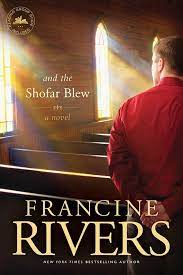
And the Shofar Blew, by Francine Rivers
     This novel is about church corruption, betrayal, and redemption.  Centerville Christian Church is a small congregation in Central California that is a little beyond its prime.  Ten years ago, the members were out sharing the gospel, bringing new people into the church.  Sunday school was full.  Ministries abounded.  Fellowship flourished.  Families and friends were close.  Now, the elderly had passed on, the middle-aged had become elderly, and the younger families had moved to towns with more job opportunities.  The church is at the end of its spiritual rope.  Things can't seem to get worse, when the pastor of forty years has heart failure and must retire.  The few remaining members consider closing down, but instead call a young man fresh out of seminary to be their new pastor.  Enter Paul Hudson.  Paul is initially humble.  He has a supportive wife, Eunice, and a preschool-aged son.  This family seems like the answer to the church's need.  Over time, Paul grows the youth group and brings in families.  Ministry again seems to be flourishing...but at a cost.  Paul has some unresolved insecurities, and is influenced by his need for approval from his father, who pastors a Los Angeles megachurch.  We see Paul's struggles, the church politics, the temptations, the tensions, and the battle between good and evil.  We see the corruption cause hurts to the Body, and godly people are shamed.  I relate so much to this, because I have been through church abuse in my life.  Reading this book helps me to appreciate what those in leadership may be struggling with, and also validates some of my experiences.  When I experienced the church abuse in the 90's, I had no frame of reference that these things actually happen.  There was no Internet back then to help compare stories with others.  It was more common for people in that time to stuff their feelings instead of expressing them.  I was only a high schooler at the time as well, and hadn't lived long enough to realize that things like this can happen in ministry.  Sometimes, churches can be so into reaching "the unchurched" that they fail to have biblical integrity or to minister to their own.  In this book, we see some people having moral failures, and others choosing to do right in the face of overwhelming temptations.  Such a reminder of the battle.  I was overall glad with the ending, but there were some aspects that were not quite satisfying to me, and that is how it often is in real life.  This book is a great commentary on church culture.  You can order this in-depth book here.

Julia's Last Hope, by Janette Oke
     This is a story about losing one's life to find it (Mark 10:39).  Janette Oke is known for writing 19th century romance stories.  Many of her books have been made into Hallmark Movies.  The Hallmark TV show When Calls the Heart is also based on Oke's writing (though many liberties were taken).  This book, a less well-known one by Oke, has more depth.  What I appreciate about everything I have read by Janette Oke is that she always has the Gospel clearly presented in her stories, so an unsaved person reading it could understand and known what he/she had to to in order to be saved.  However, some of her stories don't really seem to have any depth for the believer.  This book breaks that mold.  Julia's Last Hope is different from all other book in that:
1) It is not a romance (it is about a family, though the love between husband and wife is present).
2) It has a plot that keeps the reader wondering and engaged all the way to the last chapter.
3) It has an unexpected ending.
4) The characters learn various lessons through each phase in their experience.
The basic plot is: the Harrigan family lives in Calder Springs, a small town in the Canadian Rocky Mountains.  John Harrigan works for the lumber mill, the town's only real industry.  He and his wife Julia are devout Christians, along with their teenage twin daughters.  The Harrigan family has led a pleasant life in Calder Springs, deeply involved in their church and community.  One day, it is announced that the mill is going to close.  Calder Springs will become a ghost town, and the houses will have no resale value.  Julia Harrigan rallies the town women together to try to see what can be done to save the town and life they all love.  They seek to make their struggling little city into a resort town.  Several adventures ensue as guests come to Calder Springs--from spoiled brats to thrill-seekers, from criminals on the lam to sinners seeking to hide their transgressions.  The Harrigans have the opportunity to grow in faith and be a witness at every turn.  Difficult decisions must be made, but nothing ever done in this journey is a waste.  I am reminded that nothing done in faith is ever in vain, and that God is always at work in all of our circumstances.  I'm also struck by the way the townsfolk deal with the losses they experience, because I have been there (I've never lived in a ghost town, but I have seen a church I loved dwindle from a thriving congregation to a shell of its former self, and I've seen neighbors move away and the community change).  Sometimes, losing is still winning, because of everything you glean from the journey.  You can order this book here.

 The Magician's Nephew, by C.S. Lewis
     For the record, I highly recommend all of the Chronicles of Narnia series, by C.S. Lewis.  I used to conduct an evangelism team for junior high students in California.  Between ministry assignments, we would read this series as a group together, and really enjoyed it.  This particular book was the agreed-upon favorite.  All of the books in the series are allegorical of the Christian life.  The first book written, The Lion, the Witch and the Wardrobe portrays the gospel, while the other six books portray different biblical concepts.  The Magician's Nephew is about creation, sin entering into the world, and the promise of redemption.  There are elements of faith involved, where the protagonist, Digory, must choose to trust Aslan (the Christlike character), even in the midst of seeming to have what his heart most desires if he disobeys.  When he victoriously chooses right, Aslan praises him and says, "Well done, son of Adam.  For this fruit you have hungered and thirsted and wept. No hand but yours shall sow the seed of the Tree that is to be the protection of Narnia. Throw the apple towards the river bank where the ground is soft."  It is a reminder of the reward that ultimately awaits us when we do God's will...even if we don't initially see the results.  It's living in faith that we will one day hear Jesus say "Well done."  There have been times that I needed that reminder that I'm on the right track in living by faith.  Sometimes, I have felt God met me in this book.  Another sobering quote is: Oh Adam's sons, how cleverly you defend yourselves against all that might do you good.  This quote has reminded me several different times that God wanted me to step out in faith, instead of letting fear keep me away from what God had in store for me.  A final quotation from this book that I will share is a reminder of the joy that waits beyond this life, and that God just occasionally lets us experience now--what I call a "prelude to Heaven."  And all at once (they never knew exactly how it happened) the face seemed to be a sea of tossing gold in which they were floating, and such a sweetness and power rolled over them that they felt they had never really been happy or wise or good, or even alive and awake before. And the memory of that moment stayed with them always, so that as long as they both lived, if ever they were sad or afraid or angry, the thought of all that golden goodness, and the feeling that it was still there, quite close, just around the corner or just behind some door, would come back and make them sure, deep down inside, that all was well.  I have had some experiences with the Lord where He let me experience just a little bit of that joy that only He can give.  If we lived in that constant state of bliss, we wouldn't do anything for the kingdom while we're here on earth.  God just seems to give us that at those moments when we really need the reminder.  That "golden goodness."  It's really His presence in a very concentrated dose, giving us a hunger for Him...for eternity.  When we need it, we can look back on those "prelude" times, and know that is what we have to look forward to!  The best is yet to come for believers!  

     Those are eight of the books that have most impacted my life.  I highly recommend them.  I am always on the lookout for new books to read and be encouraged by, so please tell me your favorites, and how God has used them in your life!  

Friday, February 4, 2022

Birthday Lessons

      Today, February 4, 2022, I am forty years old.  As I think back on the lessons God has taught me in my Christian life over the years, I can't help but think that one of the most important lessons I learned took place thirty years ago today, on my tenth birthday, February 4, 1992.     


February 4, 1992--double digits at last!  I'm opening my presents from my siblings as my kid sister happily looks on.  My parents' main present to me was to be allowed to call long-distance to my friend in Colorado.  I wish I still had those encyclopedias to the right, under our VCR.  They had all kinds of cool things in them, such as the USSR, and info on all US Presidents up to Ronald Reagan.  They were even outdated in 1992, even though they were only about five years old then!

     The world was a different place, and yet not so different.  The Cold War had just ended a few weeks earlier, and everyone was totally amazed at the novelty of the phrase they never imagined to hear, Former Soviet Union.  The President of the United States was George H.W. Bush (who, at the time, we simply called George Bush, having no idea his son would one day become President as well, thus needing middle initials to distinguish them from each other).  Then-Vice-President Dan Quayle was also celebrating his birthday that day--but he wasn't turning ten (we share a birthday, look it up!  I also share a birthday with Charles Lindburgh and Rosa Parks!).  

Charles Lindbergh--born February 4, 1902--exactly 80 years before me.
Rosa Parks--born February 4, 1913-- exactly sixty-nine years before me.
Former Vice President, Dan Quayle--Born February 4, 1947--exactly thirty-five years before me.

     Who else was born on your birthday?  It's kind of fun to find that stuff out!

     For my birthday present that year, I had asked to be allowed to make a long distance call to a good friend of mine who had moved to Colorado (remember when long-distance calls actually cost money extra money?  I love having a flat-rate now!).  A twenty-minute call from Riverside, California to Denver, Colorado cost about the amount my parents were willing to spend on a gift, and that's what I had asked for.  It was totally worth it.  Beauty and the Beast was playing in the movie theaters.  I had seen it over Christmas vacation six weeks earlier, and was going to be seeing it again for my birthday, with two of my good friends.  I had wanted to invite the whole neighborhood to come with us, but of course that was out of the question.  Movie tickets were expensive (I mean, it was 1992.  It cost almost $3 a piece!  We couldn't be throwing our money around like that!).  My mother had told me to pick two friends to invite.  I settled on Chantel, a lifelong friend I had met as a toddler, and Sarah, a girl who lived on the next block over from me.  

     Since my actual birthday fell on a Tuesday in 1992, the movie excursion was planned for that Saturday, the eighth.  In the four days between my real birthday and that part of the celebration, what could go wrong?  Plenty!

     Chantel lived about ten miles away from us, went to a different school, and had a different circle of friends, so whether she told anyone or not about going to the movies for my birthday, it wouldn't have been any sort of issue.  Sarah, unfortunately, was right in the middle of my social circle.  She let it spill all over the neighborhood that I had invited her to come to my celebration.  This led to jealous kids showing up that morning, begging if they could also come.  It was torture to me to have to tell them no!  I would have loved to have invited all of them, and I felt sad that they couldn't come.  I had wished Sarah hadn't told them.  Some of these neighborhood kids hung around my house all day while we were gone, waiting for us to get home from the movie to see if we'd let them stay for cake and ice cream.  They hung out under the guise of playing with my siblings, but they really wanted a piece of the party.  When my siblings walked them home later (something we did in those days when it was time for friends to leave), they just turned around and followed my siblings back to our house.  

     The saddest part of this was that one friend, Lindsay, happened to see Sarah get into our car for the party.  I waved at Lindsay, and she waved back, but she looked sad, and I felt sad that I hadn't been able to invite her.  I wished I could have.  

     We had fun going to see the movie, but in the back of my mind, I felt sad about how those who had not been invited felt about it.  It's no fun to be left out.  I had so many good friends in my life I would have loved to have included.  

     Lindsay was very hurt I hadn't invited her, and she and I never really hung out after that.  In fact, she and Sarah were good friends, and she kind of got Sarah away from me, so I lost two friends.  I mean, we never had a fight, and we were still nice to each other around the neighborhood, but it wasn't the same.  Friendships at that age of life can be kind of fickle, since we're growing up and changing so much.  Some friends grow and change with us, and others don't.  Still, I felt that the fun of the day ruined friendships, and I always felt badly about that.  Looking back, it seems like mean girl drama, even though that wasn't the intent.  I also know that these kinds of things aren't relegated to a ten-year-old's birthday party.  People of all ages, including adults, can be just as hurt when they are left out, and respond in ways that are just as hurtful.  

     What I learned from my tenth birthday was that we should value people's feelings, and be very careful to be kind, and not hurtful.  Nothing was intentionally mean from this incident, but people were still hurt, and I can't help but think this could have been avoided if we'd been more careful.  Thoughtlessness can hurt just as much as spite.  We shouldn't just "not try" to hurt people, but we should intentionally "try not" to hurt them.  Philippians 2:4 says, Let each of you look not only to his own interests, but also to the interests of others.  Other people's feelings on the whole aren't our responsibility, but the way we treat them can affect their feelings, and that is our responsibility.   Most of us aren't cruel people who want to hurt others, but we can be thoughtless, which can be just as painful to them. 

     Here are some biblical tips that reinforce the hard lesson I learned on my tenth birthday.

1) Be friendly to everyone.  A man that hath friends must shew himself friendly... (Proverbs 18:24 KJV).  Be friendly to everyone God brings across your path.

2) Don't rank your friends into "best friends" and "second best friends."  My grandma wisely told me when I was about ten (around the time of this party, actually), that I should have several close friends, but I didn't need one "best friend."  She was right.  I had a friend growing up who always told me I was her fourth best friend.  Gee, thanks.  Another girl (with whom I was very close, in fact) told me I was her thirty-second best friend.  How do you think being ranked like this made me feel?  And how could this girl really keep track of thirty-two friends in order of quality?  It's ridiculous.  It turns friendship into a competition that you can't really hope to win.  It shouldn't be that way.  My brothers, show no partiality as you hold the faith in our Lord Jesus Christ, the Lord of glory.  (James 2:1).  You have your best china for when company comes, your best clothes to wear on Sundays, and your best friend for when you're really lonely.  What's wrong with that picture?  People shouldn't be relegated to the level of things.  Having one "Best Friend" is very juvenile and petty.  I find that most people who have a need for a "best friend" are often insecure themselves.  Every relationship in your life brings a new dimension to you, and should be valued.  Some are going to be closer to you than others, and that in itself is okay and right (Jesus had His twelve, and within that, He had His three), but being closer to them doesn't make someone a better friend, but rather a closer friend.  The term "Best Friend" is a misnomer, then.  The value should be placed on the relationship, not the person.  I have seldom (if ever) been the "best friend" people talked about.  I've had so many friends I thought I was very close to who would then talk about someone else as their "best friend" to me, and it made me feel like chopped liver!  Even now, at 40, those nagging feelings from youth come back with the thought, Why am I not good enough to be your best friend?  It makes me feel left out, and has led to a lot of insecurity in my relationships with other women.  The few times someone considered me their "best friend" it wasn't a healthy friendship, but more of a needy, codependent relationship where the person was receiving something from me, and made me feel used.  Those relationships didn't last.  Let's just not do that!  Don't have a "Best Friend" besides Jesus!  He is the friend who sticks closer than a brother. (Proverbs 18:24).  Have close friends, and value each one.  

3) Include everyone you are able to. Do not neglect to do good and to share what you have, for such sacrifices are pleasing to God.  (Hebrews 13:16).  Contribute to the needs of the saints and seek to show hospitality.  Romans 12:13.  People's needs are not always physical.  Sometimes, they are emotional.  The need to feel included.  Be that person who sites beside someone who is alone or left out.  Start a conversation with someone who is by themselves.  Put yourself in another person's place and try to make them feel better.  I wasn't able to invite more people to my birthday celebration, but I could have made an extra effort to reach out to these other kids.  Maybe I could have changed the plan and just had everyone over for cake and ice cream.  Maybe I could have invited Lindsay over the next day for just a fun day for the two of us.  I should have cautioned Sarah not to tell others about my birthday fun, since they weren't invited.  There was a lot that could have been different, and avoided hurting people's feelings.  

4) See people as Jesus sees them.  The Bible tells us how God sees people.  God so loved the world... (John 3:16a).  He wants everyone to be saved (not willing that any should perish, but that all should come to repentance. Second Peter 3:9).  We need to look at people as souls dearly beloved by God;  people Jesus died for and longs to welcome into His family.  Every person you meet was worth the life of Jesus Christ.  We should treat them as the treasures they are, and especially, tell them what Jesus did for them.  You might not be able to afford to take everyone you know to the movies for your birthday, but there are other ways to freely love them.  Many of the dearest people in my life have never spent a penny on me, but have given of the spiritual blessings God had given them, such as seeing God's hand in my life when I couldn't, listening compassionately when I needed it, encouraging me with scriptures I had forgotten, and praying with me when they could have been doing something else for themselves.  There are so many ways to love and value people.  

     In conclusions, I learned the hard way on my tenth birthday that people's hearts are fragile.  God loves people more than anything, and we should too.  Hopefully, all of you can come to my birthday party today (HA! HA!--there is no party, but if there were, you'd all be welcome!  My husband and I will get lunch out, and then come home for a really good dessert I already made).  If you're in Little Rock, drop on in!