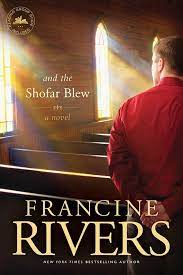
This book was originally published in 1994, and has been updated and expanded over the years. I read the first 1994 edition of it in 1999. A gentleman in our church introduced it to us, and led a study. I was a senior in high school at the time, and I believe it was in God's Divine Providence and Sovereignty that I read that book at that time. It really firmed up my theology before it was tested in the years that followed, as well as made my calling clear to me. In fact, my husband and I more recently read a newer edition of it, and God used that to lead us into the ministry we are currently in. This book talks about how what God wants most is a love relationship with the people He created. Loving and knowing Him in a personal way is more important than His plan for us (though He does have a plan for us). As we obey His leading in our lives and see Him work, we come to know Him by experience. God's will for our lives is really a smaller part of His overall will for the world. We join Him where He is working. This book talks about the ways God speaks to us. It is a very biblical book, with many scriptural references and citations for every point they make. One of the ways my theology was tested as a college student was that I met believers who saw God as a theological concept more than a loving creator who wanted to work in our lives. When I shared with a certain friend of this persuasion a way God had led me in a certain decision I was making, this friend told me that God doesn't lead us today the way He did in the Bible, and that God doesn't speak to us or work in our lives. This friend (and many others I knew at the time) believed that the Bible was an infallible guidebook, and that we needed to obey the claims and commands found in it, but did not have personal implication for the specifics of our lives. The only people who find joy in those types of beliefs are those who don't want to be surrendered to the Lord in the specific areas of their lives, but still want to technically obey the Bible. These people believed that applying scripture personally to our lives was equivalent to creating new doctrine or even a new religion. I was labeled as a heretic by these people, and even compared to Joseph Smith (the founder of Mormonism), simply because I prayed to the Lord for an answer to something I was going through, and God led me to the answer in my personal Bible study that day. Experiencing God had given me the foundation I needed to refute these believers who believed in a less personal God than the one of the Bible. Sometimes, there is a fine line between being open to the leading of the Spirit and being open to error. This book will really help to share the right view of hearing God's voice, loving God, obeying God, seeing God work in your life, and at the same time, rightly dividing the word of truth (Second Timothy 2:15). You can purchase this book here.
Wednesday, February 23, 2022
8 Books that Have Changed my Life
This book was originally published in 1994, and has been updated and expanded over the years. I read the first 1994 edition of it in 1999. A gentleman in our church introduced it to us, and led a study. I was a senior in high school at the time, and I believe it was in God's Divine Providence and Sovereignty that I read that book at that time. It really firmed up my theology before it was tested in the years that followed, as well as made my calling clear to me. In fact, my husband and I more recently read a newer edition of it, and God used that to lead us into the ministry we are currently in. This book talks about how what God wants most is a love relationship with the people He created. Loving and knowing Him in a personal way is more important than His plan for us (though He does have a plan for us). As we obey His leading in our lives and see Him work, we come to know Him by experience. God's will for our lives is really a smaller part of His overall will for the world. We join Him where He is working. This book talks about the ways God speaks to us. It is a very biblical book, with many scriptural references and citations for every point they make. One of the ways my theology was tested as a college student was that I met believers who saw God as a theological concept more than a loving creator who wanted to work in our lives. When I shared with a certain friend of this persuasion a way God had led me in a certain decision I was making, this friend told me that God doesn't lead us today the way He did in the Bible, and that God doesn't speak to us or work in our lives. This friend (and many others I knew at the time) believed that the Bible was an infallible guidebook, and that we needed to obey the claims and commands found in it, but did not have personal implication for the specifics of our lives. The only people who find joy in those types of beliefs are those who don't want to be surrendered to the Lord in the specific areas of their lives, but still want to technically obey the Bible. These people believed that applying scripture personally to our lives was equivalent to creating new doctrine or even a new religion. I was labeled as a heretic by these people, and even compared to Joseph Smith (the founder of Mormonism), simply because I prayed to the Lord for an answer to something I was going through, and God led me to the answer in my personal Bible study that day. Experiencing God had given me the foundation I needed to refute these believers who believed in a less personal God than the one of the Bible. Sometimes, there is a fine line between being open to the leading of the Spirit and being open to error. This book will really help to share the right view of hearing God's voice, loving God, obeying God, seeing God work in your life, and at the same time, rightly dividing the word of truth (Second Timothy 2:15). You can purchase this book here.
Friday, February 4, 2022
Birthday Lessons
Today, February 4, 2022, I am forty years old. As I think back on the lessons God has taught me in my Christian life over the years, I can't help but think that one of the most important lessons I learned took place thirty years ago today, on my tenth birthday, February 4, 1992.
The world was a different place, and yet not so different. The Cold War had just ended a few weeks earlier, and everyone was totally amazed at the novelty of the phrase they never imagined to hear, Former Soviet Union. The President of the United States was George H.W. Bush (who, at the time, we simply called George Bush, having no idea his son would one day become President as well, thus needing middle initials to distinguish them from each other). Then-Vice-President Dan Quayle was also celebrating his birthday that day--but he wasn't turning ten (we share a birthday, look it up! I also share a birthday with Charles Lindburgh and Rosa Parks!).
| Charles Lindbergh--born February 4, 1902--exactly 80 years before me. |
| Rosa Parks--born February 4, 1913-- exactly sixty-nine years before me. |
| Former Vice President, Dan Quayle--Born February 4, 1947--exactly thirty-five years before me. |
Who else was born on your birthday? It's kind of fun to find that stuff out!
For my birthday present that year, I had asked to be allowed to make a long distance call to a good friend of mine who had moved to Colorado (remember when long-distance calls actually cost money extra money? I love having a flat-rate now!). A twenty-minute call from Riverside, California to Denver, Colorado cost about the amount my parents were willing to spend on a gift, and that's what I had asked for. It was totally worth it. Beauty and the Beast was playing in the movie theaters. I had seen it over Christmas vacation six weeks earlier, and was going to be seeing it again for my birthday, with two of my good friends. I had wanted to invite the whole neighborhood to come with us, but of course that was out of the question. Movie tickets were expensive (I mean, it was 1992. It cost almost $3 a piece! We couldn't be throwing our money around like that!). My mother had told me to pick two friends to invite. I settled on Chantel, a lifelong friend I had met as a toddler, and Sarah, a girl who lived on the next block over from me.
Since my actual birthday fell on a Tuesday in 1992, the movie excursion was planned for that Saturday, the eighth. In the four days between my real birthday and that part of the celebration, what could go wrong? Plenty!
Chantel lived about ten miles away from us, went to a different school, and had a different circle of friends, so whether she told anyone or not about going to the movies for my birthday, it wouldn't have been any sort of issue. Sarah, unfortunately, was right in the middle of my social circle. She let it spill all over the neighborhood that I had invited her to come to my celebration. This led to jealous kids showing up that morning, begging if they could also come. It was torture to me to have to tell them no! I would have loved to have invited all of them, and I felt sad that they couldn't come. I had wished Sarah hadn't told them. Some of these neighborhood kids hung around my house all day while we were gone, waiting for us to get home from the movie to see if we'd let them stay for cake and ice cream. They hung out under the guise of playing with my siblings, but they really wanted a piece of the party. When my siblings walked them home later (something we did in those days when it was time for friends to leave), they just turned around and followed my siblings back to our house.
The saddest part of this was that one friend, Lindsay, happened to see Sarah get into our car for the party. I waved at Lindsay, and she waved back, but she looked sad, and I felt sad that I hadn't been able to invite her. I wished I could have.
We had fun going to see the movie, but in the back of my mind, I felt sad about how those who had not been invited felt about it. It's no fun to be left out. I had so many good friends in my life I would have loved to have included.
Lindsay was very hurt I hadn't invited her, and she and I never really hung out after that. In fact, she and Sarah were good friends, and she kind of got Sarah away from me, so I lost two friends. I mean, we never had a fight, and we were still nice to each other around the neighborhood, but it wasn't the same. Friendships at that age of life can be kind of fickle, since we're growing up and changing so much. Some friends grow and change with us, and others don't. Still, I felt that the fun of the day ruined friendships, and I always felt badly about that. Looking back, it seems like mean girl drama, even though that wasn't the intent. I also know that these kinds of things aren't relegated to a ten-year-old's birthday party. People of all ages, including adults, can be just as hurt when they are left out, and respond in ways that are just as hurtful.
What I learned from my tenth birthday was that we should value people's feelings, and be very careful to be kind, and not hurtful. Nothing was intentionally mean from this incident, but people were still hurt, and I can't help but think this could have been avoided if we'd been more careful. Thoughtlessness can hurt just as much as spite. We shouldn't just "not try" to hurt people, but we should intentionally "try not" to hurt them. Philippians 2:4 says, Let each of you look not only to his own interests, but also to the interests of others. Other people's feelings on the whole aren't our responsibility, but the way we treat them can affect their feelings, and that is our responsibility. Most of us aren't cruel people who want to hurt others, but we can be thoughtless, which can be just as painful to them.
Here are some biblical tips that reinforce the hard lesson I learned on my tenth birthday.
1) Be friendly to everyone. A man that hath friends must shew himself friendly... (Proverbs 18:24 KJV). Be friendly to everyone God brings across your path.
2) Don't rank your friends into "best friends" and "second best friends." My grandma wisely told me when I was about ten (around the time of this party, actually), that I should have several close friends, but I didn't need one "best friend." She was right. I had a friend growing up who always told me I was her fourth best friend. Gee, thanks. Another girl (with whom I was very close, in fact) told me I was her thirty-second best friend. How do you think being ranked like this made me feel? And how could this girl really keep track of thirty-two friends in order of quality? It's ridiculous. It turns friendship into a competition that you can't really hope to win. It shouldn't be that way. My brothers, show no partiality as you hold the faith in our Lord Jesus Christ, the Lord of glory. (James 2:1). You have your best china for when company comes, your best clothes to wear on Sundays, and your best friend for when you're really lonely. What's wrong with that picture? People shouldn't be relegated to the level of things. Having one "Best Friend" is very juvenile and petty. I find that most people who have a need for a "best friend" are often insecure themselves. Every relationship in your life brings a new dimension to you, and should be valued. Some are going to be closer to you than others, and that in itself is okay and right (Jesus had His twelve, and within that, He had His three), but being closer to them doesn't make someone a better friend, but rather a closer friend. The term "Best Friend" is a misnomer, then. The value should be placed on the relationship, not the person. I have seldom (if ever) been the "best friend" people talked about. I've had so many friends I thought I was very close to who would then talk about someone else as their "best friend" to me, and it made me feel like chopped liver! Even now, at 40, those nagging feelings from youth come back with the thought, Why am I not good enough to be your best friend? It makes me feel left out, and has led to a lot of insecurity in my relationships with other women. The few times someone considered me their "best friend" it wasn't a healthy friendship, but more of a needy, codependent relationship where the person was receiving something from me, and made me feel used. Those relationships didn't last. Let's just not do that! Don't have a "Best Friend" besides Jesus! He is the friend who sticks closer than a brother. (Proverbs 18:24). Have close friends, and value each one.
3) Include everyone you are able to. Do not neglect to do good and to share what you have, for such sacrifices are pleasing to God. (Hebrews 13:16). Contribute to the needs of the saints and seek to show hospitality. Romans 12:13. People's needs are not always physical. Sometimes, they are emotional. The need to feel included. Be that person who sites beside someone who is alone or left out. Start a conversation with someone who is by themselves. Put yourself in another person's place and try to make them feel better. I wasn't able to invite more people to my birthday celebration, but I could have made an extra effort to reach out to these other kids. Maybe I could have changed the plan and just had everyone over for cake and ice cream. Maybe I could have invited Lindsay over the next day for just a fun day for the two of us. I should have cautioned Sarah not to tell others about my birthday fun, since they weren't invited. There was a lot that could have been different, and avoided hurting people's feelings.
4) See people as Jesus sees them. The Bible tells us how God sees people. God so loved the world... (John 3:16a). He wants everyone to be saved (not willing that any should perish, but that all should come to repentance. Second Peter 3:9). We need to look at people as souls dearly beloved by God; people Jesus died for and longs to welcome into His family. Every person you meet was worth the life of Jesus Christ. We should treat them as the treasures they are, and especially, tell them what Jesus did for them. You might not be able to afford to take everyone you know to the movies for your birthday, but there are other ways to freely love them. Many of the dearest people in my life have never spent a penny on me, but have given of the spiritual blessings God had given them, such as seeing God's hand in my life when I couldn't, listening compassionately when I needed it, encouraging me with scriptures I had forgotten, and praying with me when they could have been doing something else for themselves. There are so many ways to love and value people.
In conclusions, I learned the hard way on my tenth birthday that people's hearts are fragile. God loves people more than anything, and we should too. Hopefully, all of you can come to my birthday party today (HA! HA!--there is no party, but if there were, you'd all be welcome! My husband and I will get lunch out, and then come home for a really good dessert I already made). If you're in Little Rock, drop on in!
Thursday, January 27, 2022
Redeeming Love
| Redeeming Love, owned by Universal Pictures |
"I'm going to let you decide," My mom told me seriously. "You're a Christian young adult now, and you need to make your own choices."
I felt an unexpected honor, and yet I knew I wasn't quite an adult yet. I was sixteen. The way my mom saw it, I needed to start making my own decisions about things, including what convictions I held. The question facing me was: would I go see the hit movie that was in theaters? This movie was about a sinking ship, and the title starts with a T, in case you're wondering which movie I'm referring to. The theme song, performed by Celine Dion, dominated every radio station. By osmosis, I had learned every word to the song, without even trying.
| photo owned by Vogue |
Everyone loved this movie. Many strong Christian friends had recommended I see it. However, I had learned some things about it, including that this movie had unmarried characters having sex with each other, as well as nudity. Sometimes, those things can be overlooked in the overall scheme of the movie. Some people, who are godly and would never condone such things in real life, are able to separate that and still enjoy the movie. It's a matter or conscience, and I make no judgment at all. However, I was at an impressionable time in my life, and I had the feeling this was more than I could handle at the time. It wasn't that it was evil, or that others who liked it were wrong. As I said, I make no such judgments. I just knew I couldn't handle it. I had had a boyfriend in junior high, whom God had removed from my life (it was sort of an "unequally yoked" situation, in addition to life changes separating us). For me specifically (meaning I do not put this on other people), I felt led not to date or get into another romantic relationship until I was eighteen and out of high school. Watching overly passionate things were a stumbling block to me during that time in my life. I had a very strong sex drive, but did not have a husband to exercise that with, so seeing such things was really hard on me. Knowing this about myself, I concluded it wasn't in my best interest to see that movie. That is how I became the only sixteen-year-old in Riverside County not to see Titanic. Even one of my good friends who was two years younger than me saw it, and I questioned my decision, but every time I prayed about it, the same answer came back to me. For me, that movie wasn't God's plan for me at that time. Maybe I was weak in areas the others were strong, and it didn't affect them the way it would me. I still haven't seen it, although I don't really feel it would be a problem now. I'm just not particularly interested. It's not the cool new movie, and I'm not sixteen anymore, so I don't really care if I miss out on cool movies!
| A still from Redeeming Love, picture owned by Universal Pictures |
Tuesday, January 11, 2022
Safety in Numbers
"All the moms are really upset you talked about that last week," Amber (not her real name) told me. "We don't believe in that. We all disagree with what you're doing."
I felt alarmed, and my chest felt heavy. I hated to have people upset with me, and was especially alarmed to have offended the mothers of the students I was working with. "Well then, I'm going to go make it right with each of them. I'll call them each up and apologize."
I saw the slightest panic on Amber's face, but she quickly smoothed it away. "Oh no. Don't do that. I talked to them and told them you're just naive and didn't mean it, and I think it's okay."
I was beyond annoyed with Amber's personal remarks (which were a constant occurrence), but something about her insistence that I shouldn't apologize struck me as odd. If I had done wrong, why shouldn't I apologize? She truly didn't want me talking to the other women.
I was involved in a community Bible study. Because the Bible study met from 9am-Noon, most of the women who attended were either senior citizens, or home-school moms. I was the lone working woman in the group. I was an employee of the YMCA at the time, and I worked a split shift, which made the Bible study perfect for me, time-wise. I had been asked to teach the junior highers. These were all home-schooled children. I very quickly grew to love my group of young people. They were bright, kind, and fun-loving. Most of them had a heart for the Lord, and diving into God's word with them was a joy. However, one aspect of this ministry was very complicated.
Amber was the teacher of the elementary class. She and I had our students together for parts of the day, and then separated for the study time. Many women I count as dear friends were very close with Amber, and remain so to this day. By their accounts, Amber is a wonderful person with many good qualities. However, she and I just didn't connect well at all. The word "frenemy" could well sum up our relationship in this ministry.
The previous week, our study time had gotten off track, and we had wandered into the topic of spiritual warfare. Everything said was biblical (based on Ephesians 6), but perhaps a little vivid if we'd had younger listeners (which we didn't). As it was, these kids were all seventh-and-eighth graders. Amber's group wasn't with us at the time this discussion took place. I figured my students could handle it. But I also realized I had gotten off track, and I got us back into the lesson. Now, a week later, I was being confronted by Amber that I had "traumatized" her daughter (who was in my group). Amber could have called me any time during the week, but she waited until I was surrounded by others to confront me (which violates Jesus' directions for confrontation in Matthew 18).
Having been raised to apologize and ask for forgiveness when I offended someone, I didn't heed Amber's words, and I reached out to the mothers of my students. Not only were none of them offended with me, but a few were even grateful I had brought up the subject of spiritual warfare. "They need to know about this!" one mom told me seriously. None of them had even known we had touched on that subject. Amber had implied that all the mothers came to her complaining about me, when, in reality, they didn't even know about it!
I am certainly not defending the fact that I got off topic in Bible study. I am not defending the fact that I talked about a subject that was a little scary to one of the students. I should have been more careful to stay on track. But I discovered that what I had done wasn't as disastrous as Amber had made it seem.
This post isn't about Amber, spiritual warfare, or that situation with the Bible study. I started with this story to illustrate the idea of people trying to gain power over us by using other people. Let's isolate some of that for a minute. Here I had someone dislike something I had said. She was within her right to disagree with me, and talk to me about it. If it was that big of a problem for her, she would have called me during the week. It clearly wasn't important to her. Instead, she waited all week, then approached me very combatively, and told me how offended they all were with me. She didn't speak for herself. She included other people in it, without them really feeling that way at all, or even knowing about what had happened. She used words like We and They, instead of I and Me. When I broached the subject of apologizing, she quickly tried to steer me away from that. Why? She didn't want me to call her bluff and find out that the other moms weren't mad at me. She wanted to keep the illusion of power. She wanted to be the voice of everyone.
The truth is, if she had contacted me and shared her concern, from herself, I would have listened. I would have cared. I would have apologized, and been more careful in the future. I care about individuals. Amber and her daughter were important enough to me without them needing to act as if other people were also offended. For reasons I can only guess at, Amber chose not to speak for herself, but instead built a fortress around herself, constructed of other people. My assumption is that this was done out of insecurity on her part. She gave her point more power, and made me feel outnumbered and condemned. None of these other people even know that they were being pitted against me. It made me feel badly at first, until I verified the truth.
I got my power back by talking to these other women. I learned the truth. As Jesus said, the truth will set you free. (John 8:32).
Have you ever had someone do that to you? Try to make their point stronger by including other people who may or may not have been involved? How did it make you feel? I once had a very overpowering boss tell me that everyone else was doing a good job in a particular area, but I wasn't. It made me feel heartsick, because I was doing the best that I could. A lot of the results this boss wanted were dependent upon other people besides myself. Remembering my experience with Amber, I decided to test the boss' line out, and I asked my coworkers if they ever struggled with this particular aspect of our job the way I did. Every single one of them related to my experience. They had similar results to mine. The boss was only using them to make me feel isolated. For all I know, he could have been telling them I was doing this great job and using me to make them feel insufficient. I think his idea was to motivate me to do better. What he actually did was discourage all of us, but we felt better once we talked about it.
You've heard the phrase There is safety in numbers, right? Well, that's the truth. We need each other, especially when people try to manipulate us like this. Watch out for people who can't simply speak for themselves, but instead use phrases such as:
*Everyone says you're...
*We all think...
*I was talking to so-and-so, and we decided you...
I knew a pastor's wife who literally destroyed her husband's church by doing this. She would gossip about a church member to another. The person to whom she was gossiping would listen politely, but uncomfortably, not contributing anything to the conversation. Then, the pastor's wife would go to the person she had been talking about and say, "So-and-so I and were just talking, and we were saying that you..." She took delight in complicating relationships between others. Ultimately, that church closed down because this woman drove everyone off. This is tragic, and it is evil.
Make sure you're not using these phrases either. Be strong and brave with your words. Speak the truth boldly and kindly. Be humble but confident. You don't need other people to strengthen what you have to say. It's very important to use I and me, rather than we or they. God's word urges us toward courage. Joshua 1:9 not only encourages this kind of confidence, but also gives the reason why we can be brave: Have I not commanded you? Be strong and courageous. Do not be afraid; do not be discouraged, for the Lord your God will be with you wherever you go. We are also told biblically to speak the truth in love (Ephesians 4:15). People who have to be misleading by adding other people to what they're saying in order to make you feel isolated are not being loving. They are furthering their own agenda. Watch out for that. It is a form of gaslighting, which I have covered in several different posts in this blog.
Individuals are not the only ones who do this. News media outlets use a false display of people to misrepresent the truth as well. If what you are hearing doesn't sound right, check it out. Talk with other people. That is where social media has made a big difference. People can speak their mind on things, and it's harder for the news outlets to control the narrative. This is also why so many people end up in Facebook jail...
During a particular election, my candidate won. At the time, I was working for a major university. The day after the election, all employees got an email from the University President, saying that no one was happy with the election results, and if people were really struggling with their candidate's loss, they could come receive counseling from the university's psychology department. First of all, people need to grow up. No one has ever offered me counseling when votes didn't go the way I wanted. But more to the point, did you catch what they did? They made the bold statement that no one was happy with the election result. Obviously this wouldn't be true. No election has everyone happy, or everyone unhappy. Some people got what they wanted, and others did not, so saying that is transparently incorrect. Secondly, though, it also made those who were happy with the outcome feel in the minority, and outnumbered (and if they won the election, they were obviously not in the minority!). That was a very manipulative way to word that email, and I would have expected much more professionalism (or at least more subtlety) than that! We need to watch stuff like this. We should be seeking the truth, and exposing deception wherever we find it. Second Timothy 2:15 urges us to be ...rightly dividing the word of truth.
Every time someone gives you something misleading, whether it is a suspicious news report or a personal confrontation, check it out. The tendency is to feel sad, and isolate yourself, feeling left out and alone. Resist that. Find out the truth. Go to the people and get the facts. Align yourself with people who speak the truth. Remember what Proverbs 11:14 says, in the multitude of counsellors there is safety.
Most of what I am talking about is how to avoid letting liars manipulate you with misleading statements. However, when we think about the truth, we need to go even deeper. Jesus Christ is the truth (John 14:6). His word is truth (John 17:17). First John 1:6 reminds us how we need to be walking with the Lord if we are going to be people of truth: If we say we have fellowship with him while we walk in darkness, we lie and do not practice the truth. The very first step in any situation is to make sure you are right with the Lord, walking with Him. Then, go to other truth tellers! After all, the truth will set you free!
Saturday, January 1, 2022
Into the Truth
Over the week between Christmas and News Years, I have been listening to a podcast. The title of this podcast is: I Pray You Put This Journal Away. Some important things are brought up, that I think should be discussed. I'm going to react to it, but don't particularly recommend it. You'll see why as you read my interaction with it, but a basic additional reason that I'll share now is that the speakers were not very well prepared, and used a lot of filler words, such as "like" and "ya know" while groping for what to say, and it was hard to really listen to that. That is just a mechanics thing, though. I also didn't like all the profanity used (thought most of it was bleeped out). If you wish to listen, that is up to you. You can look it up, but because I don't recommend it, I'm not including the link this time.
It is a husband and wife talking about their journey in life. This couple is about a decade younger than I am (they were children in the 90's, teens in the 2000's--whereas I was a child in the 80's and a teen in the 90's). The thing that made this podcast interesting is that the husband grew up as friends with the Duggar family (formerly famous, currently infamous family in northwest Arkansas). If you are not familiar, the Duggars are a fundamentalist family who have 19 children. They formerly had their own reality television show. On their show, their life was portrayed as unadulterated wholesomeness. To be honest, during the years the show was popular (late 2000's and early 2010's), I never really felt comfortable with it. They espouse themselves to be conservative Christians, which I do as well, but their convictions are pushed to some extreme measures that would never have been part of my life. What struck me about them at the time was the control they exercised over their adult children's lives. I didn't really watch the show, but I knew of it, and I knew many people really liked and admired them.
| photo owned by TLC |
I want to clarify that I am not picking on anyone's convictions of how they live out their faith. People are free to do as they believe they should. I am not mocking or belittling the Duggars for having different convictions than I do. I just didn't like the way the Duggars and their followers seemed to try to define Christianity or Conservatism by their own standards. I have always considered myself to be a Conservative Christian, but as a single woman, I owned a small house, had a college degree and a career. When I met my husband, we dated without parental supervision. These things are all very different from what the Duggars presented as the right way to do life and relationships. I knew people (Duggar wannabe's) who considered me to be very liberal. That was frustrating. Also, the Duggars consider themselves to be Baptists, which I am as well, and yet my experiences as a Baptist are very different than what they have expressed. Critics of the Duggars' extremism make comments like, "Baptists are an extreme hate-group," thinking that the Duggar's brand of Baptist is the entirety of the denomination, when in reality, most Baptists are nothing like what is being depicted by the Duggars. I resented the way they hijacked these things and gave everyone the impression that this was what it means to be Christian, home-schooled, Baptist, or Conservative. In some aspects, I also consider myself a fundamentalist Christian, in that my faith goes back to the fundamentals. Fundamentalists used to be those of us who believed in the inerrancy or scripture. Now, thanks to people like the Duggars, fundamentalists are people who don't let women wear pants, and other such rules. The focus has totally changed, to the point that I am very careful about referring to myself as a Fundamentalist. I'm definitely an Evangelical Christian, but by the definition of Fundamentalist given in this podcast, I am definitely not a Fundamentalist. Worth noting, some of the Duggar's children have moved away from their extreme beliefs as married adults. Most notably, their daughters, Jill and Jinger, and their husbands, are living what most would consider "normal" Christian lives, more similarly to the way I live.
In 2015, their facade of perfection was shattered when the sins of the oldest Duggar child, Josh, became public. Josh had molested his sisters in the past, and, as of that point in 2015, was addicted to pornography and was actively cheating on his wife Anna. My heart truly went out to her. This was how the family went from being famous to infamous. Josh professed to be very sorry, and apparently got some sort of treatment and counseling. However, less than a month ago, Josh Duggar was found guilty of child pornography charges. He will be in prison for a very long time. This so-called sweet, wholesome, home-schooled boy who appeared to do everything right has been into some very evil things for a very long time. He is finally getting justice. It just goes to show you can have all sorts of man-made rules and do everything "right" by those standards, and yet fail miserably where it really counts. He didn't kiss his wife until their wedding, and yet he cheated on her after marriage, then went on to take part in child exploitation and abuse. It strongly reminds of Jesus' words to the Pharisees in Matthew 23:24, You strain out a gnat but swallow a camel.
Anyway, that was some background there. I'm not really here to discuss the Duggars (if you are interested, there is a lot of info out there, but that isn't my purpose here). This podcast done by a former friend of the Duggars was very interesting. This couple is really sharing their story of being raised as very strict fundamentalists, and then growing up and deconstructing their beliefs. They clearly love each other very much, and are trying to tell their story. I could tell this was therapeutic for them. They sound like they feel good about where they are at in life right now. They clearly had some trauma and emotional abuse in their childhood faith. Some of these fundamental groups cover up abuse, and even facilitate it in some cases. This is unquestioningly evil. It grieves me that those who bear Christ's name would do something that wicked, and appear to care more about their image than about what is truly right and holy. Maybe they started off truly wanting to do right, but got off track. Maybe others were always wolves in sheep's clothing. Only God knows.
It was clear that the couple doing the podcast (particularly the husband, who actually grew up with the Duggars) really struggled with no one addressing needs they had growing up. The husband struggled with his normal sexual desires during puberty, since it was not talked about sufficiently. That is unfortunate. Some of what was shared was very sensitive and troubling. He recounted drawing a picture of some well-known fictional characters from a G-rated storyline in an X-rated, sexualized way, and then getting caught by his father. The talk with his father didn't address the real struggles and desires he had, but was rather a critique of his drawing ability and trying to trick him into confessing if he did this often or if this was a one-time thing. It was very brave and vulnerable to share this in the podcast, but I must confess it was very awkward and embarrassing to me to hear this. I don't condemn him at all. He clearly was feeling some very real things, and perhaps saw himself in these characters. That is normal. Good stories with well-written characters will do that for us. If these characters were real people, they surely would be sexual beings like all of us. The scenario just went to show how much this young man wasn't being taught and helped as he went from being a child to an adult. That is the tragedy. He needed to have his parents talk to him about his desires and feelings, and about the right way and time to exercise them.
All through the podcast, I really got a glimpse of the shame being thrown at the young people in their fundamentalist church, the sense of never being good enough, and needing to measure up. Both husband and wife recalled "asking Jesus into their hearts" as very young children, but neither seemed to talk about really encountering Jesus in a personal way. It was all about form, rather than a right relationship. It appeared that in both cases, their parents initiated them "praying the prayer" rather than them coming to a place of conviction of sin and a desire to receive Christ. It was about crossing all the t's and dotting all the i's. As this man read entries from his teen journal, I saw just how down he was on himself, and how little grace he was extended. My heart broke for him, and for everyone who has been wounded like that. It wasn't a blunt abuse, but a subtle message of not being good enough, given a little at a time, until it became a deadly poison. The guy shares his struggles with suicide.
The biggest tragedy he shared (though he doesn't see or present it as a tragedy) was his falling away from his faith in Christ as an adult. He calls himself a "sort of atheist." He and his wife have both deconstructed their faith. That is something we hear a lot about now, and I have addressed it before in my blog. All of us are constantly deconstructing our beliefs in small ways as we learn new info. I used to believe that combing your hair while it was wet was really bad for it. A beautician recently told me that is not the case. I let go of the belief I previously held in light of new info. That's part of living. But as Christians, our faith is in the finished work of Christ, and that should never change. That doesn't need to be reconstructed. I would venture to guess that all of us have small beliefs creep in that are unbiblical, and as we compare that to God's word, we should be working on changing that to align it with what God has said. The major deconstruction of young people leaving Christianity is truly tragic. It is a process of deciding what they now believe. It is heartbreaking that they were unable to grasp the truth, and are discarding even the remnants of it. As I said, though, as I listened to all of this, I never saw either of the spouses, nor any of the people they mentioned, have a true encounter or relationship with Jesus. This isn't to say they didn't. It just didn't come across that they did in anything shared. They went through the motions, and tried very hard to live up to man-made standards. There was a sweet innocence to where they were at as young people, but Christ wasn't the center. If they truly did know Christ, I believe they still do, and He will work in them and bring them back. If they didn't, then they still don't, and they are simply no longer going through the motions. If that is the case, I suppose it makes them a little more honest now.
The big takeaway I get is that people need to encounter Jesus Christ, in His true glory. This can happen in a little old-fashioned country church with a pastor who preaches out of the King James Bible, or at a large, modern congregation in a major city. The outer trappings don't matter. If someone truly embraces Jesus as Savior, this person has God's Holy Spirit. God's law is then written in his or her heart (Romans 2:15). There isn't a need for all these human rules that only serve to bring on guilt and condemnation. The believer is taught by the Bible, led by the Spirit. True doctrine and teachings are important, but not the extra man-made stuff that only serves to throw people off track.
I encountered Jesus Christ as a little girl. I recognized I was a sinner and in need for Christ's salvation, and I embraced the redemption He offers freely. I was born again when I was five years old. From there, I grew in my faith. I grew up in an American evangelical home. I went to AWANA and Sunday school. I had a Christian education. I went to camp. As a little girl, I was had Psalty records, which we performed as plays at church. On car trips, we would listen to cassette tapes of GT and the Halo Express, which is how I memorized many of the verses I still know today. My family listened to Adventures in Odyssey every Saturday evening (my husband and I are still fans now!). I had church/school friends who were Christians, and I had neighbor friends who weren't. I saw my parents sharing the gospel with others. I still cherish all of these precious things from growing up. I see so many of those who deconstruct suddenly start ridiculing things that were once important to their lives. I absolutely love all of these remnants of my childhood and teen years, and am so thankful for the ways they encouraged my already-existing faith. They didn't create my faith, but they stimulated what was there.
Were there silly things I now chuckle at? Certainly. When I was in high school, my pastor was very into the Rapture and Tribulation. That was pretty much all he talked about. When he would witness to people, he would ask, "If the Rapture happened right now would you be taken or left behind?" The average person on the street had no idea what he was talking about. He lived in such a belief in the imminence of the Rapture that he told us we would never die, but that the Rapture would happen in our lifetime. It got me thinking so strongly about it that, as a young college student, I was scared to drive unsaved friends, because if the Rapture happened, I would be taken, and the car would crash, killing my unsaved friend and sending her to hell, without a chance to get saved during the Tribulation. I really thought deeply about this, and anytime an unsaved friend asked for a lift, I would silently pray the whole time that God would postpone the Rapture until I got her home. I chuckle now at my naivety. As if I was the only Christian on earth who was driving an unsaved person in my car, and as if God would postpone the Rapture just for me! But I also think it is a very sweet idea that I lived in such belief in the imminence. I wish I still thought that way. Sometimes I do. There are some little convictions I have gone through, then changed my mind about upon further study of scripture. That is how we learn and grow.
If you read my blog two posts ago (Unfinished Business, December 7), you know that I experienced some abuse in church. In other posts, I have shared about some of the ways I have been wounded in ministry. I'm sure you have too. My journey with other believers has not been perfect. Hurtful things should not happen, but they do. They are inexcusable, but not unforgivable. And they do not make Jesus any less real or the Bible any less true. Think of how ridiculous it is to base truth's validity on people's actions. Someone at church hurt me. Does that mean Jesus didn't actually die on the cross? Of course not! We are supposed to look at Jesus (Looking unto Jesus the author and finisher of our faith...Hebrews 12:2). That is what I feel was missing from this podcast. The background of the couple didn't seem to point to Jesus, but to man-made rules and standards of righteousness that they were expected to adhere to in their own strength (which is impossible). Their current life doesn't seem to look to Jesus at all, but to what they call "my truth." (which is a total misnomer, because everyone's so-called truth contradicts everyone else's, which calls the validity into question!).
| This quote is probably the most accurate thing out there regarding "my truth." |
There are things that shouldn't have happened to me. There are things that shouldn't have been said. There were times my parents, church leaders and teachers made honest mistakes in trying to do right. There were times no one knew what I was dealing with internally, and consequently said things that shamed me and intensified my struggle. But guess what? Jesus is greater than all of that. He was real in my life and He enabled me to overcome (And they overcame him by the blood of the Lamb, and the word of their testimony, and they did not love their lives unto the death. -Revelation 12:11). He will do the same for everyone who truly wants Him to. Jeremiah 29:13 says, You will seek me and find me, when you seek me with all your heart. I am not inside of anyone else. I can't say what they did or didn't do in their spiritual journey, but I do know what God has done for me, and what He promises for all who call on Him! Our journey should be a journey into the truth.