Thursday, September 7, 2023

Peacemakers

      Another person (let's say it's another Christian) has really hurt you.  Maybe intentionally, maybe unintentionally.  You try talking to them, and that gets you nowhere.  You go to your pastor, or other Christian leadership, and they just tell you to take the plank out of your own eyes and forgive the person.  But the person continues to repeat the detrimental behavior.  You don't want to, but you can't help feeling resentful toward them, and it is a strain to be around this person.  Yet no matter what you do, you are told to examine yourself and make it right.  Maybe a well-meaning leader even told you that you should just apologize for everything, just to bring peace.  Is this right?  

     Another thing I often hear (I have heard it this week, in fact) is that after a certain amount of time has passed, it's just over, and if you aren't over it, you're being petty (even if no resolution or working it through has happened).  Things don't magically disappear.  There may be times you choose to overlook a wrong done to you, but even then, you need to work through it within your own heart with God's help before you can effectively forgive and move forward from it.  Nothing just disappears because enough time has passed.  And if it causes resentment and an inability to continue working with this person, resolution is needed, regardless of how long it has been since the offense happened.  

     There is so much bad information floating around about conflict resolution, and I have found Christians to often be the least equipped for it.  I think this is because we want to be gracious and kind, which is a good thing.  Unfortunately, not everyone is gracious and kind.  Not everyone deserves the benefit of the doubt.  A lot of times, the way Christian leaders handle conflicts just gives abusive people the green light to continue, and makes godly and mature people ashamed.  

     I have heard the whole spectrum of responses to conflict.  One pastor vehemently said it was a sin to ever confront anyone, and if you ever do, it means what happened was really your fault to begin with.  Can you see how false this is?  This would mean innocent children are responsible for abuse they receive because they told someone about it or tried to fight off the abuser.  It would mean the allies in World War II were really responsible for the Holocaust, because they fought to stop Hitler and the Nazis.  It would mean police officers who pull over drunk drives and give them a ticket are really the ones who were drinking and driving.  That just doesn't work!  I believe the pastor who said this was trying to keep himself above accountability and confrontation.  I did not attend his church, but he spoke at a camp I served at (and I didn't know it then, but my husband Walter was a member of his church before I knew him).  On Walter's and my first date, I found out he had sat under this pastor, and I asked what he thought of him, and he replied, "The man's a jackass!"  I knew I was in love with Walter at that moment!  Walter had been the victim of this man's assigning blame.

     Other Christian leaders have had a softer version of the same response. It often says to look to yourself and fix what's wrong with you, and that will fix the problem.  This would only work if you are 100% at fault.  Now, it is true that we should examine ourselves before the Lord (Search me, O God, and know my heart; try me and know my thoughts.  And see if there be any wicked way in me, and lead me in the way everlasting. Pslam 139:23-24).  We should make our part right (So if you are offering your gift at the alter and there remember that your brother has something against you, leave your gift there before the altar and go.  First be reconciled to your brother, and then come and offer your gift.  Matthew 5:23-24).  Sometimes, allowing God to convict and change us does change our perspective on the situation.  But no person has enough power to fix a situation singlehandedly (unless, as I said, he is the only one at fault, which is rare).  A lot of times, all this "look to yourself" stuff is a smokescreen, because the leader doesn't really want to deal with the problem (or perhaps doesn't know how).  

     I have just read a great Christian book that addresses all of this.  It is The Peacemaker, by Ken Sande.  I'll give a link to order it below. This book gives four major steps in peacemaking, and most are not used by the average Christian leader.  These are: 1) Glorify God, 2) Get the Log Out of Your Own Eye (you know that had to be one of them, right?), 3) Gently Restore, and 4) Go and Be Reconciled.    I only ever heard leaders use the second one, Get the Log Out of Your Own Eye, but all four are necessary for effective peacemaking.  

     All of our dealings should glorify God.  If the way someone is treating you is hurtful or wrong, that is not glorifying God, and allowing it to continue unchallenged is not godly or gracious.  It is allowing someone to continue in sin, which has grievous consequences.  We shouldn't want that for someone.  So often, I have heard that the best way to glorify God is to allow people to do whatever they want and never confront them, but this is clearly not so.  However, our response to the person should also glorify God.  

     Yes, we really do need to get the log (or plank) out of our own eyes.  In most cases, both parties are partly at fault.  Examine your part, and make it right.  Repent before the Lord, and to the other person.  You can't control the other person, but you can control yourself, and how you respond.  That is partly why so much emphasis is made on this point.  Unfortunately, it is also easier for leaders to tell the concerned party to take the log out of their own eye than to actually address a real issue.  I have written whole posts about the idea of inventorying your wrongs and making amends, but as a brief explanation here, write down the person's name, what he or she did, how it affected you, and the damage it caused.  An example might be: Susan told me she would watch my son, but when I went to drop him off at her house, no one was home, and when I called her, she laughed and said she forgot and was on her way to Florida.  Saw it as a joke and continued laughing about it.  I was left in a lurch and missed an important work meeting.  The damage was I didn't get a raise I had hoped to receive.  So you examined the other person's wrong.  Then, you ask yourself, "What was my part?"  In this imaginary scenario, maybe you would conclude: I did not confirm with Susan the day before, or, I wasn't clear with Susan on the date and time of the babysitting need when I originally asked her, or even, I trusted Susan in the first place after she has let me down on other occasions.  This is a pretend example, just to give an idea. There are a lot of possible situations that can happen to you, with varying degrees of who is at fault and by how much.  In the made-up example I did, you probably wouldn't need to apologize to Susan for your part, because she wasn't hurt or inconvenienced by it--you were!  But there are times you will need to make your part right, regardless of the other person's part in it, and whether or not they make their part right.  

     A lot of people stop it right there, with getting the plank out of their own eye.  They think you should just make your part right.  And you should.  But what if what the person has done has hurt you, or made you unable to trust them, or be close to them?  What if it can't be ignored?  I have always been taught that if you struggled with resentment, you were the problem, but this book has told me otherwise.  Resentment is a warning inside of you that something isn't right, and needs to be fixed.  It is telling you that you are too valuable to be treated this way by this person, and you need to do something about it.  Holding onto bitter resentment is something else altogether, and I'm not defending that.  But feeling unable to trust or be around a hurtful person unless the situation is resolved isn't sinful or wrong (who knew?!).  After all, the only way sinners can be made right with God is by humbling themselves to recognize their sinful state, and receiving Christ's sacrifice by faith.  God doesn't just ignore it, or try not to resent it, or say, "Well, it's been a while since that person sinned, so I need to be over it by now."  No, He made the one and only way.  This being the case, in your own conflict resolution, after you make your part right, it is okay to say, "You know, there are some things you can do that would help me out as well.  May I share them with you?"  After a truly humble amends for your wrongs, the other person may be very willing to hear you out.  This is what is meant by Gently Restore.  Restoration happens when both parties are able to make their parts right.  

     As I already said, there may be a time when you should overlook something someone has done.  But, also as I stated, you don't ignore it or pretend it away.  You acknowledge it, and then choose forgiveness.  If you can do that, and move forward, do so.  If there is still remaining residual of struggle with the person because of it, though, and you can't just "let it go" it is okay to engage the person kindly and humbly.  

     Several years ago, on a mission trip, I had a sweet teammate who was likable and fun, but was incredibly lazy.  I ended up doing most of the work.  When I questioned her, she would say God hadn't called her to do this or that task.  I tried not to mind her laziness, and to just have a good time with her, but I struggled.  It wasn't right for me to have to do all the work.  I confronted her one day and told her she needed to help me, and she got very angry, and said I was being critical of her and that I needed to focus on my own faults instead of hers.  Let's look at that a minute.  I wasn't criticizing her character.  I was addressing something that was causing me a lot of trouble.  I didn't just walk up to her and said, "I don't like your personality.  You have all these faults, and you need to work on them.  You need to become perfect like me."  She responded as if that was what I was doing, but I was just asking her to help me with the jobs she should have been doing to begin with.  Sometimes, people may take you the wrong way.  All you can do is try, and that is when having a third party involved may help.

     It is never right to spread gossip about the person you're in conflict with, but it is perfectly acceptable to get accountability and help from someone you trust.  Sometimes a third party can help bring reconciliation.  The book advises that if you are dealing with a non-Christian situation, it is best to get someone who doesn't know either of you and can be impartial.  However, if this is a conflict with a fellow believer, it is best if the third person knows both of you and can pray and give godly wisdom.  The book even talked about the possibility of involving both parties' pastors and church leaderships, and submitting to whatever they decide is right.  

     When the person who wronged you has truly made amends, you ought to forgive readily, and move forward as if it never happened . If they don't acknowledge their wrong, you can still choose to forgive, but that will put a limit on reconciliation.  You can't reconcile with someone who won't own up.  And that's okay.  So many Christian leaders seem to expect everyone to kiss and make up, regardless of how the situation is handled, and that just isn't always possible.  Remember Romans 12:18, If possible, so far as it depends on you live peaceably with all.  You can control only yourself.  You can do what leads to peace, but you can't singlehandedly create peace with another person.    If the person receives what you have to say, and makes their part right as well, be reconciled!  Don't bring the conflict up again.  The author shared a very sweet children's poem his wife had written:  Good thoughts, hurt you not, gossip never, friends forever.  

     As Christians, we should want to be at peace, but peace comes at a price.  Are you willing to glorify God?  Are you willing to admit your wrongs?  Are you willing to confront the other person's wrong behavior toward you?  If true amends are made, are you willing to forgive?  Will you move forward?  And if you're a leader, and someone comes to you with something like this, are you willing to hear them out, and work toward reconciliation, or are you going to just tell the person to take the plank out of his own eyes and let it go?  The choice is yours.

Order The Peacemaker here.

Saturday, September 2, 2023

Facing Fear

      I have been dodging an unseen enemy since my Freshman year of high school--almost 30 years ago.  I knew sooner or later, I would have to face it, but I avoided it as long as I could.  But it was never completely out of my mind.  I recently had my time of reckoning.  

     I was fourteen when my mom had a cancer scare.  She didn't end up having cancer at that time (she did years later, but they caught it so early that it was removed immediately and she was fine), but it was a very hard few weeks.  During that season, we were at a hard place with the church we were members of, and ended up facing some hurt from the leadership, and left.  There was a lot of hurt, and it all seemed compacted to me.  Just a few months after this (I was fifteen by then), my aunt passed away from cancer.  She had battled it for several years.  This was all just a hard time for our family.  

     I have feared cancer ever since those long-ago days of darkness.  I have a few little benign lumps on my body (the most notable on my left arm), and I became a hypochondriac about them, and had them checked out several times as a young woman, always told they were nothing.  Just recently now, I had a physical that revealed a concern, and I had to be checked more thoroughly.  It was too early for me to share with others or even assume I had cancer, but the possibility was terrifying.  I do not fear death.  I have assurance of my salvation, and know I'll go to Heaven when I die (I write these things to you who believe in the name of the Son of God, that you may know that you have eternal life. -First John 5:13).  I also know that if I were in Heaven one moment, I would never want to be back (For me to live is Christ, and to die is gain. -Philippians 1:21).  My hope, my heart's desire, and my whole perspective on life are rooted in eternity.  But I don't want to die right now.  I have so much to live for, with our new little boy, and my wonderful husband.  And yet I know I'll be on this earth the exact number of days God has planned for me.  (... [God] having determined allotted periods and the boundaries of their dwelling place, -Acts 17).  There is peace in that.  Also, a cancer diagnosis is not necessarily a death sentence.  Medical science has come a long way.  My mom had a diagnosis last December, and less than a month later, it was gone and taken care of, and she remains cancer free.  All the same, the idea was scary to me.  

     The hardest part of it was that I have no control.  There are medical things I can control.  I can get the nutrition, exercise, rest and water intake to produce certain results the doctor is looking for.  I can eat enough iron and protein.  Those are all things I have some control over.  But I can't control whether or not I have cancer.  I have known some very healthy people, who took every precaution, who still got cancer.  Two of these healthy people even died from it.  So I felt that sense of helplessness.  Not feeling in control is scary.  But the thing is, we're never really in control anyway!  That's so important.  God is in control.  There is no searching of His understanding. (Isaiah 40:28).  We must look at everything that happens to us through the lens of the cross. His love for us was settled then and there.  Anything He allows in our lives can work for our good (And we know that all things work together for good to them that love God, who are the called according to His purpose.  Romans 8:28).  

     I have recently heard someone try to explain why terrible and senseless things happen to Christians.  This person, who is a believer himself, and has many good things to say on other subjects, says that God is not really Sovereign, and that sin being in the world is sometimes stronger than God, and He isn't always able to protect us.  That really disturbs me!  That idea makes me very fearful.  It would seem that we're dependent on luck instead of God, and I don't believe that was this person's intent.  Worse than all of that, it isn't biblical.  If we look at the book of Job, we can see that God puts limits son how much the enemy can do.  Satan is still under God's authority.  We don't know why things happen as they do.  Some things are beyond us, but we'll understand one of these days, though it may not be until we see the face of God (...I shall know fully, even as I have been fully known. First Corinthians 13:12).  

     Many years ago, as a college student, I went through a very dark time.  God used Second Corinthians 4 to really encourage me.  Here is verse 8--in the Living Bible paraphrase (which really spoke to me at the time).  We are pressed on every side by troubles, but not crushed and broken. We are perplexed because we don’t know why things happen as they do, but we don’t give up and quit.   

     The passage that spoke to me the most during my recent cancer scare was Psalm 91.  Verse 1 summarizes the rest of the passage, and why it spoke to me: He who dwells in the secret place of the Most High Shall abide under the shadow of the Almighty.  I felt like I was in a secret place with God, letting Him breathe life and courage into me.  

     The long and short of it is, I don't have cancer.  Thank you, Jesus!  My husband took us to our favorite restaurant to celebrate.  The scare I had doesn't even indicate a particular risk or propensity toward it.  I'm going to keep running my race (Hebrews 12:1).  But that time was a moment of reckoning, and I feel as if I passed some sort of test.  I faced my greatest fear, and knew that God was my refuge.  

     Whatever fears you are running from (as I ran from this fear for so many years), or facing (as I just had to face it), God is with you.  He gave His Son for you.  He isn't letting you go!  

Friday, August 18, 2023

Trust but Verify

     "If you feel the Lord leading you to give up rock music, come forward now as the music plays," the camp preacher said as the soft piano music began playing.  All around me, fellow campers were having a moment of conviction.  A few were crying.  One stood up and walked forward, leaving rock and roll behind forever, embracing a new life.  Was my heart made of stone?  I didn't feel any of this conviction in myself.  I just sat there, surrounded with but not submerged in repentance for ever having listened to that evil rock music.  Later that week, we had a camp fire, and students threw in their rock cassettes, while everyone cheered.  

     Lest you think this experience was totally crazy, I must say that this Christian camp I went to had some really good aspects to it.  They preached biblical salvation, and gave campers and opportunity to come to faith.  I knew people who genuinely received Christ there.  They instilled spiritual disciplines, such scripture memorization and doing daily devotions.  They prayed, and taught us God's word.  They also had other fun camp things I enjoyed, like nature hikes, horseback riding, swimming, archery, and other fun things.  I made friends.  I really saw God work in my life, and even use me there back in the early 90's.  


     In spite of this, some of their teaching was what some might consider more extreme--I even considered it more extreme at the time.  I grew up in a Christian home, but my parents didn't have a lot of strict rules about music.  Their only problem would have been if a song had vulgar lyrics, or a wrong message.  We liked all kinds of music in our family, from country, to bluegrass, to pop, to rock.  We loved showtunes the most, and would often sing along (and not all of us are very musical)!  This camp held a different view than my family did, and I was confused they made this teaching about rock a point of actually giving an altar call.  

    This begs the question: Can godly people disagree?  I am talking about godly, Christ-honoring, Bible-reading, Holy-Spirit-listening believers.  And if you do disagree with a fellow Christian, does it mean you should discard everything else they say?  

     My first time that camp, I was eleven.  I went a few more years, as did my siblings.  I got a lot out of it, but after that first year, I remember talking to my dad about it.  I shared about how I had felt uncomfortable that they had said all rock and roll was evil, and asked everyone to come forward and give it up, and how I hadn't done it, because I hadn't felt led.  My dad told me that was okay.  He told me it was okay to like people and agree with some of what they said, but disagree with other parts.  The parts I disagreed with didn't cancel out the true parts that I did agree with.  He told me this was true about pastors as well.  I could like and agree with most of what a pastor said, but still think he was wrong about something else, or at lest take a scripture differently.  I didn't realize it at the time, but my dad was teaching me to think for myself, and not to follow leaders at all cost.  On the flip side, he was teaching me not to throw the baby out with the bath water.  With these thoughts in place, I continued to go to camp, enjoying my time, growing in the Lord, but also knowing there were some things I didn't agree with...and that was okay!  Trust but verify.  Trust what they say, but go to the source the verify!  
     What does the Bible say about this?  First, we must go by what the Bible says about any given issue.  We should align our beliefs with God's Word, even if it means we need to change something in our own lives.  But some things aren't clear or even mentioned in the Bible.  On those things, look at the principle.  Ask yourself, is this issue biblical, and what does the Bible say?  Is it helpful?  Is it selfish. Does it glorify God?  Does it cause others to sin?  

     On things that aren't completely spelled out in the Bible, Romans 14 is an excellent passage about Christians having different convictions.  I believe rock and roll would fit under this banner, as the Bible does not specifically teach against music styles.  If this is a stumbling block to someone else, than we should avoid it when we're with them, but it doesn't mean we have to think it's evil for ourselves in our own lives.  Romans 12:10 says, Love one another with brotherly affection. Outdo one another in showing honor.  If we are called to be in a situation where different convictions are held, we should keep our liberty to ourselves.  We shouldn't go in flaunting our freedom in order to shock propriety.  I'll give an example of this.  The ministry I serve with is strongly evangelistic.  One phrase they ask us not to use in our evangelism is "invite Jesus into your heart."  As their employee, the right thing for me to do is respect that, and use the phraseology they ask me to use, which I do.  However, I personally disagree with them.  I think "invite Jesus into your heart" is biblical, per Ephesians 3:17 (...so Christ may dwell in your hearts by faith...).  I think the push-back against that phrase has been out of proportion.  I use it in my personal evangelism (off the clock, so to speak).  I use it when explaining the Gospel to my son.  I have freedom to do this, but it would be wrong for me to go into our training classes that our organization does and use this phrase, just because I can.  That would show a lack of humility and integrity.  When I am on the clock, representing our ministry, I need to follow their guideline.  If I really felt they were very, very wrong and couldn't rightfully obey what they asked, the only right solution would be to resign (I'm not even close to that with this issue!).  There can be times we are called to leave a group or situation because of our differing convictions.  Romans 14:23 concludes, For whatever does not proceed from faith is sin.


     It can be especially confusing if you feel you disagree with a leader you respect, such as a pastor or teacher.  Acts 17:11 describes some people we can learn from, the Bereans.  These were more noble than those in Thessalonica, in that they received the word with all readiness of mind, and searched the scriptures daily, whether those things were so.  These people were commended for trying to make sure what Paul told them was really biblical.  Paul didn't get mad or threatened by this.  A good leader shouldn't.  Search the scriptures, and if you see an area where you disagree with your leader based on the Word of God, that is okay!  A godly leader should be happy you are thinking about this and checking in the Bible!  If respectfully disagreeing with a leader is forbidden, find a new church/group!

     I never did go forward to give up rock music at camp all those summers ago, but I did make other resolves in my Christian life.  I didn't throw the baby out with the bathwater.  I learned so much about the Lord, and I'm so thankful for everything God used in my life, even things I didn't 100% agree with 100% of the time!  

Friday, July 28, 2023

Bottom of the Barrel

     "Janelle, please pray with me!"  My dear friend Sonya* (not hear real name) closed her story with this desperate plea.  I held the phone to my ear, taking in ever word of her circumstance.  Sonya is a faithful servant of the Lord, and a close friend of mine.  But she is in a desperate situation, where, if God doesn't intervene, she is in some serious trouble that can alter the trajectory of her life (through no fault of her own).  And so we prayed, as Christians in desperation, Christians in trouble, Christians needing an answer, have done through the ages.  We petitioned the Almighty on Sonya's behalf.  But I am in deep trouble. Rush to my aid, for only you can help and save me. O Lord, don’t delay. (Psalm 70:5, TLB).  


     Sonya is at the bottom of the barrel.  Have you been there?  I have.  In fact, there was a time when I was in that kind of desperation, and only God could help--and He did.  There's something about being in a position where we're more dependent on God.  Hearing Sonya's harrowing plight reminded me of a long-ago challenge another friend unwittingly gave me.  

     I was given a challenge as a very young woman (about twenty years old).  Like Sonya today, I, too was at the bottom of the barrel.  The person giving me this challenge was someone I considered one of my best friends at the time, and she didn't realize she was giving me a challenge at all, especially not one that would become a lifelong quest and obsession.  The conversation with Sonya this week has reignited my passion for this challenge.

     My friend wasn't trying to challenge me all those years ago.  She was faced with a decision, and when sharing with me the logic behind the choice she ended up making, she unknowingly called into question everything I was basing my life upon, and I had to wrestle, and live by faith that I was doing what God had called me to do, waiting years before seeing the fruition.  Until that time, the only confirmation was the inner testimony of the Holy Spirit urging me onward.  

     This long ago friend and I had both made some difficult choices, acting in faith to what we truly believed God led us to do.  These hard choices we made brought us closer for a time.  Only for a time.  These choices we made weren't a matter of sinning or not sinning . It was a matter of specifically obeying God's leading in our lives.  That's where things get hard.  

     There are obvious things that are sins, and we should always avoid sin.  If I am faced with the choice of murdering someone or forgiving them, it's kind of a no-brainer, right? Even if forgiveness over murder is hard to carry out, it is an obvious answer.  But not all decisions are that apparent.  Some things are not defined in the Bible as sin, but they are different than how God is guiding you or me specifically, and would be sin for us in those cases.  An example is Jonah.  God clearly led him to go to Nineveh (Jonah 1:1), and he instead fled from that calling and headed on a boat to Tarshish (Jonah 1:2).  Getting on a boat is not sinful.  Going to Tarshish is not sinful.  Jonah could have justified his actions by pointing out the lack of sinfulness in these things.  And yet he did sin, in that he ran from God's specific directions for him.  He faced God's discipline, mercy, and a second chance.  That's another story.  But my point is, Jonah did sin by disobeying God's specific directions for him, even though the things he technically did couldn't be defined in the scriptures as sins.  

     Jumping from Jonah back to my friend and me as young college girls, this friend ended up going back on her decision and going in the other direction.  Just as our choices had brought us close for a while, her going back on it effectively ended our friendship shortly thereafter.  I was left to question and wrestle with the implications this left me with.  I sought God in His word and in prayer.  I listened to godly leaders I trusted.  But mostly, I clung to the Lord, wanting His presence primarily and His will for me secondarily.

     God leads us individually.  Sometimes we try to follow God's leading, and then realize He is leading differently than we thought.  But in this friend's case, she didn't say any of this.  She basically said that there was no verse in the Bible that condemned what she wanted to do, and that God doesn't really have callings in our lives, and we can do whatever we want, as long as there isn't a verse defining it as sinful. 

     This teaching deeply troubled me when she said it (she was given bad advice by a mentor of hers), and I have heard this belief perpetuated over the years.  A pastor I greatly admire and otherwise agree with, Andrew Farley, preaches this in his book Twisted Scripture.  I love and agree with most of the points he makes in that book, but I disagreed with the implication that believers don't need to seek God when making decisions (such as what job to take, where to move, whom to marry, etc.) because God will meet them on the other side of whatever choice they make (I addressed this in two blog posts Under Grace, May 27, 2019, and Where there's a Will... June 1, 2019).  A more recent book I read, Becoming Free Indeed, by Jinger Duggar Vuolo, also promotes this teaching.  I reviewed that book in this blog on January 31, 2023, if you want to check it out.  I hear this message from others as well, and it is a problem for me.  I wrestled with it for years as a young woman.  A lot of my Christian colleagues at the time seemed to press this, and it was so contrary to what I saw in the Bible, as well as what I was seeing God do in my life (of course, I wanted to line my life up with the Bible--it was the model, my life was not).  

     What a lot of these people do is live by the Bible, which is a good thing, but they focus so much on technically obeying the commands in the Bible that they miss out on knowing the God of the Bible.  Obeying God's word is good, please don't misunderstand me.  But if one's entire walk of faith is just avoiding sin, that's a pretty one-dimensional way to live the Christian life.  There is so much richness in pressing into God, crying out to Him, hearing His voice, and obeying, then seeing the results of your obedience.  God is not an impersonal force, like on Star Wars.  God is real.  He wants a relationship with the people He created.  He went to great lengths to have that relationship made possible.  He longs to envelop people in His love.  

     We make many decisions.  How detailed is God in these decisions?  How deeply should we analyze?  Should you seek the Lord on whether to go to McDonalds or Burger King?  How about on whether to stop at the post office or the grocery store first in your errands?  To be honest, I don't usually pray about those things, but I do believe God is still at work guiding me when I don't even know it.  There have been times I chose to do a certain errand before another, and then avoided a car accident.  Other times, I've chosen one restaurant over another, and got to witness to a waitress God brought my way.  That is God at work.  Even so, I don't agonizingly seek God's will in those nitty gritty decisions.  I just live life in faith, knowing He is working.  But once things start getting bigger than that, I do start really seeking God's will.  The most major life decision (besides salvation) where I sought God with all my heart and soul was marriage, but I have done so in other things too, such as finding the right job, joining the church God was leading me to, and living where I was supposed to live.  God cares about those things, and He wants me to be surrendered to His Lordship in them.  Besides, these things are all gifts, and Every good and perfect gift is from above... (James 1:17).  When I have tried on my own, without God's guidance, I flopped (Trust in the Lord with all your heart, lean not on your own understanding, in all your ways acknowledge Him and He shall direct your paths. (Proverbs 3:5-6).  There are so many biblical examples of people seeking and waiting on the Lord, and acting on the faith they had in Him.  One of my favorites in Elijah.  The main bulk of his story (where you can see him wrestling with faith, but still obeying and having victories) can be found in First Kings 17-19 (although he makes a few more appearances, finally exiting the scene in Second Kings 2).  Elijah is one of so many who sought the Lord and waiting on Him in faith.  Why would we think we can just go through life making choices without God's help?  

     I find that it isn't until I'm at the bottom of the barrel, like Sonya, that I realize how important this teaching is, that God is actively involved in our lives, and has a specific will for us, and we need Him so desperately.  Everyone I have ever known who claimed we could just do what we wanted as long as it wasn't sin had it pretty easy when they said it.  None of them were seeking God with all their hearts.  None of them were depending on Him to make it through the day.  None were poor in spirit or heartbroken.  None were hungering or thirsting after God.  They weren't depending on God so greatly that, were He not to come through, all would be lost.  They weren't mourning their brokenness and experiencing His comfort.  In other words, God wasn't their everything.  These people appear to want to direct their own paths.  In the case of my long ago friend, I believe (though I can't know, since I'm not her, nor am I accountable for her choices) that it was the easy way out, to do what she really wanted to do anyway.  The saying is true, you don't know God is all you need until God is all you've got.  When I was bottom of the barrel, God was all I had, and He led me to rich fulfillment, and I believe He is doing the same for Sonya.  Call upon Me in the day of trouble; I will deliver you, and you shall glorify Me. (Psalm 50:15).  you let men ride over our heads; we went through fire and through water; yet you have brought us out to a place of abundance.  (Psalm 66:12).  Being at the bottom of the barrel is a gift, because it brings us closer to Jesus.  We share in His sufferings, and we learn to know Him in ways the comfortable never can.  And when God pulls us out of the pit, even when we are joyful and comfortable again, we never forget the lessons we learned at the bottom, and we carry them with us, additions to who we are.  The greatest thing Sonya and I have learned is that we need God's leadership in our lives, because there is no way without Him!  


Friday, July 14, 2023

Broad-Minded?

     Christians are sometimes made out to be narrow-minded bigots.  Most of us would say this is an unfair characterization.  Often, those who call others narrow-minded (or some of its cousin insults, such as ignorant) are really just using this assertion against anyone who disagrees with him or her.  It makes the person saying it seem superior, and as if they don't feel they have to explain themselves.  There is often no merit behind an accusation of ignorance or narrow-mindedness.  What is really meant is often, "Don't you dare disagree with me!"  

     The dictionary defines narrow-mindedness as not willing to listen to or tolerate other people's views; prejudiced.  Nobody wants to be seen that way.  Broad-mindedness, on the other hand, is defined as tolerant or liberal in one's views and reactions; not easily offended.  That sounds like a much more rational way to be.  Most people enjoy being around those who are accepting and not easily-offended, right?  I'll return to the definition of liberal in the next paragraph.  Bear with me for a moment.  But to what extent are we to accept views that differ from our own?  Some act as if we need to accept everyone and everything as being valid and right.  That sounds so nice, but it isn't possible.  No one believes in everything, even if they claim they do.  It just isn't feasible.  Every belief is held at the expense of the opposing belief.  If you say you believe in God, you are also saying (though not necessarily in so many words) that you believe atheists are wrong.  If you claim to be an atheist, you are also saying that you think those who believe in God are wrong.  You can't have it both ways.  This is true of all beliefs and those which oppose them.  

     I am going to submit that the word liberal (defined in the dictionary as willing to accept or respect behavior or opinions different from one's own) is not to be confused with the political or religions form of liberalism that constantly discards foundational beliefs and wants progressive beliefs to replace them.  A political or theological Liberal may or may not be openminded.  If they are willing to consider all viewpoints, including a Conservative's, they are a true Liberal.  But usually, like everyone else, a theological or political Liberal is not open to every idea, since they are not open a Conservative's views.  A better name for these people is Progressive, and many have started using this word instead of liberal.  It is a more accurate description than the word liberal.  Like most people, they are open to their own viewpoint and want that worldview to prevail.  By the real definition of liberal, many people from all political and religious views would be considered liberal, since many people are very accepting of those who disagree with them.  That is a good way to be.  To a point, I think it is scriptural.  Jonah had to overcome his prejudices and preach to the Ninevites.  Jesus was loving to tax-collectors, and people caught up in horrible sins, even demoniacs.  The early church had to learn to accept Hellenist Jews and Gentile members.  Acts 10:34 says that God is no respecter of persons.  

     But I repeat, to what extent should we accept other views?  The biblical examples I gave in the last paragraph involved welcoming and loving different people, but did not involve telling them they were right.  In every case, these people were loved and accepted, and brought to know God's truth.  Like all of us, they were required to change their mind.  

     As I already said, every belief is held to the exclusion of opposing beliefs.  Nobody can believe in everything.  Nobody really thinks everything is right or good.  Everyone has a set of ethics they go by to determine right from wrong.  As Christians, we should form these ethics on God's unchanging Word.  We should never, ever compromise what God has said in the Bible.  It is the final word.  Sometimes, this requires us to change long-held or traditional beliefs, because they are not scriptural.  Other times, it means holding fast to what we have always known in the face of a changing culture.  The Bible is the guide, not our traditions of the past, our culture of the present, nor the prediction of the future.  Isaiah 40:8 says,  The grass withers, the flower fades, but the word of our God will stand forever.  Psalm 119:89 says, Forever, O LORD, Your word is settled in heaven.

     Is there a way to be openminded without compromising the truth?  How can we be broadminded without compromise?  How do we be accepting of people without accepting ideas that contradict the Bible?  Here are a few thoughts.

1) Know your audience.  Read up on what a certain position teaches and believes.  Don't go by hearsay or prejudices, but find out what they actually believe.  If you really don't know, ask them.  They will feel respected by your asking, and that can lead the way to a productive conversation.  In fact, even if you have studied up on it, ask them anyway.  People are not all the same, and even those with the same philosophies might apply them differently.  

2) Put yourself in their shoes.  So many people of various beliefs and worldviews make the mistake of assuming everyone arrives at conclusions the same way they, themselves have, and then go on to make terrible assumptions about other people's character and motive.  Here is an example.  During Covid, some people held that this was a serious, deadly disease, and that the most loving thing a person could do was to stay home and wear a mask if he or she had to go out in public.  Some who held this view assumed everyone else also believed it was deadly, but just didn't care if they endangered others if they didn't stay home or wear a mask.  This led to seeing others as hateful and uncaring.  In reality, those who didn't feel the need to stay home or wear masks were not being hateful at all.  They didn't believe the same thing about the pandemic.  Many did not believe the danger was as severe as portrayed by the news, and considered going out to be a reasonable risk, just like people do during normal flu season.  Hate had no part in their logic, but it was falsely accredited to them.  On the flip side, people who viewed masks and staying at home as excessive and unnecessary often viewed those who chose to do these things as a puppet to the fear-mongering media, and maybe even assumed things about the person's faith or politics, when these people really did believe in the imminence of the danger and were trying to be careful (some even had autoimmune diseases and had to be more careful).  To share another example, I had a friend who used to call other religions outside of Christianity "stupid," and that is a very disrespectful way to talk about someone else's beliefs.  Try to think outside yourself a little bit.  The Apostle Paul did when he preached at Athens in Acts 17.  He got into their culture, using references around them that they revered and knew, and then led them to the truth of Christ.  Putting yourself in someone else's shoes and understanding their beliefs doesn't mean you think they are right, but you should try to understand the logic behind them.  I have engaged with many people online who hold different beliefs than I do, both theologically and politically, and never once have I had someone politely say, "Wow, I disagree with you.  Let's talk about it.  How did you come by your conclusion?"  Instead, I've had people level insults and even dirty statements at me for daring to disagree with them.  Not mature, and not a way to get people on your side.  

3) Assume the best.  People often demonize those with views that oppose their own.  They think of them as stupid or cruel.  It is important we recognize there are beautiful, talented, nice and smart people who believe differently than you do, and many have arrived at their conclusions honestly.  That deserves respect, even if we disagree with them.  You will never win people over to your viewpoint if you treat them as if they're stupid or evil for not agreeing with you to begin with.  Worse, don't conclude these people are not worth your time or consideration.  Jesus came to save people who weren't giving Him the time of day, and He still considered it worth it (...while we were still sinners, Christ died for us. Romans 5:8 ).  

4) Find out about their journey.  Ask people how they arrived at their conclusions.  Listen to them.  If nothing else, this buys you time to consider your response.  Ask clarifying questions.  Make eye contact, and listen politely.  This will go a long way in earning their respect, and also earning your own right to share.

5) Affirm their experiences (there is a major caveat, so keep reading!).  I am not suggesting you say that their experiences and conclusions are indicators of the truth, or that you agree with them.  I am saying to affirm their real, heartfelt, life experiences.  You can disagree with what they did as a result of those experiences, and we'll get to that, but don't deny the reality of what they experienced and felt.  Show compassion.  Sometimes, people really face hard, hurtful situations that lead them to conclude as they have.  How would you handle it?  Can you at least understand how they came to the conclusions they have?  This is another aspect of putting yourself in their shoes.  Show compassion and respect for what they share.  

6) After hearing their whole story, as kindly as you can, tell them that you don't question their experience, but that you reserve the right to question the way they interpreted the experience (this is what Henry Blackaby, author of Experiencing God says when people disagree with him and say, "Well I don't care what you say!  I've experienced this!").  The very best thing from here is to ask thought-provoking questions to get them thinking.   Share what you have found to be the truth (from God's word, ideally).  Don't make it seem like a simple thing.  It isn't simple at all.  A lot is involved.  For example, if someone you are talking to is involved in a sinful relationship, don't just say, "Well, that's bad.  You shouldn't do that anymore."  These are issues God will have to help them navigate.  The Holy Spirit will have to work in them.  You're just planting seeds.  

7) Don't expect them to change their view.  Changing one's view isn't some quick, easy thing.  God has to do it in them.  Philippians 2:13 says, for it is God who is at work in you, both to desire and to work for His good pleasure.  

8) Leave them with a blessing.  Close your interaction with a kind word.  Humility and kindness go a lot further into their hearts than dogmatism.  It can just be something as basic as, "I've enjoyed our conversation.  Thank you for sharing with me."  You could add, "I'll be praying for you," if you think it will be taken in the right way, not a barb against them.  

Finally, 9) Pray for them after the fact.  Prayer is a way you can always reach someone, even if you have no further contact with them.  

     Be as kind as you can.  Be open to understanding someone else's views.  Listen to their stories.  Be open to seeing why they chose as they have.  That is being broadminded in a good way.  However, in the end, we need to realize that the truth is narrow.  We want to be open and accepting, but we ultimately must stick to God's narrow way.  Jesus Himself said in Matthew 7: 13-14, Enter by the narrow gate. For the gate is wide and the way is easy that leads to destruction, and those who enter by it are many. For the gate is narrow and the way is hard that leads to life, and those who find it are few.  If holding to this truth makes us narrow-minded in the world's eyes, so be it.  People whose beliefs oppose yours aren't compromising their beliefs for you.  Don't compromise the truth for them or for anyone else.  I'll close with Paul's words to the church in Philippi, holding fast to the word of life, so that in the day of Christ I may be proud that I did not run in vain or labor in vain. (Philippians 2:16).

Sunday, July 9, 2023

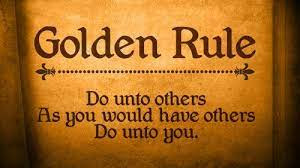
Doing Unto Others

      So in everything, do to others what you would have them do to you, for this sums up the Law and the Prophets. (Matthew 7:12).  Do to others as you would have them do to you. (Luke 6:31).  Most of us are familiar with these verses.  The idea of doing unto others as you would have them do to you is often referred to as the Golden Rule.  Even people who don't believe in the Bible often know the Golden Rule, and partly because other philosophers throughout history have also promoted this idea, some even before Christ said it.  And yet Jesus still said these words "sum up the Law and the Prophets."  

     On a basic level, doing unto others is very practical.  I don't want someone ridiculing me, so I shouldn't publicly ridicule someone else.  I don't want someone sharing my private business, so I shouldn't share theirs.  I want people to respect my property, so I should respect theirs.  Sounds simple.  And it is, to a point.  However, what happens when you want to be more creative with your doing unto others?  

     There are basic things all people need and appreciate, and you can "do unto others" with these tings, but when you start getting more specific, what you'd want to have done for you might not be what someone else would want.  

     Years ago when I was working at the YMCA, I had a coworker who was very difficult for me to relate to.  We were on very different wavelengths.  But I wanted to be kind.  Her birthday was coming up, and I decided to do something special for her.  I got her a card and had all the children in the YMCA sign it.  I got her a gift card to her favorite restaurant.  I found out her favorite candy bar and included that in the gift.  I had everyone hide and jump out and surprise her, and we presented her with the card, gift card, and candy bar.  I wasn't expecting us to suddenly become best friends, but I was expecting her to at least be happy her birthday had been remembered.  A part of me hoped it would melt a little bit of the ice between us as well.  Instead, she just stared deadpan and had no reaction at all.  As soon as it was over, she acted like nothing had happened and told the children to get to their homework.  The children had been so excited, and they were a little hurt by her lack of reaction.  I was shocked someone could be that ungracious...but from her side, we had embarrassed her.  She was very private about her birthday.  In her mind, we had crossed a line.  That wasn't our goal at all.  I don't like to be embarrassed or a huge deal to be made, but I do appreciate acknowledgement, so I was "doing unto others" by acknowledging her birthday with something special.  It would have been a blessing to me, but it wasn't a blessing to her.  

     Sometimes, we run into that.  Something you appreciate and would be blessed by might not have the same effect on the person you are trying to be kind to.  We are all so different.  There isn't a one-size-fits-all approach to encouraging someone.  So how do we really apply the biblical principle of doing unto others?  

     First of all, on a practical level, know your audience.  That isn't always possible, but do your best to know who this person is, and how they might receive your good intentions.  

     Second, and much more importantly, seek the Lord.  God knows all people inside and out.  He created their inmost being (Psalm 139:13).  He knows what would minister to that person.  He knows what would be best.  Let God lead and guide.  

     Third, let God fill you with His love for that person, and then extend it.  Our own human love fails, but God's never does.  James 2:8 calls this the "royal law" If you really fulfill the royal law according to the Scripture, “You shall love your neighbor as yourself,” you are doing well.  Sometimes, that might mean just praying for someone.  It might mean saying a kind word.  Or it might mean not saying anything at all.  Let God work in you and in the other person.  Don't worry about the results.  God can handle all of that.  You might not see the results in your lifetime.  But keep doing good out of a pure heart of love for God.  

     The kind of love we are commanded to have for others isn't necessarily friendship (though it's nice when that happens), but simply desiring another's highest good, regardless of what's in it for us.  That is so hard.  I believe my heart was mostly pure in planning the birthday surprise for my coworker, but a small part of me hoped it would improve our icy relationship.  That small part of the motive was sort of a "what's in it for me?" idea.  I've had to come to a place where I let go of what I hope happens, simply saying, "That would be nice" but knowing it might not be the case.  I need to just let God's love fill me, and follow His directions in my interactions with others.  I don't always get it right.  A book on the subject of being a conduit of God's love toward others (which I highly recommend) is The Way of Agape, by Nancy Missler.  You can view it (and possibly choose to purchase) here.

     I have asked God for His love for others many times, and never, ever have I gotten a No response from Him on that.  He always supplies me with His love for the person in question.  Fulfilling the golden rule, and the royal law, can be daunting, but God helps His children do what is right!  To get busy doing unto others, get busy seeking the Lord.  

Thursday, June 29, 2023

Deceived

     I was recently looking for a particular worship song on YouTube.  I like to have Christian music playing as I get work done.  I couldn't recall the title, so I typed in a line from the chorus (do you ever do that?).  What popped up was a different song that had similar name to the line I had typed in.  At first, I thought maybe it was another version of the same song.  As soon as I clicked on it, I knew it was a very different song, but I wasn't disappointed.  It was one of the most beautiful songs I had ever heard.  I'll put a link to the video at the end of this post.  The song shows two young girls, presumably sisters, dressed in their Sunday best.  The older one (pictured below) is singing to her sister about Jesus, and the scene flashes to a group of children in "biblical" clothes sitting around Jesus and being loved by Him.  These children around Jesus were of various races, which made it even more attractive and engaging.  The second verse of the song goes back to the sisters, but then shows several other children, all dressed up in their Sunday best, running up to them, and they all sang together about Jesus.  It was a beautifully recorded video, and the singing was absolutely gorgeous.  I do encourage you to watch it, but there is a reason I'm saving the link until the end.  

     As I often do with a song I hear for the first time, I listened to it a few times.  As I did, something about it started to seem just a little bit off.  It still appealed to me, but something just didn't seem quite right.  The lyrics weren't technically wrong, but they weren't really rich in theological truth.  

     In this short song, there are five references to feeling or emotion, but no reference to the basis of truth.  The song is titled (and the chorus states) I know that my Savior loves me, but there is no basis given to this knowledge in the song.  Even simple children's songs about Jesus usually give some basis (IE: Jesus loves me, this I know, for the Bible tells me so... bold underlined emphasis mine).  For being a song about "knowing" it really gives a lot more information about feeling.  Feelings aren't bad.  They do play a part in our lives, and even in our faith.  There are times in our Christian lives when we are aware of God's love for us, and feel that connection to Him.  God ministers to our emotions.  The Psalms testify to this.  However, we know the truth because of the Bible, not because of these experiences of emotion (even if they are real, they are subjective, and not the determiner of truth).  Christian teachings, whether the lyrics to our church songs, our children's Sunday school lessons, or our pastor's sermons, usually focus more on helping people come to know the truth of God's word.  This song just seemed too focused on emotions.  The beauty of the singing and cinematography definitely got into my emotions.  

     In the second verse of the song, the beautifully-dressed children sing about learning the teachings of Jesus.  Of course we learn the teachings of Jesus, but as Christians, we usually hear more about learning the Bible as a whole (For I have not hesitated to proclaim to you the whole counsel of God. Acts 20:27).  Also, we don't just learn Jesus' teachings--we learn to know Him personally.  Just isolating Jesus' teachings without studying the rest of scripture seems more academic than truth-seeking.  Again, not wrong, just a little different than what I'd expect in a Christian song.  

     Another line in the song that started to seem off to me was Parents and teachers will help guide the way.  Again, this isn't bad or untrue.  Children need the guidance of their parents and Sunday school teachers, and encouraging this is a good thing.  It just seemed odd to have that in a song about knowing Jesus.  Most Christian leaders I know want to teach children (and adults) to know Jesus for themselves, not remain dependent on their leaders.  By itself, this line in the song wasn't wrong, it just seemed a little off.  This is especially true when I consider the very next line that follows this: Lighting my path every day.  Parents and teachers can enlighten children as they grow, but the Bible is clear that God's word, not people, are a Lamp unto my feet, and a light unto my path. (Psalm 119:105).  

     After it started to seem off, I looked up the producer of this video, as well as the young girl singing (who is the daughter of the producer).  They are members of The Church of Jesus Christ of Latter-Day Saints, or the Mormon Church.  Their beautifully-produced video seemed deeply Christian, and yet they are part of a religion whose beliefs are vastly different than biblical Christianity.  By the admission of the Mormon church's website, churchofjesuschrist.org, Latter-Day Saints do not believe the Bible to be the final, infallible word of God (and if you're familiar with their history and teachings, you know they esteem other books as being higher than the Bible).  They didn't say anywhere in this video that they were Mormon.  It would be very easy for someone to listen to this and think it was Christian, and be drawn in.  I know that a common Mormon tactic is to try to look very Christian, and even call themselves Christian.  I've seen some of my Christian friends on Facebook share a Christian-sounding meme they liked, but it was actually taken from a Mormon leader or site (but my friends in those cases clearly didn't know it, but just shared the post they liked).  I share this just to illustrate how easy it is to fall into this.  Pew Research (which I usually consider reliable) considers Mormonism to be part of Christianity, and therefore considers Utah the most Christian state in the US, due to it's high church attendance.  It is so easy to be deceived, not just by Mormonism, but many other false teachings that may look and sound very Christian!  A lie is meant to look as much like the truth as possible.  We need to be guarded.

     As I watched that video after learning of its Mormon origins, my heart broke for everyone involved in it.  They think they know Jesus.  They call Him their Savior, and claim to feel His love, and yet they are deceived.  The death and resurrection of the Jesus they sing about only atones for our sins after we have done all we can do (this is taken from the Mormon scripture of 2 Nephi 25:23--I am not recommending you read it, only referencing what I say so you know I am not pulling it out of thin air).  This changes it to a works-based gospel, regardless of how Christian and beautiful it seems.  It is my prayer that they will seek to know the biblical Jesus.  

     There is no finger-pointing at the judgment, saying "I was deceived!"  It is our own responsibility to avoid deception.  Jesus said in Matthew 24:4, Take heed that no one deceives you.  It is our job to be wise, aware, and grounded in the truth.  Jesus said in John 8:32, and you will know the truth, and the truth will set you free.  Jeremiah 29:13 promises, You will seek me and find me, when you seek me with all your heart.  Seek the truth, and follow it.  How?  Jesus said in John 14:6 that He is the truth.  Knowing Jesus is the key.  We come to know Him by reading what He has said about Himself in the Bible.  God's word is our anchor.  We need to be reading it diligently on our own.  We need to meditate on it (Psalm 1:2), and hiding it in our hearts (Joshua 1:8, Psalm 119:11).  We need to be studying it with other believers, being accountable to them and holding them accountable.  We need to be sitting under solid Bible-teaching.  We must always remember, though, that we are directly accountable to God ourselves.  As Christians, we have the Holy Spirit inside of us, and He guides us into all truth (John 16:13).  We should have good Christian leaders, but we are directly answerable to God, not them.  They are not perfect or infallible.  No leader deserves your allegiance at all cost--except Jesus Himself.  We need to surround ourselves with things that enforce our faith.  If something seems off, line it up with the Bible.  Talk to other believers you trust and gauge their responses.  

     Don't be taken in by the cheap imitations.  Go for the real thing!  

The link to the beautiful song I mentioned (which, if you take it at face value, you can enjoy from a Christian point of view) https://www.youtube.com/watch?v=CDyx2kayhGQ